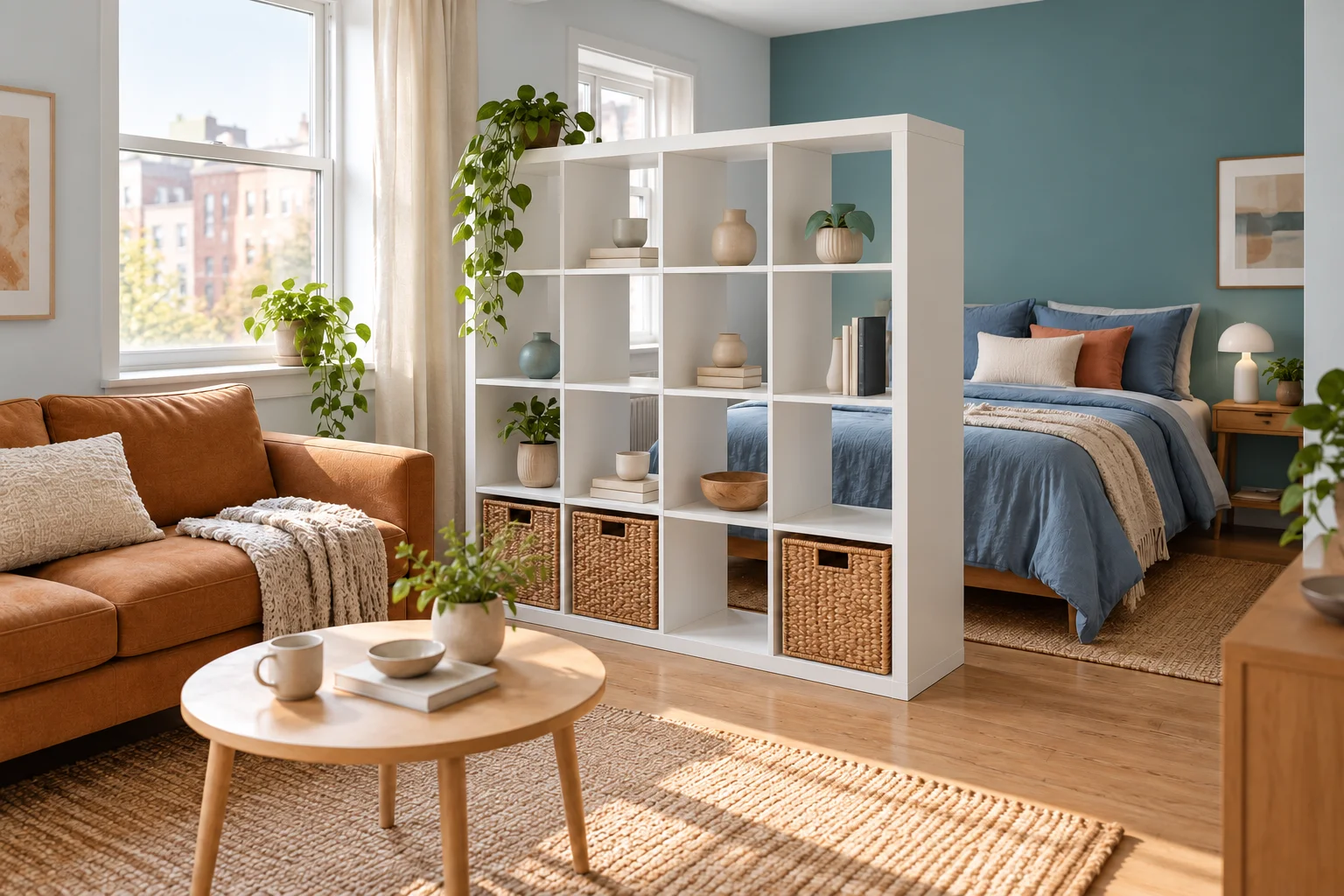
One room can do several jobs, but it feels more comfortable when each activity has its own place. A curtain can give your bed a little privacy, an open shelf can separate your desk from the sofa, and a folding screen can turn an overlooked corner into a cozy retreat.
These IKEA room divider hacks and ideas combine practical storage, soft fabric, natural textures, and flexible layouts. Some need only thoughtful furniture placement, while others involve a small DIY project or a carefully planned installation.
Explore 12 ways to divide your space, plus advice on choosing materials, coordinating colors, and keeping your layout comfortable. Whether you are decorating a studio apartment, shared bedroom, or open living area, start with the solution that supports your everyday routine.
Affiliate note: This article may contain affiliate links. If you buy through these links, we may earn a small commission at no extra cost to you.
Related Ideas for a Comfortable, Well-Planned Home
- 14 Zen Home Ideas to Make It Feel Calm for simple storage and inviting natural textures.
- 12 Ideas to Create a Zen Space at Home for styling a quiet corner behind your divider.
- 15 Calming Zen Bedroom Decor Ideas for finishing a peaceful sleeping area.
Quick List: 10 IKEA Room Divider Ideas
- Make an IVAR and cane folding screen.
- Separate a living room office with KALLAX.
- Use a clothes rail between bedroom zones.
- Create a private sleeping area with flowing curtains.
- Conceal a desk or dressing corner with a curtain track.
- Use a PLATSA-style bed and wardrobe divider.
- Frame a reading nook with a leafy clothes rack.
- Create a cabinet divider with a fold-down dining table.
- Define a children’s study area with ELVARLI shelving.
- Arrange white KALLAX units as a storage boundary.
How to Choose an IKEA Room Divider That Fits Your Space
Begin by deciding what you want the divider to accomplish. Hiding a bed requires a different approach from organizing toys or marking the edge of a home office. Curtains and fabric screens offer visual privacy, while open shelving keeps the room connected and provides useful storage.
Use painter’s tape to mark the proposed divider footprint on the floor. Then test the room as you normally use it: pull out the desk chair, open drawers, carry a laundry basket through, and walk between the door and the window. Include the space needed for curtain stacking, screen folds, and cabinet doors.
- Map the two areas: Identify where each activity begins and ends.
- Protect daylight: Avoid leaving one side without useful natural or artificial light.
- Choose the right level of privacy: Open cubes suggest a boundary; opaque fabric conceals more.
- Check installation requirements: Confirm anchoring, ceiling suitability, and rental permissions before buying.
- Plan both sides: A divider should look intentional from every regularly used viewpoint.
- Price the complete project: Include hardware, fabric, baskets, finishes, and installation supplies.
Simple room divider formula: A clear purpose + the right divider + comfortable circulation + coordinated finishes + secure installation.
Product ranges and configurations vary by country and change over time. Check the current US range and assembly instructions before planning your project. IKEA’s room divider collection is a useful starting point; older PLATSA and STUVA examples may require secondhand pieces or an adapted design.
Which Divider Works Best for Your Room?
| Style or Area | Best Pieces to Use | Why It Works |
|---|---|---|
| Living room office | KALLAX with selected storage inserts | Defines the desk area and contains work supplies. |
| Studio sleeping area | Opaque curtains on a suitable track | Creates an adjustable visual boundary. |
| Natural or boho interior | IVAR side frames with cane webbing | Adds texture while allowing some light through. |
| Occasional dressing corner | Canvas folding screen | Provides coverage and folds away when needed. |
| Children’s study zone | Properly installed ELVARLI shelving and light storage bins | Separates activities while keeping supplies accessible. |
| Compact dining nook | Anchored cabinet divider and supported folding tabletop | Combines a room boundary with occasional dining space. |
10 IKEA Room Divider Hacks and Ideas to Try
1Make an IVAR Folding Screen With Woven Cane

Image credits – IKEA
Pair IKEA IVAR wooden side frames with cane webbing to create a textured screen for a living room, bedroom, or dressing corner. The open weave softens the view without forming a solid wall, making it a lovely choice beside light wood furniture and simple cotton curtains.
Measure each frame opening before ordering the cane, allowing enough material for attachment and a neat finish. Follow the cane supplier’s preparation instructions, cover exposed attachment edges with suitable trim, and choose hinges compatible with the frame. Test the finished screen in a stable folded position before placing it in the room.
Styling tip: Repeat the woven texture in one basket or lampshade. A few connected details will make the screen feel like part of the room.
2Give Your Living Room Office a KALLAX Boundary

Image credits – IKEA
A KALLAX shelving unit can mark the edge of a home office while providing storage for notebooks, cables, and paperwork. Arrange it so the desk feels tucked into its own area, and leave several cubes open to maintain a connection with the rest of the living room.
Put frequently used office supplies on the desk-facing side and keep the living room view simple with coordinated boxes and a few books. Check the exact unit’s permitted orientation and anchoring instructions before positioning it perpendicular to a wall. A divider layout still needs the required secure fixing.
Amazon find: Fabric Cube Storage Bins
Matching bins help contain small office supplies. Compare their exterior dimensions with your shelf openings, including clearance around handles.
3Separate Bedroom Activities With a Slim Clothes Rail
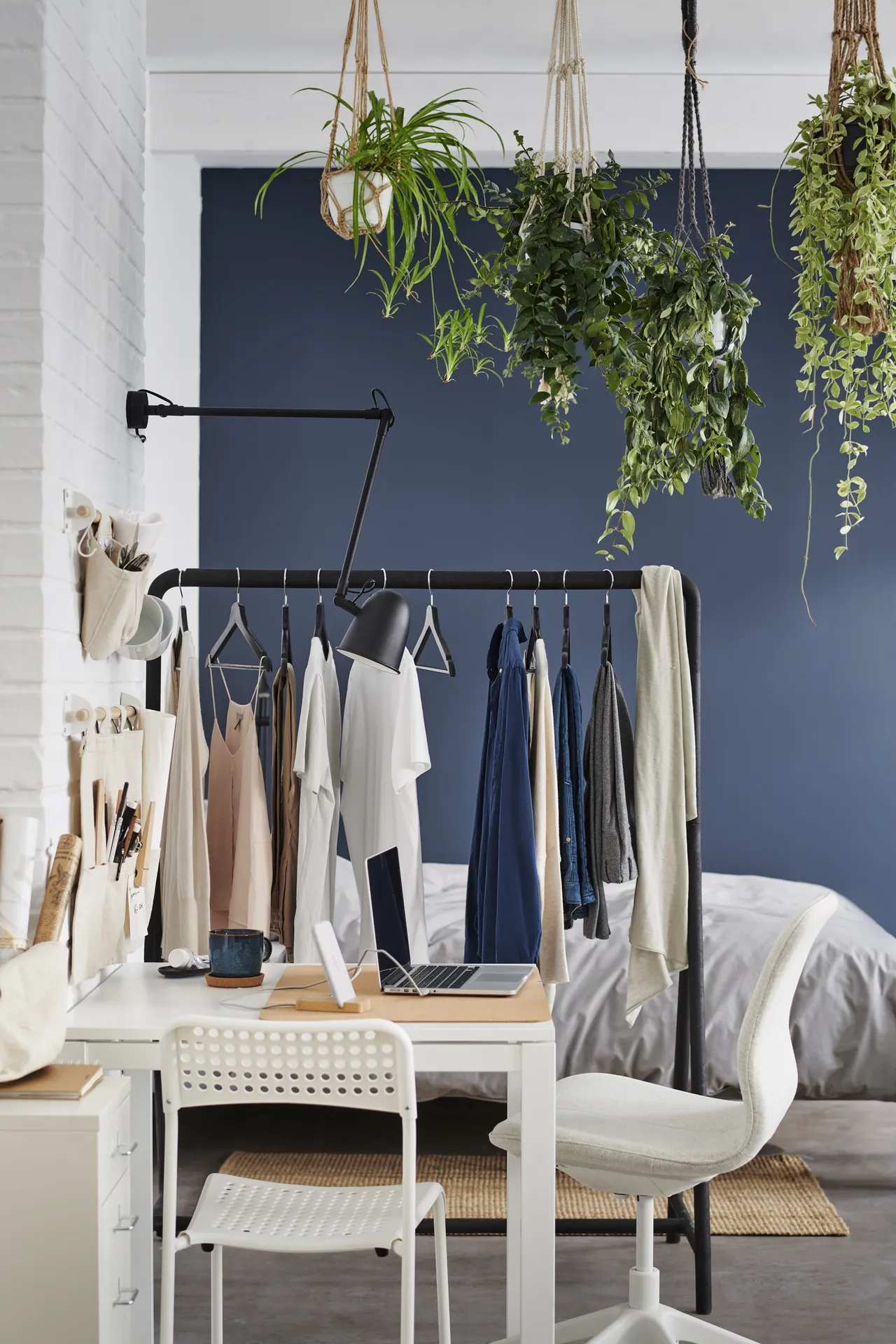
Image credits – IKEA
A slim clothes rail can create a gentle boundary between a bed and a small desk without adding a bulky cabinet. Its usefulness comes from doing two jobs: holding your everyday clothing and helping the room read as separate sleeping and working areas.
Keep the display edited with matching hangers and a manageable selection of clothes. Position the rail where garments will not brush the desk chair or spill into the walkway. Respect its load rating, and choose a finish that connects with another room detail, such as a black lamp or white bedside table.
Small-space tip: Measure the rail with clothing hanging on it. Sleeves and wider garments occupy more room than the empty frame suggests.
4Wrap a Sleeping Area in Soft, Flowing Curtains
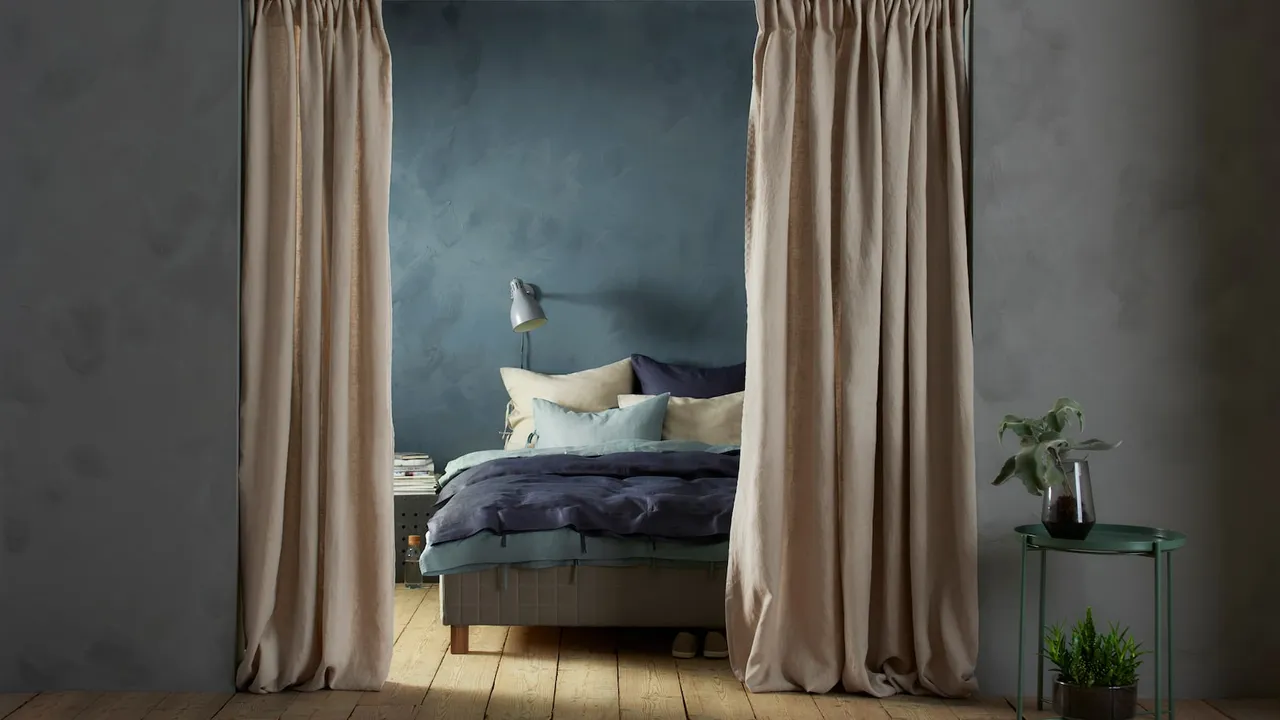
Image credits – IKEA
Curtains can give a bed its own visual setting within a studio apartment or shared room. Choose an opaque fabric when concealing the sleeping area matters, or a lighter material when you mainly want a soft outline. Cream, oatmeal, and muted blue all pair easily with everyday bedding.
Plan where the panels will gather when open so they do not cover a window or obstruct the bedside route. Use enough fabric for attractive folds, with a hem that sits just above the floor. Check the view with the room lights on after dark, since thin fabric may reveal more than expected.
Amazon find: Opaque Curtain Panels
Opaque panels are useful for a more concealed bed area. Check panel width, finished length, fabric care, and compatibility with your chosen hanging system.
5Close Off a Desk or Dressing Corner With a Curtain Track
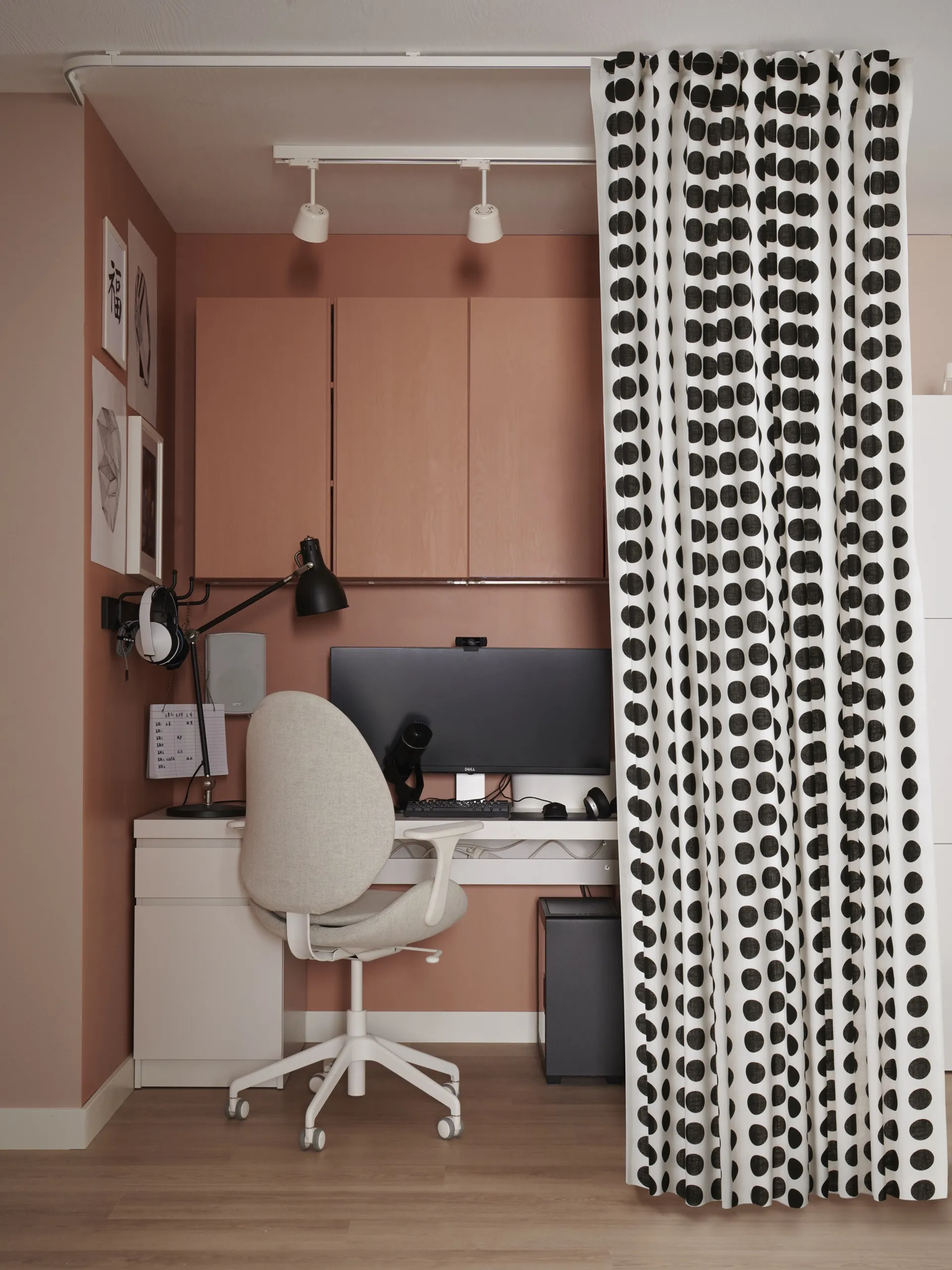
Image credits – IKEA
A curtain across a shallow work area lets you put the office out of sight when the day ends. The same approach works for a dressing corner with a mirror and clothing storage. An IKEA VIDGA-style track arrangement can provide a tidy overhead boundary when the compatible components and mounting layout suit the space.
Place the curtain line far enough from the furniture for fabric to move freely without catching on handles or equipment. Keep cords organized and maintain ventilation around electronics. For a quiet look, choose panels close to the wall color and confirm the ceiling or wall can support the installation.
End-of-day tip: Clear your chair, switch off unused equipment, and close the curtain. A short reset makes the concealed area easier to use the next morning.
6Create a Bed-and-Wardrobe Divider With a PLATSA-Style Layout

Image credits – IKEA
A bed arrangement with storage at the head can separate a sleeping zone from the rest of an apartment. Older IKEA PLATSA bed combinations illustrate this concept: the bedroom side has a headboard-like boundary, while the opposite side provides practical wardrobe or cabinet access.
If you find a suitable secondhand combination, confirm the model, complete hardware, mattress requirements, and assembly instructions before buying. To adapt the idea, use a properly supported bed beside storage designed and secured for the proposed placement. Check the cabinet backs, door clearance, and access to both sides of the bed.
Planning tip: Sketch the layout with wardrobe doors fully open. Do not use ordinary storage cabinets as bed supports unless the manufacturer specifically approves that use.
7Frame a Reading Nook With a Leafy Clothes Rack
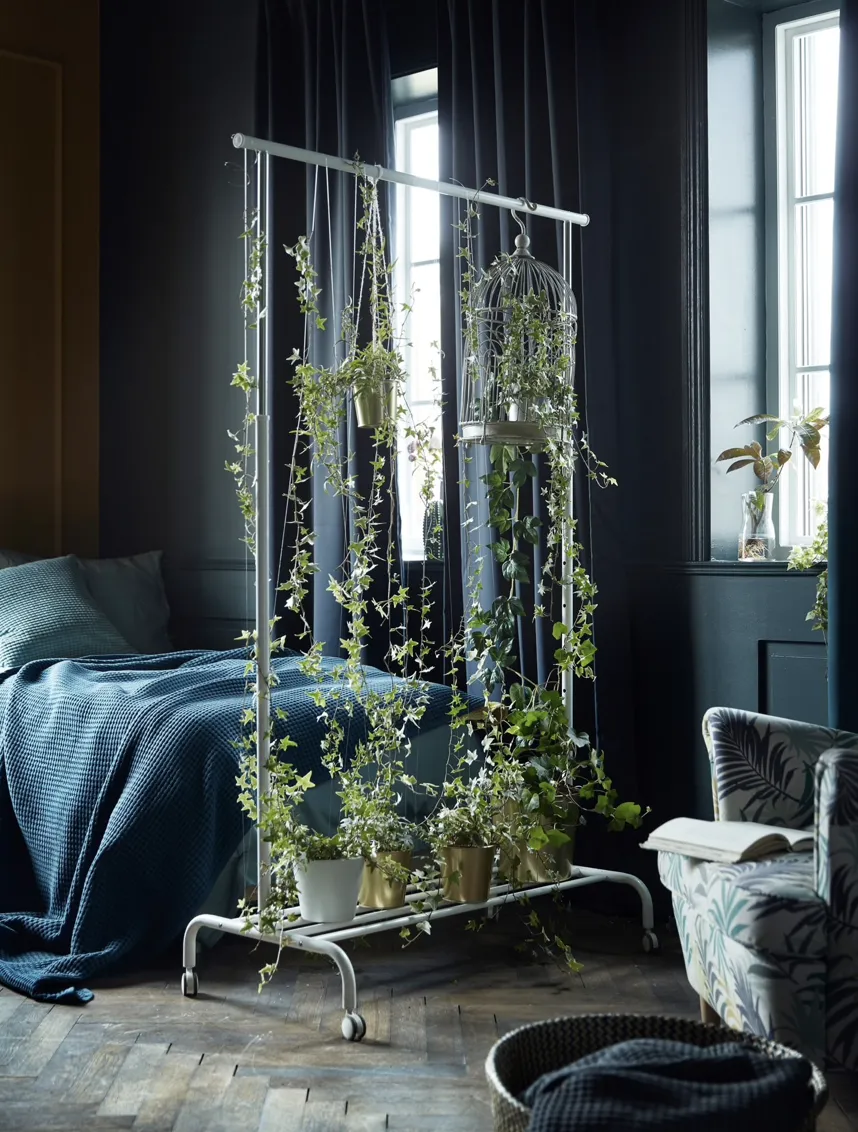
Image credits – IKEA
A clothes rack decorated with greenery can define a reading corner while keeping the room bright. Place a comfortable chair and small table behind the leafy boundary, then use a few trailing stems to soften the frame. The effect works especially well with natural wood and simple textiles.
Keep heavier planters on the floor in watertight trays. Attach only lightweight greenery to a rack that is suitable for the added load, and avoid pulling stems tightly around the frame. Choose plants for the available light and household needs; lightweight faux vines offer a lower-maintenance option.
Amazon find: Lightweight Faux Trailing Greenery
A few removable faux stems can soften a suitable rack without watering or soil. Check their weight and keep attachments clear of wheels and moving parts.
8Combine a Cabinet Divider With a Fold-Down Dining Table
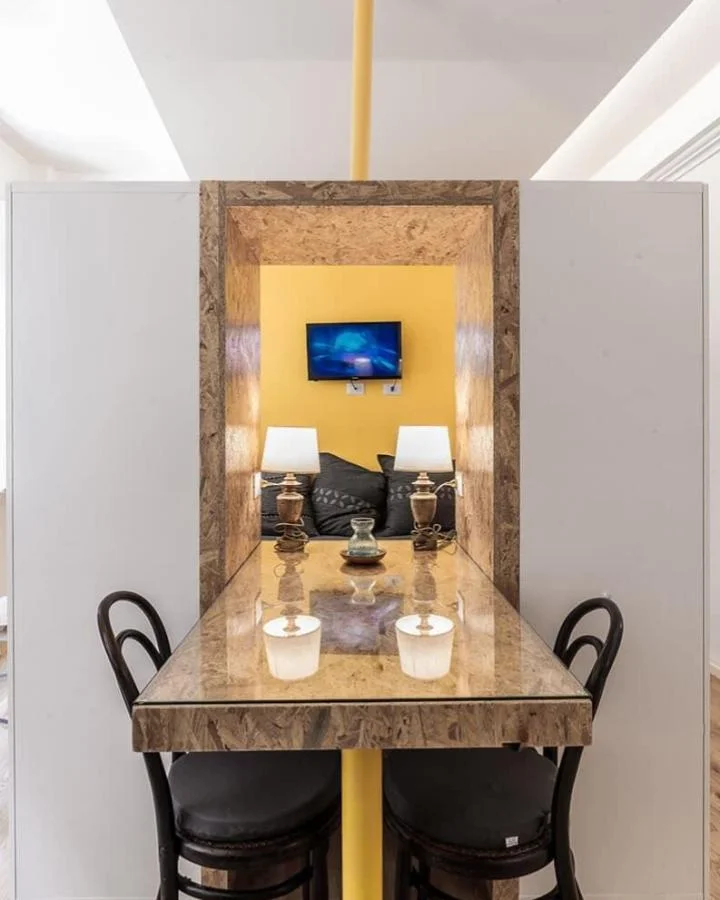
Image credits – Ikeahackers
A cabinet boundary with a folding tabletop can turn part of an open room into a compact dining nook. Older IKEA STUVA-based projects show how this arrangement can provide storage and a place to eat within the same footprint. A warm wood finish and washable cushions help the nook feel welcoming.
This project needs careful structural planning. Use a securely anchored cabinet arrangement and table supports rated for the intended load, rather than fastening a tabletop to a thin cabinet back. Account for the table when open, chair movement, and the folded position. Use seating designed to support people.
Budget tip: Add the cost of supports, fixings, finishing, and skilled help before committing. A separate folding table beside a storage divider may be simpler and more economical.
9Define a Children’s Study Zone With ELVARLI Shelving

An open ELVARLI shelving arrangement can help distinguish a children’s desk area from sleeping or play space. Keep the study side organized with books, drawing supplies, and lightweight storage bins, while leaving enough openings for light to pass through.
Choose the appropriate configuration and follow its specific fixing instructions; different support types have different installation requirements. Store everyday supplies at a comfortable reach and avoid heavy objects overhead. Colorful bins can make the area cheerful without filling every shelf with decoration.
Amazon find: Lightweight Storage Bins With Handles
Easy-to-lift bins help organize stationery and small toys. Check shelf fit, age suitability, and the weight of each bin once filled.
10Use White KALLAX Units to Create a Coordinated Storage Divider
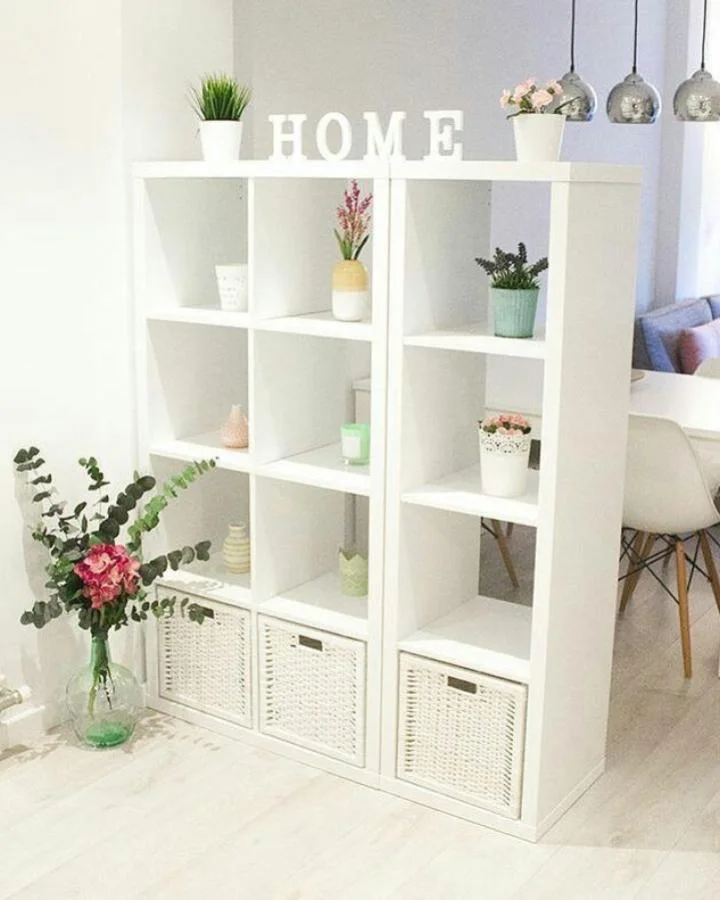
White KALLAX units arranged beside one another can establish a wider boundary between living, dining, or sleeping areas. The repeated cube pattern gives the layout a tidy rhythm, while woven baskets add warmth and conceal everyday clutter.
Choose units that fit the room without crowding its main route, and secure each according to its instructions. Keep heavier belongings low and leave selected cubes open. Style both sides with the same restrained palette, avoiding improvised stacking, risers, or a heavy connecting top without an approved structural plan.
Styling tip: Start with baskets in the lower cubes, books in a few middle openings, and plenty of visible empty space. Use flameless candles if you want a candle-like accent.
Shopping Checklist for Your Room Divider Project
Choose your main IKEA furniture or track system first, then shop for compatible finishing materials. Buy samples where possible and measure every opening before ordering accessories.
| Item | Best For | Amazon Search |
|---|---|---|
| Cane webbing | Woven IVAR screen panels | Shop on Amazon |
| Canvas fabric | Opaque folding screens | Shop on Amazon |
| Cube storage bins | Concealing shelf clutter | Shop on Amazon |
| Curtain panels | Bedroom and dressing privacy | Shop on Amazon |
| Sheer curtain panels | Layered fabric dividers | Shop on Amazon |
| Woven storage baskets | Adding texture to open shelving | Shop on Amazon |
Frequently Asked Questions
Can you use IKEA KALLAX as a room divider?
Yes, KALLAX can create a storage boundary between areas. Choose a suitable size and orientation, keep some cubes open if you want light to pass through, and follow the exact unit’s anchoring instructions. Check how it looks and functions from both sides.
What is the most budget-friendly IKEA room divider idea?
Repurposing a piece you already own is often the most economical approach. A suitable clothes rail or shelving unit may need only a layout change and a few organizers. Compare the total cost of curtain projects, including tracks, brackets, panels, and installation.
Which room divider is best for a studio apartment?
Choose curtains when adjustable visual privacy is the priority, or open shelving when you need storage and a lighter boundary. Map the bed, desk, seating, and walking routes first. The best option is the one that fits those needs without blocking daylight or access.
How can renters divide a room without drilling?
Consider a purpose-designed freestanding folding screen or a suitable clothes rack used within its instructions. Do not omit required furniture anchoring or assume adhesive hooks can support a curtain installation. Confirm rental permissions if your preferred solution needs permanent fixings.
Are cane screens or fabric screens better for privacy?
Opaque fabric generally conceals more, while woven cane provides a lighter visual boundary with gaps. Privacy depends on the material, viewing angle, and lighting. Test a sample with light behind it before choosing the final panels.
Final Thoughts
A thoughtful room divider can make one space feel more organized and comfortable. KALLAX adds storage, curtains offer flexible privacy, and IVAR-based screens introduce texture without requiring a full renovation.
Start with the area that needs the most help, measure the layout, and choose a divider that suits your daily routine. Secure installation and easy movement matter just as much as the finished look.
Once the boundary is in place, finish it with a few coordinated details. Simple fabric, useful baskets, or a touch of greenery can help your new zones feel welcoming and ready to enjoy.
1 thought on “10 Ikea Room Divider Hack & Ideas”