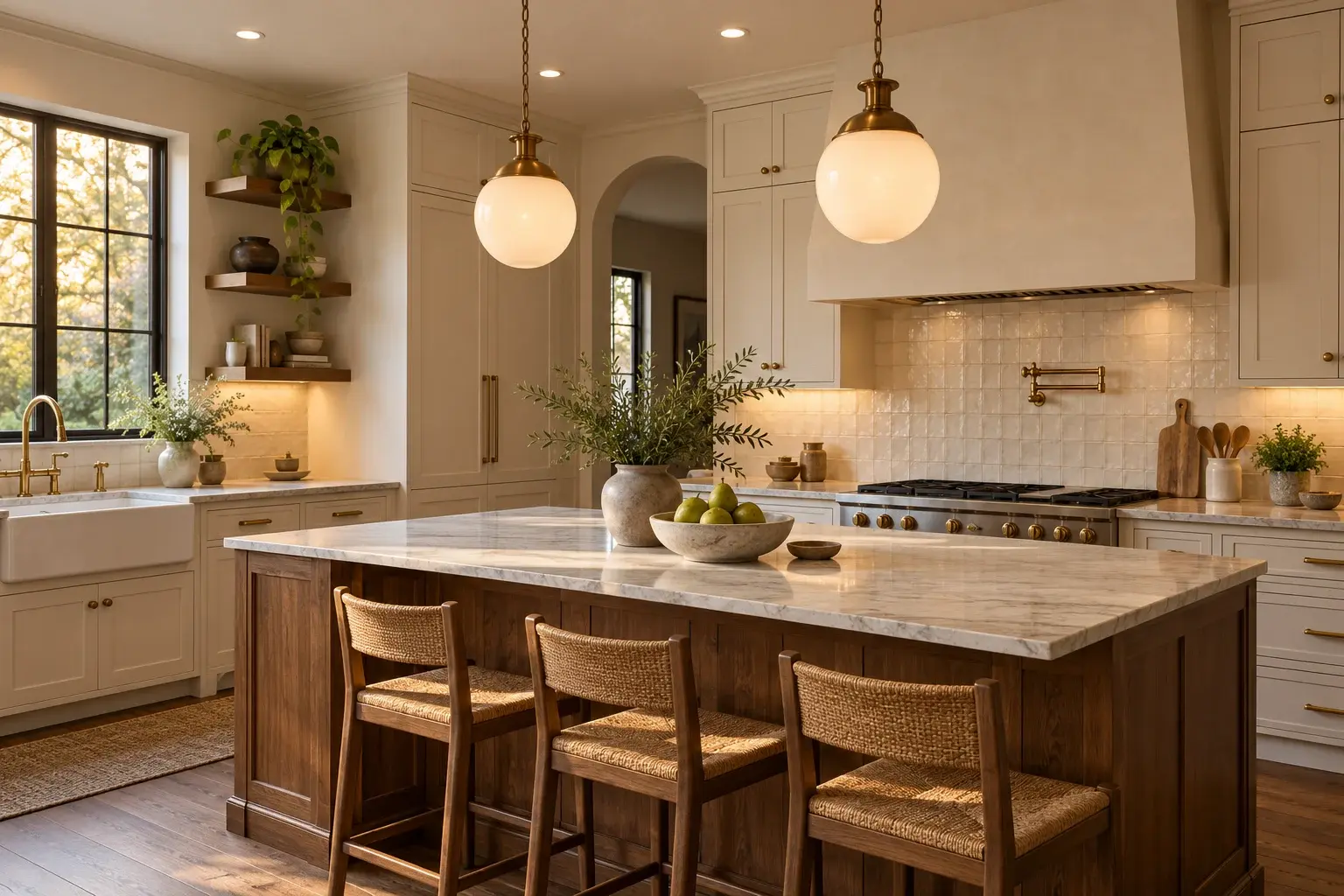
A beautiful kitchen needs lighting that works as well as it looks. You want a clear view while chopping vegetables, comfortable light over the breakfast counter, and a softer glow when the cooking is finished.
The right update might be a pair of statement pendants, discreet under-cabinet lights, or a small lamp beside your coffee station. You do not always need a full renovation to make the space feel more welcoming.
These kitchen lighting ideas cover practical placement, fixture styles, small-space solutions, and budget-friendly upgrades so you can plan a room that feels comfortable from morning coffee to evening cleanup.
Quick List: Kitchen Lighting Ideas to Try
- Build a layered lighting plan.
- Add dimmers for different moments.
- Balance a large island with generously sized pendants.
- Place a small pendant above the sink.
- Give spotlights a more considered finish.
- Brighten a work corner with a plug-in task light.
- Add a portable lamp to a dry countertop.
- Choose ceiling lights that spread light evenly.
- Illuminate preparation areas with under-cabinet lights.
- Use focused pendants to define an island or breakfast bar.
- Hide LED strips along shelves and cabinet details.
- Add a decorative fixture over an eating area.
- Keep a small kitchen open with low-profile lighting.
How to Plan Kitchen Lighting That Looks Good and Works Hard
Walk through your kitchen after dark with the existing lights on. Stand at the cutting board, sink, stove, and coffee station. Notice where your body casts a shadow and where a bare bulb or reflected light feels uncomfortable.
Plan three useful layers: general lighting for moving around, task lighting for work surfaces, and accent lighting for atmosphere. One fixture may contribute to more than one layer, but a decorative pendant should not have to illuminate every corner by itself.
Then think about control. Separate switches for ceiling lights, work lights, and decorative fixtures let you use only what you need. Before buying, compare fixture dimensions, light output, installation requirements, and the appearance of the light beside your cabinets.
Even room lighting + direct light on work surfaces + one softer decorative layer + convenient controls.
For example: ceiling fixtures, under-cabinet bars, an island pendant, and separate switches for each group.
Which Lighting Works Best in Each Kitchen Area?
| Style or Area | Best Pieces to Use | Why It Works |
|---|---|---|
| Main preparation counter | Under-cabinet light bars with diffusers | Places light directly on the working surface. |
| Large island | Well-proportioned pendants with controlled glare | Provides a focal point and useful local light. |
| Coffee corner | Compact task light or portable lamp | Makes a small station feel inviting and easier to use. |
| Breakfast table | Dimmable pendant or compact chandelier | Creates a comfortable gathering spot. |
| Small kitchen | Flush ceiling fixture plus focused work lights | Preserves headroom while addressing dark counters. |
13 Kitchen Lighting Ideas to Elevate Your Space
1Build a Layered Lighting Plan

Start with lighting that serves different parts of the room. Combine general ceiling light with focused illumination at the counters, then add a pendant, wall light, or small lamp for a softer finishing layer.
You can build the plan gradually. If your ceiling fixture already provides comfortable room light, address the darkest work surface next. This helps each purchase solve a real problem rather than simply adding another fixture.
2Add Dimmers for Cooking, Dining, and Unwinding
Dimmers let the same kitchen shift between practical work and a relaxed evening. Keep work areas clearly illuminated while preparing dinner, then lower the decorative lighting when everyone sits down.
Check compatibility across the dimmer, LED bulb or fixture, and any driver before buying. If you are updating wall controls, have a qualified electrician confirm the right combination rather than choosing by appearance alone.
Amazon find: Dimmable LED Bulbs
Compare bulb bases, brightness, color appearance, and dimmer compatibility. A matching bulb shape can also make a visible fixture look more intentional.
3Balance a Large Island with Generous Pendant Shades

A long island or tall ceiling can make tiny pendants look lost. A pair of larger shades may give the space better visual balance, especially when their shape connects with the room’s cabinetry and architecture.
Before ordering, make paper silhouettes of the proposed shades and hold them in position. Check the view from doorways and nearby seating. Choose the number and size around your island rather than assuming every kitchen needs three pendants.
4Give the Sink Its Own Small Pendant
A compact pendant can bring character to a sink wall while adding useful local light. Try a simple ceramic shade, a small metal dome, or diffused glass that suits the rest of the kitchen.
Check that the fixture will not interfere with the faucet, an opening window, or your sightline. Ask the installer to confirm suitable placement and any required location rating, especially where splashing or moisture could reach it.
Amazon find: Small Kitchen Pendant Lights
A modest shade can add personality without crowding a window. Compare actual dimensions, hanging adjustments, and installation specifications.
5Make Spotlights Feel Like Part of the Design
Spotlights can look more considered when their finish relates to the kitchen. Manufacturer-supplied trim in a ceiling-matching color can feel discreet, while a coordinated metal finish can connect with cabinet hardware.
Pay attention to glare and direction as well as appearance. Adjustable fittings can be useful for specific areas, but a ceiling covered in bright spots may still leave counters shadowed. Do not paint fittings or cover ventilation openings unless the manufacturer expressly permits it.
6Brighten a Work Corner with a Plug-In Task Light
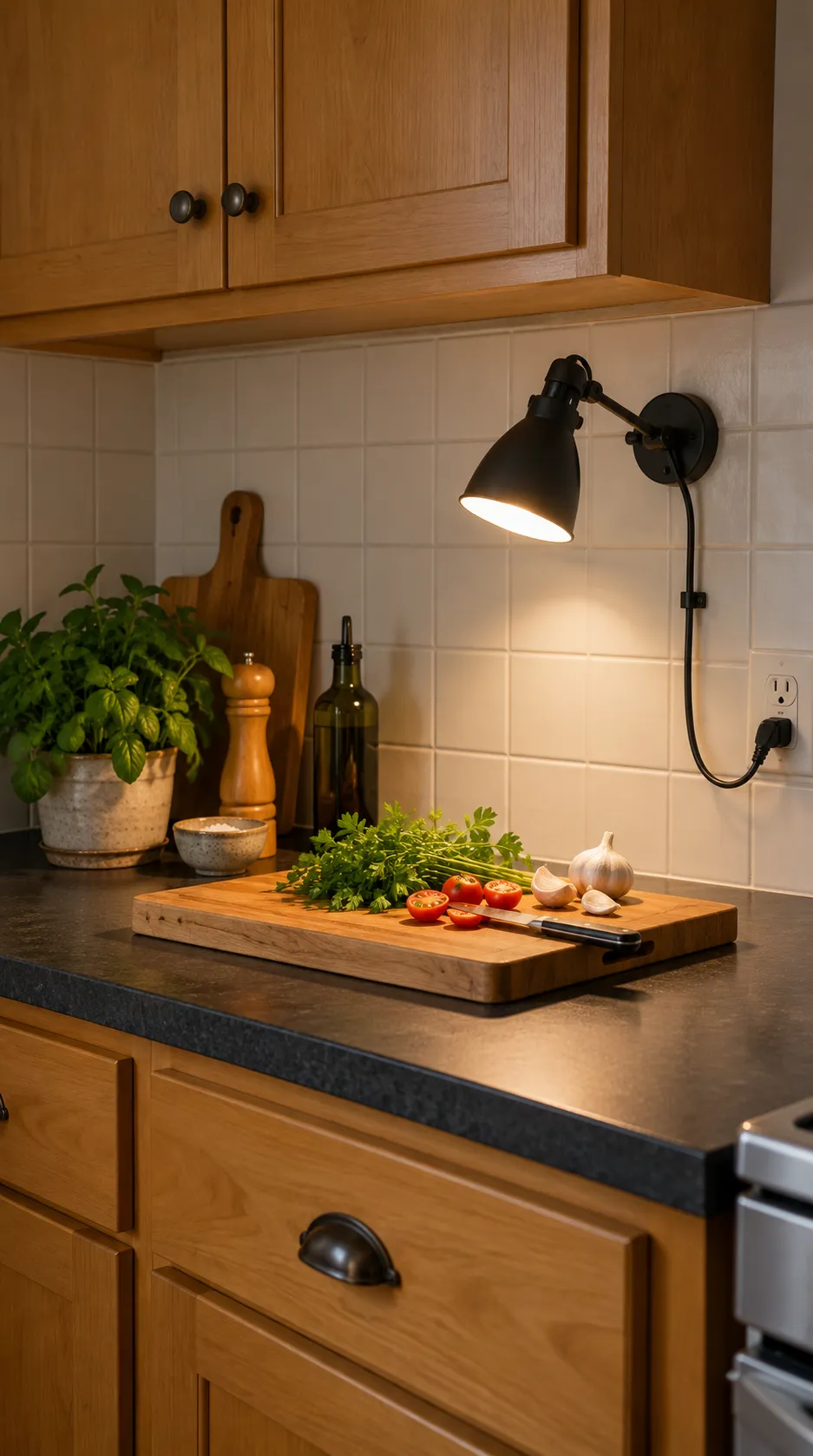
A plug-in wall light or adjustable task lamp can help at a dry coffee station, recipe shelf, or kitchen desk. It is a useful option when the area needs focused light and an appropriate outlet is already nearby.
Choose a wipeable fixture and plan the cord route before mounting anything. Keep cords away from water, heat, appliance doors, and preparation areas. Renters should also check permission before adding wall fixings.
7Add a Portable Lamp to a Dry Countertop
A small portable lamp brings a soft pool of light to a kitchen corner. Place one beside a cookbook display or on a sideboard to make the room feel welcoming after the main cooking lights are switched off.
Choose a stable base and a shade that is easy to clean. Treat this as atmosphere lighting rather than the main light for chopping or cooking, and keep the lamp outside splash and heat zones.
Amazon find: Rechargeable Table Lamps
Look for a compact, stable lamp with adjustable brightness. Check charging instructions and whether its runtime suits your evening routine.
8Choose Ceiling Lighting for Even Room Coverage
A ceiling fixture provides the foundation for moving comfortably around the kitchen. A diffused flush mount can suit a compact room, while a larger layout may need several carefully positioned ceiling lights.
Plan coverage around the shape of the room and cabinet runs. Avoid assuming that a fixture in the middle will reach every corner. Check how the selected light distributes illumination, then add task lighting where cabinets or your body block it.
9Light the Counters with Under-Cabinet Fixtures
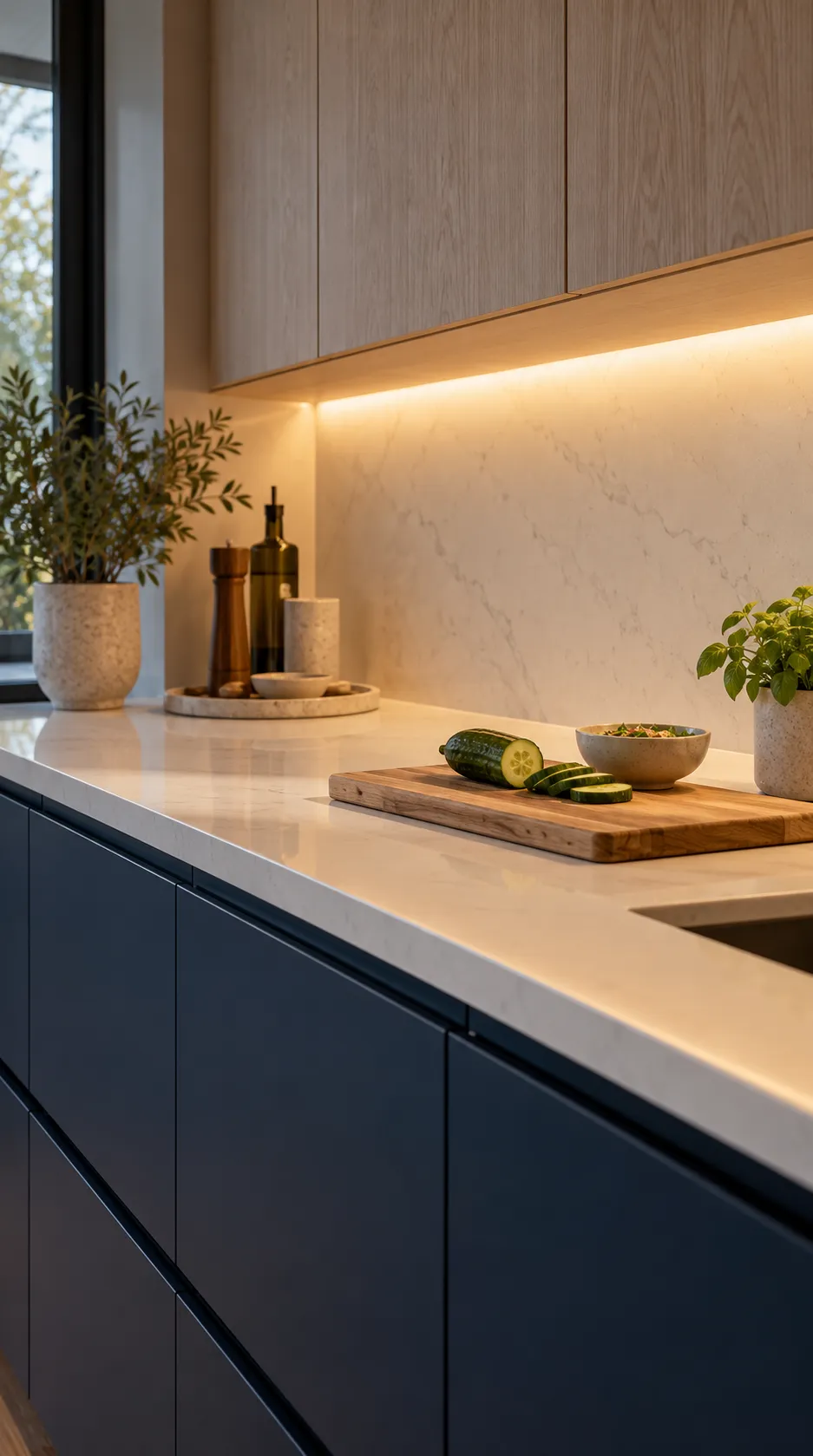
Under-cabinet lights put illumination close to the surface where you chop, mix, and measure. Slim light bars with diffusers can create a clean line beneath upper cabinets without adding much visible detail.
Test the position before permanent installation. Mounting nearer the cabinet’s front edge can help light the work surface, but check reflections on glossy countertops and conceal the fixture from seated views where possible.
Amazon find: Under-Cabinet LED Light Bars
Compare the power source, light output, bar lengths, and switching options. Check whether connectors and mounting hardware are included.
10Define an Island or Breakfast Bar with Focused Pendants
Use pendants to mark the island as a place for breakfast, homework, or casual conversation. Downward-facing shades can focus light on the surface, while diffused designs offer a softer appearance from nearby seating.
Match the fixture’s light distribution to how you use the island. Check seated eye levels and views across the room before deciding on hanging height. A decorative shade may still need support from ceiling or task lighting for detailed preparation.
11Hide LED Strips Along Shelves and Cabinet Details
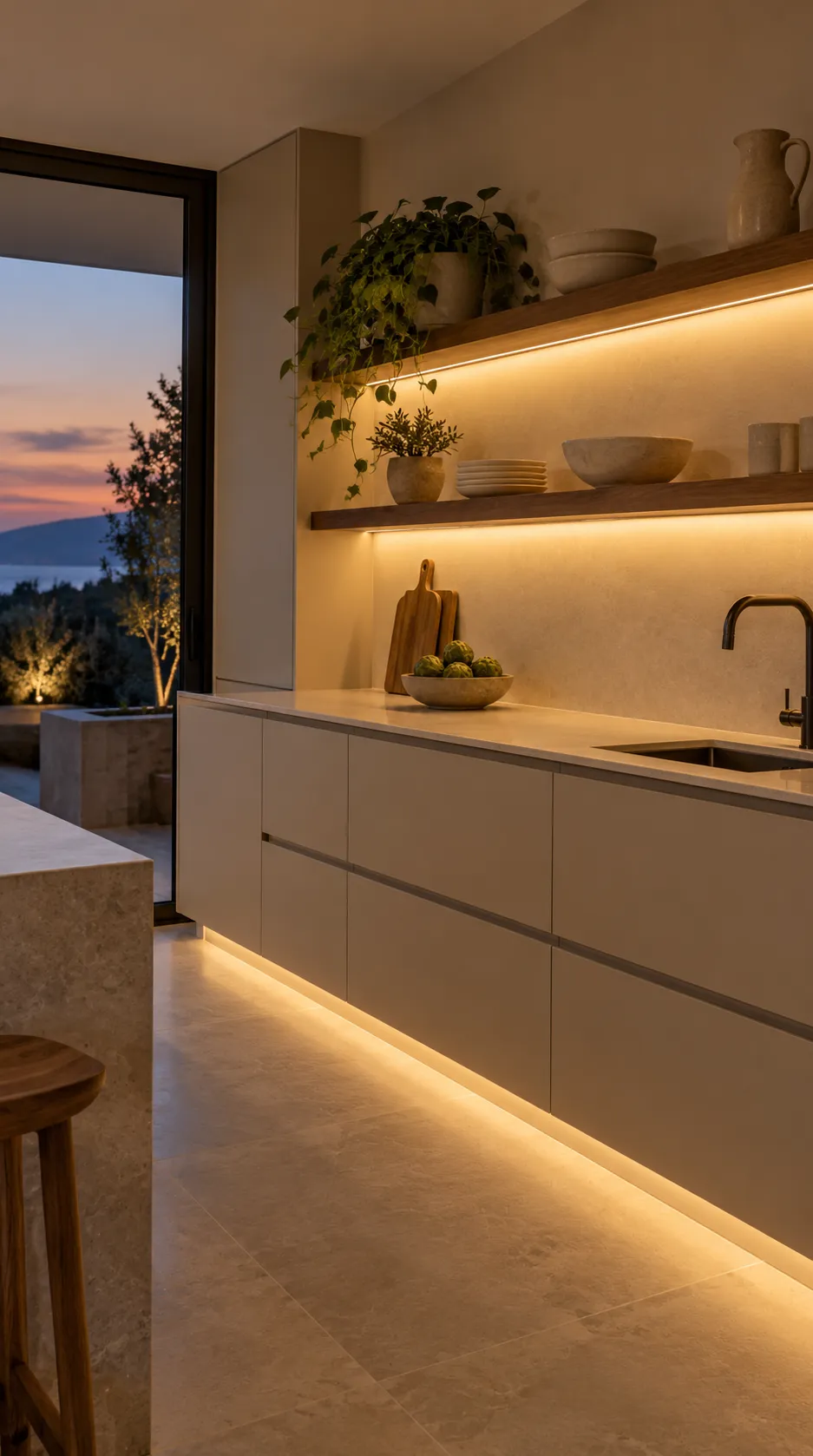
Concealed LED strips can highlight an open shelf, illuminate a glass-front cabinet, or add a subtle glow beneath a cabinet base. Pick one or two features so the effect feels intentional.
Use a system with the appropriate channels, diffusers, and power supply. Plan access to the driver for future maintenance. Test the glow from different angles to avoid visible dots and distracting reflections.
Amazon find: LED Strip Light Channels and Diffusers
Channels can help conceal compatible strips and soften the visible light points. Check strip width, channel depth, and installation instructions.
12Add a Decorative Fixture Over the Eating Area
A compact chandelier or sculptural pendant can give an eat-in kitchen its own gathering spot. Center it over the table’s planned position so the arrangement feels connected to the furniture below.
Choose a design that you can clean comfortably and that suits the room’s ceiling height. Put it on a separate control where practical, allowing the table to stay softly lit while the preparation area is brighter.
13Keep a Small Kitchen Open with Low-Profile Lighting
In a narrow kitchen or a room with a low ceiling, start with a flush fixture or another compact ceiling design. Add under-cabinet task lighting to address the counters without filling the space with hanging shades.
Use pale, softly reflective finishes where they suit your style, and watch for glare on glossy surfaces. A small kitchen can still have a decorative fixture, but choose one focal point and preserve clear headroom and cabinet access.
How to Choose Brightness and Light Color
Compare lumens for brightness. Wattage describes power use, so it does not reliably tell you how bright different LED products will look. Consider where the light falls, the fixture’s diffuser, and the surface being illuminated.
Use color temperature to guide the mood. A warm-white option around 2700K to 3000K is a useful starting point for a cozy kitchen. Try a sample beside your cabinets and counters before replacing every bulb.
Keep neighboring lights visually consistent. Closely related color temperatures usually create a calmer result than a mixture of strongly yellow and blue-white light. Check color-rendering information too, particularly where you prepare food or display colorful finishes.
Kitchen Lighting Shopping Checklist
Choose the item that solves your biggest lighting problem first. You may need brighter counters more than another decorative pendant.
| Item | Best For | Amazon Search |
|---|---|---|
| Under-cabinet light bars | Shadowed preparation counters | Shop on Amazon |
| Flush ceiling light | Low ceilings and compact rooms | Shop on Amazon |
| Island pendant | Defining a central gathering area | Shop on Amazon |
| Plug-in task light | A dry coffee or recipe corner | Shop on Amazon |
| Portable table lamp | Soft evening atmosphere | Shop on Amazon |
Frequently Asked Questions
What is the best lighting for a kitchen?
A combination of general, task, and accent lighting usually offers the most flexibility. Start with comfortable room lighting, illuminate work surfaces directly, and add decorative fixtures where they suit the layout.
How many pendant lights should go over an island?
The right number depends on the island size, shade dimensions, and light distribution. Two larger pendants may work better than three small ones. Test the arrangement and check the manufacturer’s installation guidance.
Can warm lighting work for food preparation?
Yes. Warm-white lighting can provide useful task illumination when the light output, placement, and color rendering suit the job. A warmer color appearance does not automatically mean a light is too dim.
How can I improve kitchen lighting without rewiring?
Consider compatible replacement bulbs, plug-in under-cabinet lights, or a portable lamp in a dry corner. Plan safe cord routes and remember that decorative battery lamps may not provide enough light for detailed preparation.
What lighting works best in a small kitchen?
A low-profile ceiling fixture paired with direct counter lighting is a useful starting point. Keep hanging fixtures proportional to the room, preserve headroom, and avoid adding more fittings before checking placement.
Final Thoughts
The best kitchen lighting ideas begin with how you use the room. Clear light at the counters, comfortable coverage throughout the space, and a softer decorative layer can make the kitchen feel more practical and welcoming.
Start with one area that needs attention. Whether you add under-cabinet lights, improve the island pendants, or introduce a small evening lamp, let each update serve a purpose and fit naturally into your home.