
Some rooms need a little architectural detail to feel finished. Wainscoting brings that detail to plain walls, adding texture, structure, and a beautiful backdrop for furniture you already own.
From soft neutral bathroom panels to dramatic dining room walls, this classic treatment works with many decorating styles. Simple beadboard feels relaxed, picture-frame molding looks refined, and board and batten can suit both traditional and modern homes.
These 15 elegant wainscoting ideas cover bedrooms, living rooms, entryways, hallways, bathrooms, and staircases. You will also find practical planning advice, color combinations, shopping suggestions, and ways to make the finished result feel thoughtful without overspending.
Affiliate note: This article may contain affiliate links. If you buy through these links, we may earn a small commission at no extra cost to you.
More Decorating Inspiration
Finish your newly detailed walls with these helpful ideas:
Quick List: 15 Wainscoting Ideas
- Warm neutral paneling in a powder room
- Classic white board and batten in a bedroom
- Colorful bedroom panels with pale upper walls
- A cheerful entryway with contrasting beadboard
- Hallway paneling with a rich upper-wall color
- Dramatic dining room walls with crisp white detailing
- A living room in coordinated shades of one color
- Light wainscoting beneath a shiplap ceiling
- Fresh neutral paneling along a staircase
- White dining room panels with delicate wallpaper
- Tall entryway beadboard with practical hooks
- High wainscoting that becomes a focal point
- Paneling that follows existing architectural features
- Slim vertical detailing for a streamlined bedroom
- A coordinated gallery wall above wainscoting
How to Plan Wainscoting That Looks Beautiful and Balanced
Wainscoting generally describes paneling or decorative wall treatment on the lower portion of a wall, usually finished with a top rail. It can include beadboard, raised panels, flat panels, or board and batten. Full-height paneling creates a related look, but it is usually described as wall paneling rather than traditional wainscoting.
Begin by measuring your walls, ceiling height, baseboards, door trim, and window sills. Mark outlets, switches, vents, and furniture positions before choosing a layout. The panels should look planned around these features rather than squeezed into the spaces left over.
A height near one-third of the wall is a useful starting point, not a required minimum. Taller designs can look lovely too. Use painter’s tape to test the top rail at several heights, then step back from the doorway to see which proportion suits the room.
Choose materials for the room’s conditions. Paint-grade MDF can work in dry interiors, while bathrooms need products specifically suitable for the expected moisture exposure. Decorative paneling does not replace waterproofing in a shower or another wet area.
Simple wainscoting formula:
A room-appropriate panel style + a carefully tested rail height + balanced spacing + a coordinated paint palette + uncluttered decor.
Which Wainscoting Style Fits Your Room?
| Style or Area | Best Pieces to Use | Why It Works |
|---|---|---|
| Relaxed entryway | Beadboard, simple cap rail, securely mounted hooks | Combines gentle texture with everyday function. |
| Traditional bedroom | White board and batten, clean baseboards, soft bedding | Creates a settled backdrop without competing with textiles. |
| Elegant dining room | Picture-frame molding, contrasting paint, a simple chandelier | Adds definition and a more formal atmosphere. |
| Small bathroom | Moisture-appropriate panels, sealed edges, washable finish | Adds character when materials suit the room’s conditions. |
| Modern living room | Flat panels, restrained trim, related paint shades | Provides architectural interest with a calm appearance. |
15 Elegant Wainscoting Ideas to Try
1Soften a Powder Room With Warm Neutral Panels
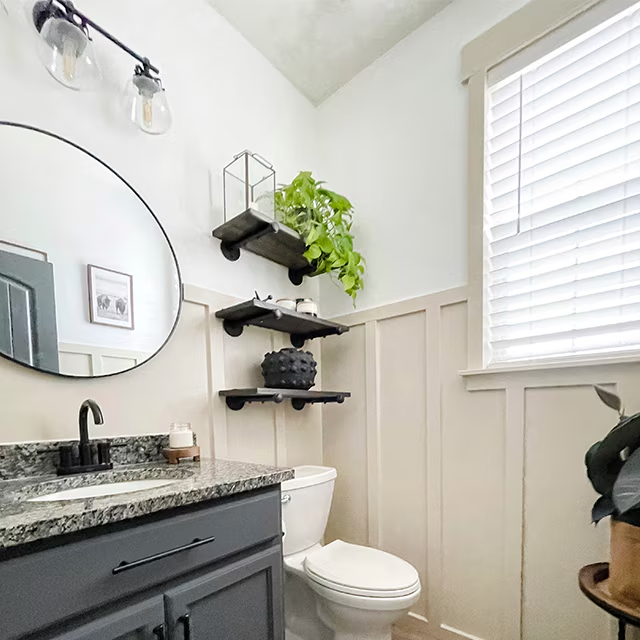
Image credits – greybirchdesigns
Give a powder room an inviting feel with board-and-batten wainscoting painted in warm ivory, linen, or light beige. Pair it with a pale upper wall and a darker vanity so the cabinetry becomes a natural focal point. A wood-framed mirror or brushed brass hardware adds warmth without requiring extra decoration.
Plan the panel spacing around the sink, toilet, and visible wall sections before installation. In a compact room, simple profiles are easier to keep visually balanced than several layers of ornate trim. Choose suitable materials and seal exposed edges according to the manufacturer’s instructions, especially near the basin.
2Refresh a Bedroom With Classic White Board and Batten

Image credits – 520farmhouse
White board-and-batten wainscoting brings quiet structure to a bedroom. Its repeating vertical lines look especially attractive with a dark upper wall, an iron bed, or a simple upholstered headboard. Choose a white that works with your existing trim and bedding rather than assuming every white will match.
Use the bed wall as the starting point for your layout. Center the visible pattern around the bed where possible, then adjust the neighboring sections thoughtfully. If your room already has paneling, cleaning, repairing gaps, and repainting may provide the refresh you need without replacing the entire treatment.
Amazon find: Paintable Flat Trim Boards
Simple trim boards can help create a board-and-batten layout. Check their actual dimensions, material, and thickness against your baseboards before ordering.
3Pair Colorful Bedroom Wainscoting With Pale Walls

Reverse the familiar white-paneling look by painting bedroom wainscoting in muted green, dusty blue, or another restful shade. Keep the upper walls soft white or a compatible pale neutral. The colored lower section gives the room personality while leaving plenty of visual breathing room above.
Repeat a small amount of that color in the bedding, curtains, or artwork. Warm wood furniture and simple lamps help the room feel comfortable rather than overly coordinated. Test paint samples beside your flooring and headboard, since those larger surfaces can change how a color appears.
4Create a Cheerful Entryway With Contrasting Beadboard

Make your entrance feel welcoming with light beadboard beneath a cheerful upper-wall color. A mellow yellow, softened teal, or warm blush can brighten the space without needing a large collection of accessories. The beadboard adds texture while a simple bench provides a practical place to sit.
Choose the palette with your front door, floor, and nearby rooms in mind. In a tiny entryway, use a shallow bench or wall-mounted storage so the new paneling does not become a backdrop for clutter. Keep the top rail clear of switches and consider how coats or bags will hang against the wall.
5Give a Hallway Depth With Rich Color Above Light Panels

A hallway can feel like a designed part of your home when pale wainscoting sits beneath olive green, smoky blue, or warm taupe walls. The contrast highlights the trim and gives this often-overlooked space a clear decorating direction. A narrow wood console and one framed print can finish the look.
Keep the rail height consistent along connected wall sections, and work out how the molding will end at each doorway. Choose shallow trim in a narrow passage and avoid furniture that crowds the walking route. Before committing to a dark upper color, view a large sample under the hallway’s actual lighting.
6Add Dining Room Drama With Dark Walls and White Detailing
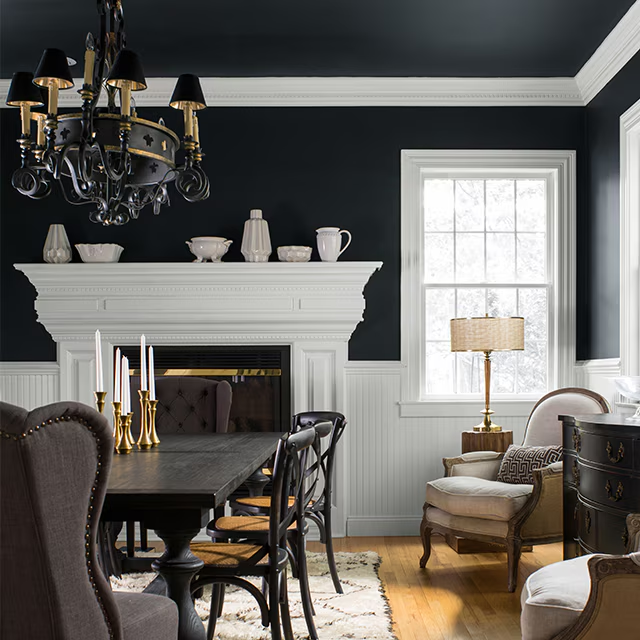
For an elegant dining room, combine charcoal, inky blue, or deep brown walls with crisp white wainscoting and trim. The contrast makes the architectural lines stand out and gives even a simple dining table a more polished setting. A dark ceiling can deepen the effect if you enjoy an enveloping atmosphere.
Balance the strong wall colors with warm wood, pale upholstery, or a lighter rug. Use warm lighting and check the paint in the evening, when the room is likely to be used for dinner. If you want a budget-friendly update, repainting existing panels can provide the visual change without a new carpentry project.
Amazon find: Paintable Picture-Frame Wall Molding
Decorative molding can create refined rectangular details on the lower wall. Plan the complete layout first and check whether a kit includes enough pieces for your measurements.
7Style a Living Room With Coordinated Shades of One Color

For a calm living room, paint the wainscoting and upper walls in different shades from the same color family. Pale gray above medium gray, or light greige above a slightly deeper greige, creates gentle definition. The panel lines remain visible without a strong color break around the room.
Add variety through textures such as linen curtains, a woven rug, and wood furniture. Compare the two paint shades together before choosing them, because mismatched undertones can make a subtle palette feel unsettled. Satin paneling with a flatter upper-wall finish can also give the architectural details a little extra presence.
8Combine Light Wainscoting With a Shiplap Ceiling
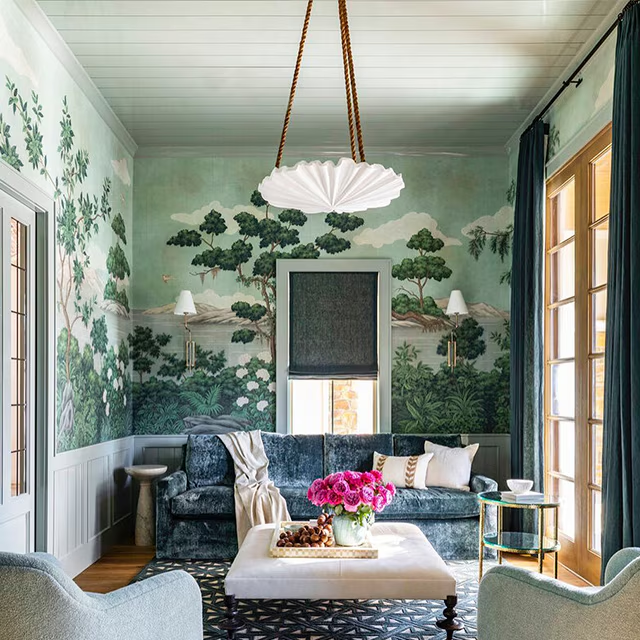
Image credits – graciestudio
Bring interest to both the lower walls and the ceiling by pairing pale wainscoting with light-painted shiplap overhead. This layered architectural approach looks lovely with scenic wallpaper, colorful upholstery, or a patterned rug. Keeping both wood treatments light helps the room feel connected.
Choose restrained molding so the ceiling boards and wall panels do not compete. Test the ceiling white against the wainscoting color, especially if one has a warmer undertone. Ceiling installation requires suitable fastening and planning around fixtures, so use professional help if the overhead work is beyond your experience.
9Brighten a Staircase With Fresh Neutral Wainscoting

Image credits – careyushome
Soft white or pale neutral paneling can give a staircase a clean, welcoming appearance. Pair it with a natural wood handrail and a restrained runner for a timeless combination. A satin or semi-gloss finish can highlight the molding, although shinier paint also makes surface imperfections easier to notice.
Draw the stair-wall layout before cutting anything. The rail generally follows the stair slope, while panel shapes need careful adjustment at landings and changes in direction. Keep trim clear of handrails and required passage space, and use a carpenter for complicated angles or work that needs difficult access.
10Keep a Dining Room Airy With White Panels and Delicate Wallpaper
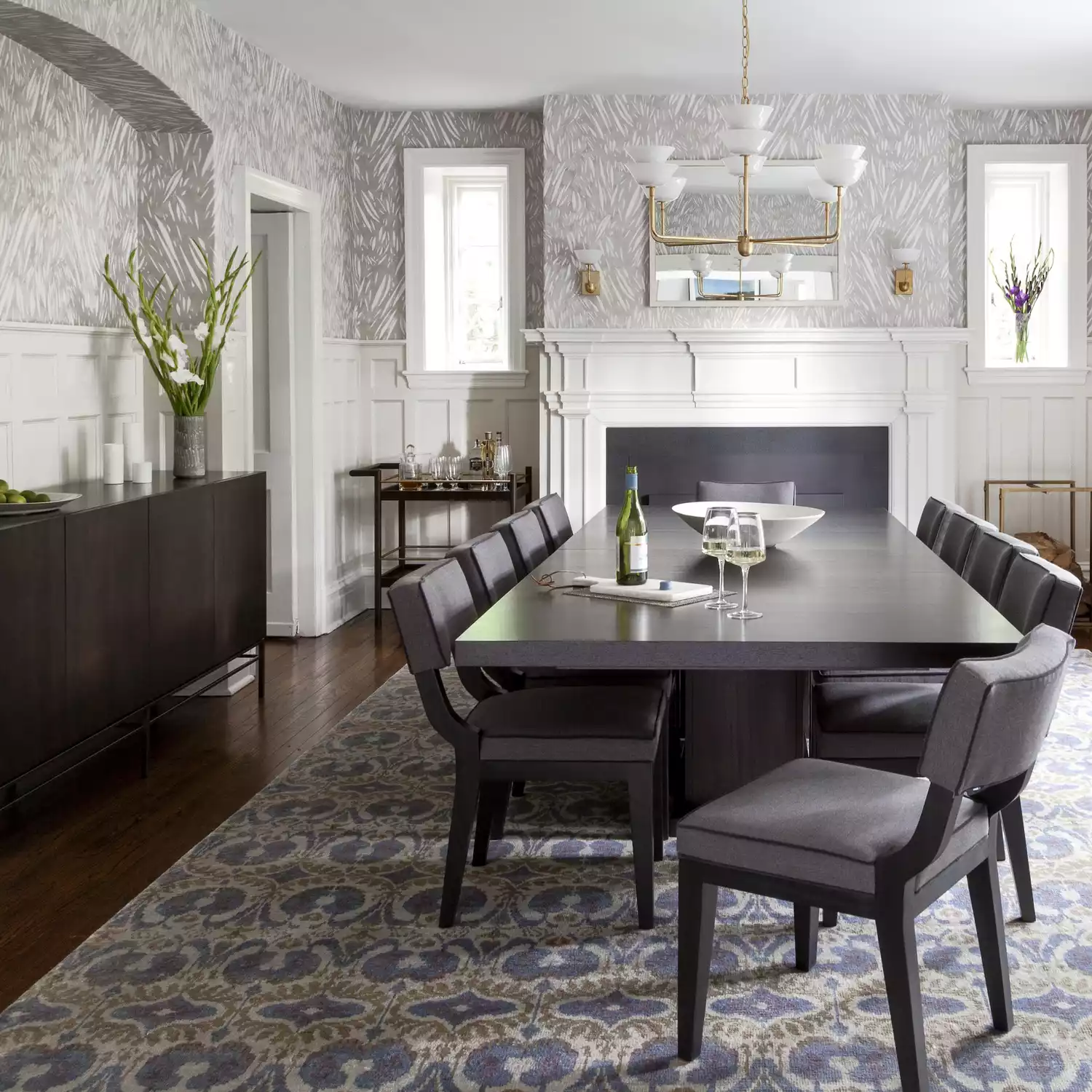
Image credits – Wendy Concannon
White wainscoting beneath gray-and-white patterned wallpaper creates an elegant dining room with a light, open feel. Choose a modest botanical, geometric, or scrolling pattern that adds interest without dominating the room. A wood dining table and a few darker accents keep the pale palette from feeling flat.
Coordinate the panel paint with the wallpaper’s background rather than choosing white separately. Order a wallpaper sample and place it beside a painted sample board before buying full quantities. A simple cap rail gives the paper a tidy stopping point and makes the two wall treatments feel intentionally connected.
Amazon find: Gray-and-White Patterned Wallpaper
A subtle pattern adds softness above white panels. Check the pattern repeat, wall preparation requirements, and removal instructions before selecting traditional or peel-and-stick wallpaper.
11Use Tall Entryway Beadboard With Contrasting Hooks
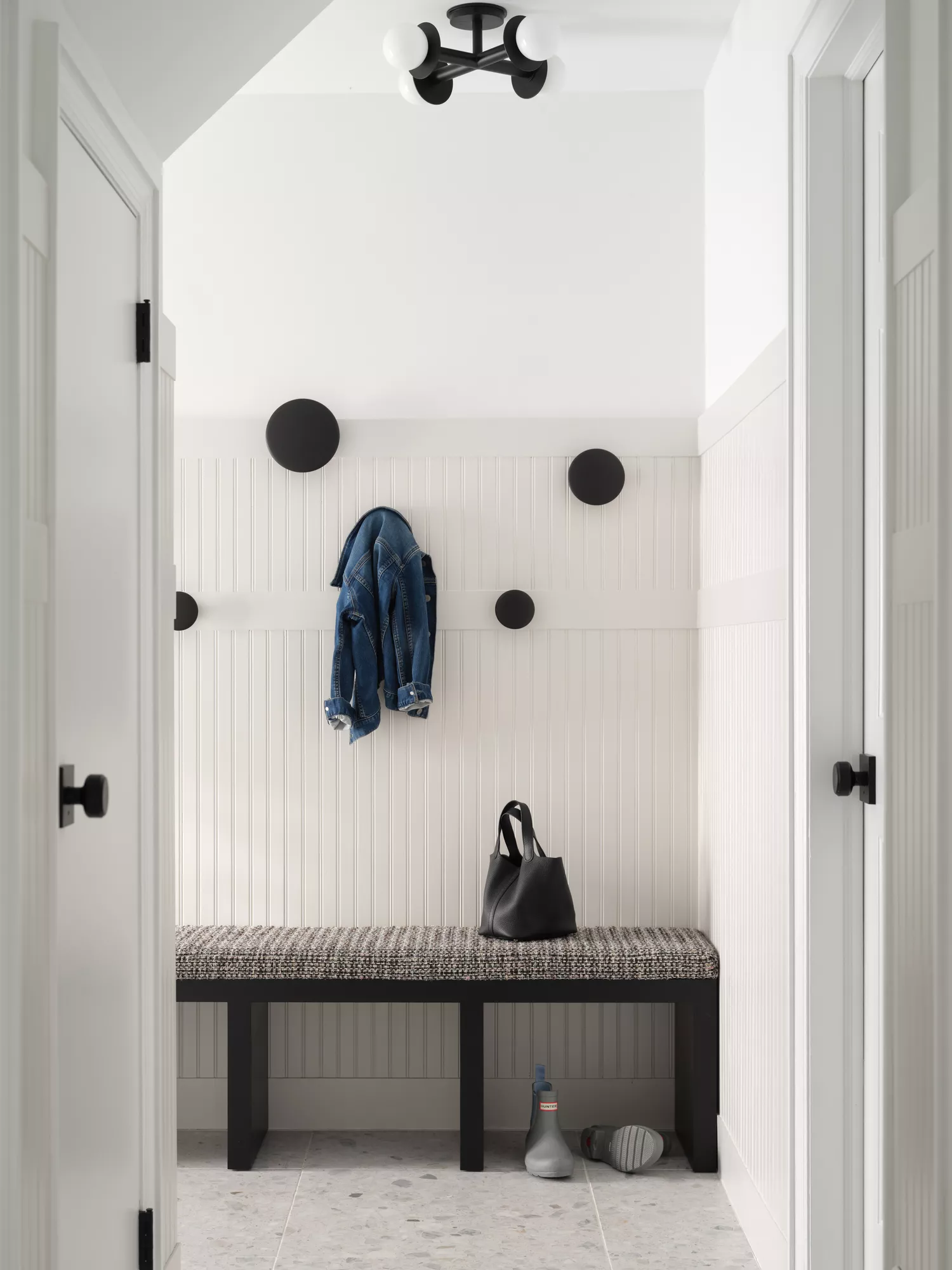
Image credits – Sarah Tract Interiors
Extend beadboard to roughly three-quarters of an entryway wall for a practical, character-filled treatment. The narrow grooves give the space texture, while contrasting black hooks create a clear place for coats and bags. Leave a band of painted wall above to keep the taller paneling visually defined.
Mount hooks into studs or suitable backing using hardware rated for the intended load. Decorative beadboard alone may not support heavy bags. Position hooks so hanging items stay clear of the door, and choose a manageable number to prevent the wall from becoming crowded.
12Make High Wainscoting the Room’s Main Feature

Image credits – Chasing Paper
Take wainscoting above the halfway point when you want the paneling to become a stronger focal point. Tall sections create an enveloping backdrop for a sitting room, and they can relate beautifully to the height of a fireplace mantel. A narrow upper band of paint or wallpaper completes the design.
Test the proposed height with tape before installation, including how it looks behind furniture. If the panels extend above a mantel, plan their relationship to the fireplace surround carefully. Follow the fireplace manufacturer’s clearance requirements for any combustible trim or paneling.
13Design Paneling Around Your Home’s Architecture

Image credits – Molly Rose Photo; Michael Mitchell
Make wainscoting feel built into the room by coordinating it with window casings, doorways, and existing trim. Repeating compatible profiles and thoughtful alignments gives the walls a cohesive appearance. In a room with taller architectural detailing, related molding can continue above openings as part of a broader paneling scheme.
Sketch each wall elevation so you can see how the pattern meets windows and passageways. Adjust panel widths to avoid awkward slivers beside casings. If the original woodwork is attractive, choose new molding that complements its scale rather than covering it with a heavier profile.
14Choose Slim Vertical Detailing for a Streamlined Bedroom
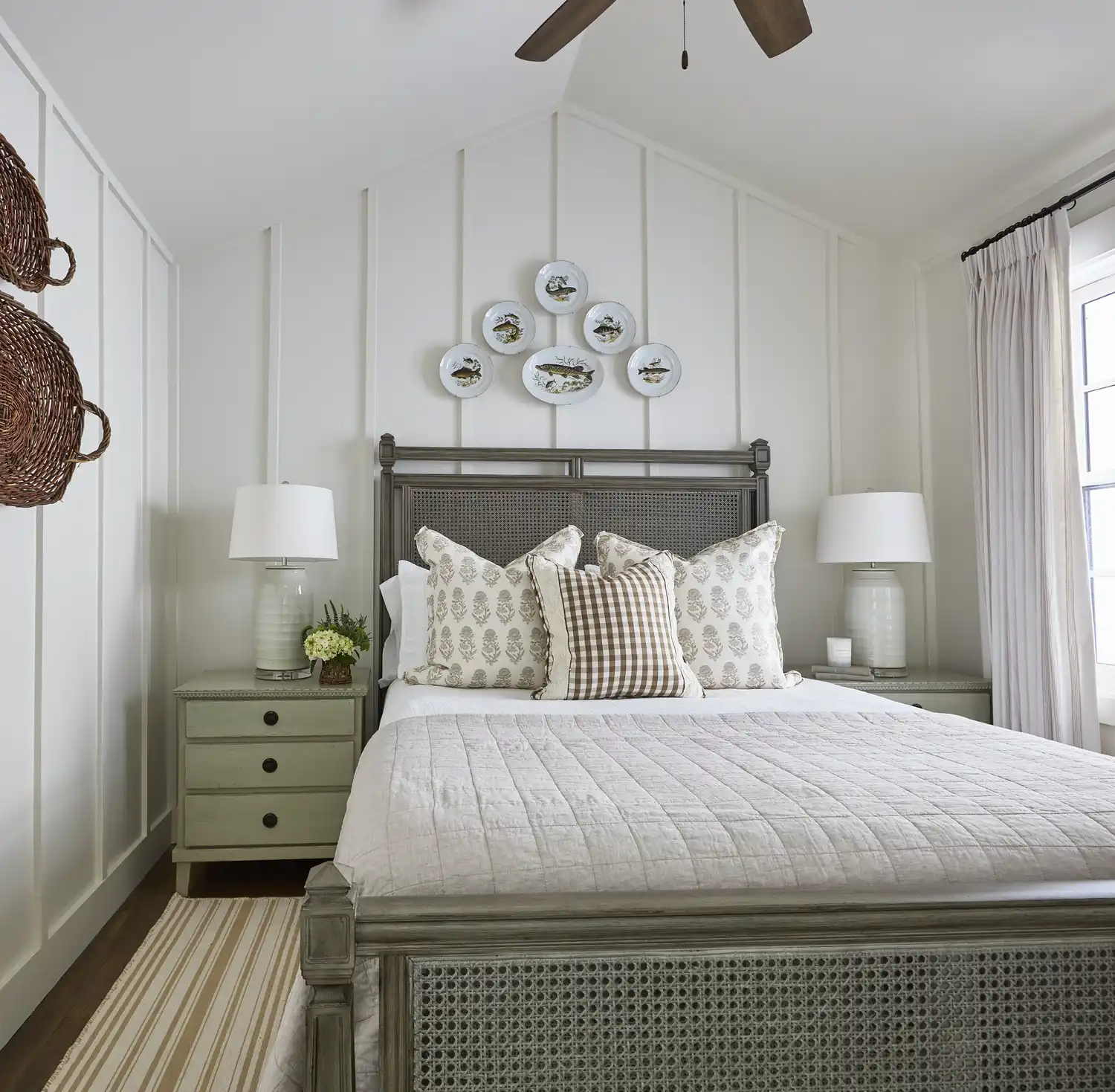
Image credits – Brian Bieder; Maggie Griffin Design
Thin vertical panel details give a bedroom texture with a clean, understated appearance. Keep the trim and wall surface the same color so the shadows provide most of the definition. The upward lines can encourage the eye to travel toward the ceiling, especially when paired with neatly hung curtains.
Space the vertical elements evenly and keep their profile shallow. Light oak furniture, plain bedding, and simple lamps support the streamlined look. Stop the treatment at a tested rail height for wainscoting, or continue it higher if you prefer a related full-height wall-paneling effect.
15Hang a Coordinated Gallery Wall Above Wainscoting
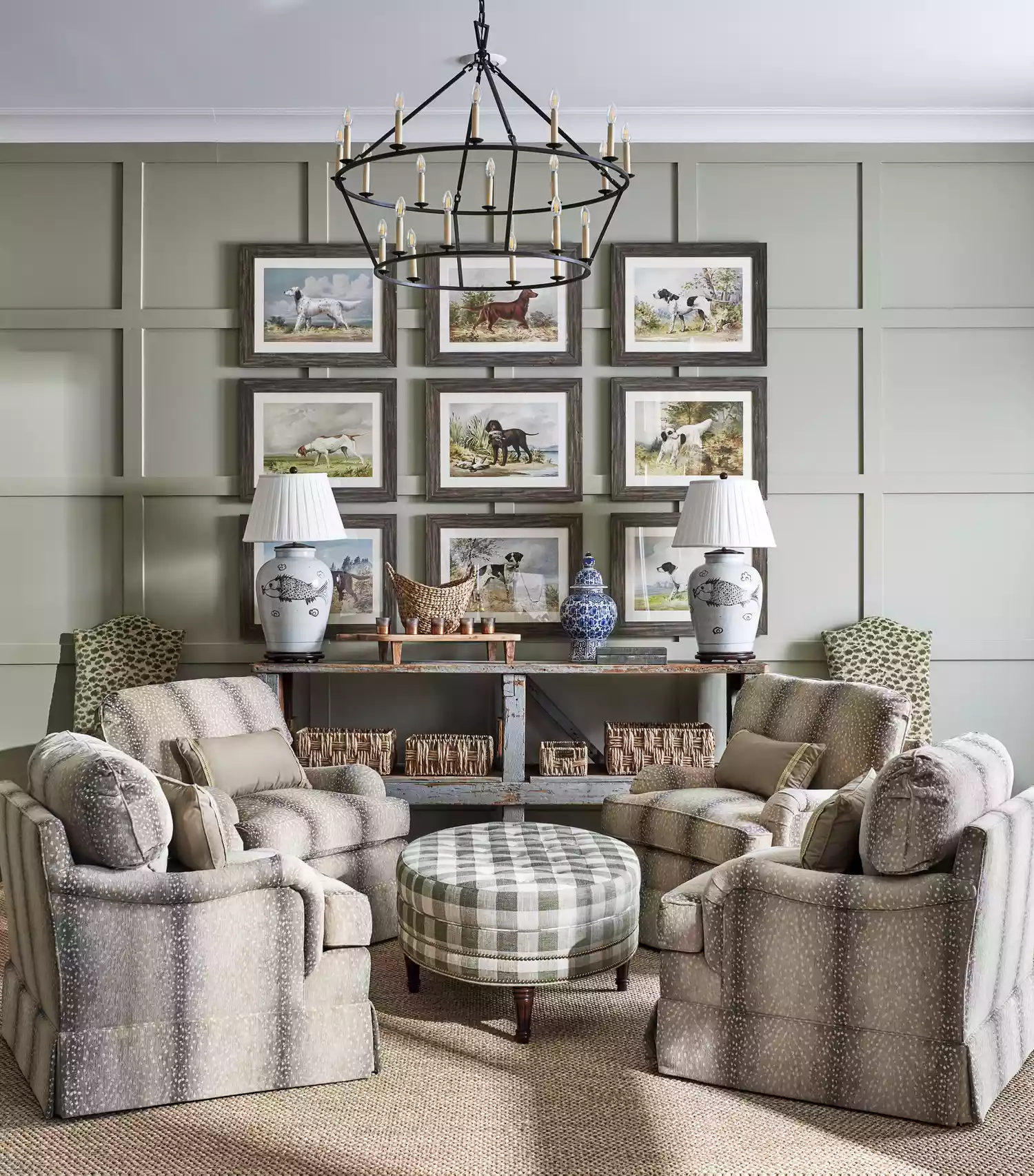
Image credits – Brian Bieder; Maggie Griffin
Wainscoting gives a gallery wall a structured foundation. Hang a collection of photographs, botanical prints, or artwork above the rail, using matching frames or a limited group of finishes. Consistent mats and a shared subject help the display feel connected to the room’s architectural detail.
Arrange paper templates before installing picture hooks. Leave a visible gap above the cap rail and keep spacing between frames reasonably consistent. In a small room, a compact arrangement of fewer, larger pieces may feel calmer than many tiny frames scattered across the wall.
Amazon find: Coordinated Picture Frames
A matching frame set makes it easier to create a cohesive display above detailed walls. Check both the outer frame dimensions and the usable image size.
Wainscoting Shopping Checklist
Measure and finalize your layout before buying materials. Include primer, paint, installation supplies, and finishing products in the budget, along with an allowance for cuts and mistakes.
| Item | Best For | Amazon Search |
|---|---|---|
| Paintable molding | Decorative panel frames | Shop on Amazon |
| Beadboard panels | Textured entryway or bathroom walls; verify room suitability | Shop on Amazon |
| Level and measuring tape | Checking rail height and panel alignment | Shop on Amazon |
| Paintable caulk | Appropriate small joints between trim and wall | Shop on Amazon |
| Compatible filler and sanding supplies | Preparing nail holes and joints for paint | Shop on Amazon |
| Trim brush and small roller | Painting profiles and flat panel surfaces | Shop on Amazon |
Frequently Asked Questions
What is the difference between wainscoting and beadboard?
Wainscoting describes a treatment on the lower portion of a wall. Beadboard describes a panel style with narrow vertical grooves. Beadboard can be used as wainscoting, but wainscoting can also use flat panels, raised panels, or board and batten.
How high should wainscoting be?
About one-third of the wall height is a useful starting point, but there is no single height that suits every room. Taller designs may work better with your furniture or architecture. Test several heights with painter’s tape before deciding.
Can wainscoting work in a small room?
Yes. Shallow trim, simple panel shapes, and coordinated colors can add character without overwhelming a small space. Avoid bulky profiles and crowded accessories, and choose a rail height that looks balanced with the room’s furnishings.
What is a budget-friendly way to create wainscoting?
Applied molding over a smooth, sound wall can create decorative panel outlines without full panel sheets. Simple board-and-batten layouts may also be economical. Compare the complete cost of trim, preparation, paint, tools, and installation before choosing a method.
Should wainscoting match the baseboards and door trim?
Matching them creates a cohesive look, especially in smaller rooms. A contrasting panel color can also work beautifully if you plan the transitions carefully. Compare paint samples beside the existing trim so the undertones feel compatible.
Final Thoughts
The most beautiful wainscoting feels connected to the room around it. A balanced height, thoughtful panel spacing, and a compatible paint palette can make simple materials look carefully considered.
Start with one space that would benefit from extra character, such as a plain hallway, a compact powder room, or the wall behind your bed. Test the layout before buying, and spend time on the finishing details.
Whether you choose classic white board and batten, colorful bedroom panels, or tall beadboard in the entryway, these wainscoting ideas can help you create timeless walls that feel right for your home.
2 thoughts on “15 Elegant Wainscoting Ideas for Timeless Walls in Every Room”