
A tiny hallway can feel welcoming, organized, and full of personality, even when there is barely room for a console table. The key is to make your walls, lighting, colors, and storage work together while keeping the walking route comfortable.
Whether you have a narrow apartment entrance, a short passage between rooms, or a small hallway beside the stairs, a few thoughtful changes can make the space easier to use. You do not need to fill it with furniture to make it feel finished.
These 13 tiny hallway ideas cover light, paint, practical storage, colorful runners, and creative ways to use an awkward corner. You will also find shopping tips, color palettes, and simple styling advice to help you choose what fits your home.
Affiliate note: This article may contain affiliate links. If you buy through these links, we may earn a small commission at no extra cost to you.
More Inspiration for a Welcoming Entrance
Quick List: 13 Tiny Hallway Ideas
- Let daylight travel through the space.
- Pair two paint colors for character.
- Create a focal point at the far end.
- Use a reflective finish on hardworking surfaces.
- Add a shallow shelf above a radiator.
- Mix patterns within a limited color palette.
- Fit a fold-down desk into an unused recess.
- Refresh a small console with furniture paint.
- Choose tall, slim storage for coats and shoes.
- Turn a spare corner into a reading spot.
- Bring in color with a hallway runner.
- Use shallow cabinets with tilt-out shoe storage.
- Build a wall organizer with a message board and pegboard.
How to Decorate a Tiny Hallway Without Crowding It
Start by measuring the hallway at its narrowest point, including baseboards, door handles, and any radiator. Open every nearby door before deciding where furniture or shelves can go. A piece that fits against the wall may still interfere with a door or make carrying groceries uncomfortable.
Next, choose the hallway’s main job. An entrance may need shoe storage and a place for keys, while a passage between bedrooms may only need good lighting and one attractive focal point. Solve that need first, then add decoration around it.
Use the floor sparingly and decorate upward. Paint, a securely mounted mirror, artwork, and shallow wall storage can add personality without taking over the walkway. In a hallway with no windows, pair your chosen colors with an overhead light that illuminates the full route.
Choose the Right Idea for Your Hallway
| Style or Area | Best Pieces to Use | Why It Works |
|---|---|---|
| Very narrow passage | End-wall artwork, coordinated paint, low-profile lighting | Creates interest without adding floor furniture |
| Busy front entrance | Shallow shoe cabinet, key tray, limited coat hooks | Gives everyday belongings a clear home |
| Hallway with little wall space | Two-tone paint, colorful runner, painted trim | Uses existing surfaces to introduce character |
| Unused side recess | Fold-down desk or compact reading chair | Adds a useful function when there is sufficient clearance |
| Budget refresh | Upcycled console, existing frames, fresh paint | Changes the look with fewer new purchases |
13 Best Tiny Hallway Ideas to Try at Home
1Let Daylight Reach Every Corner
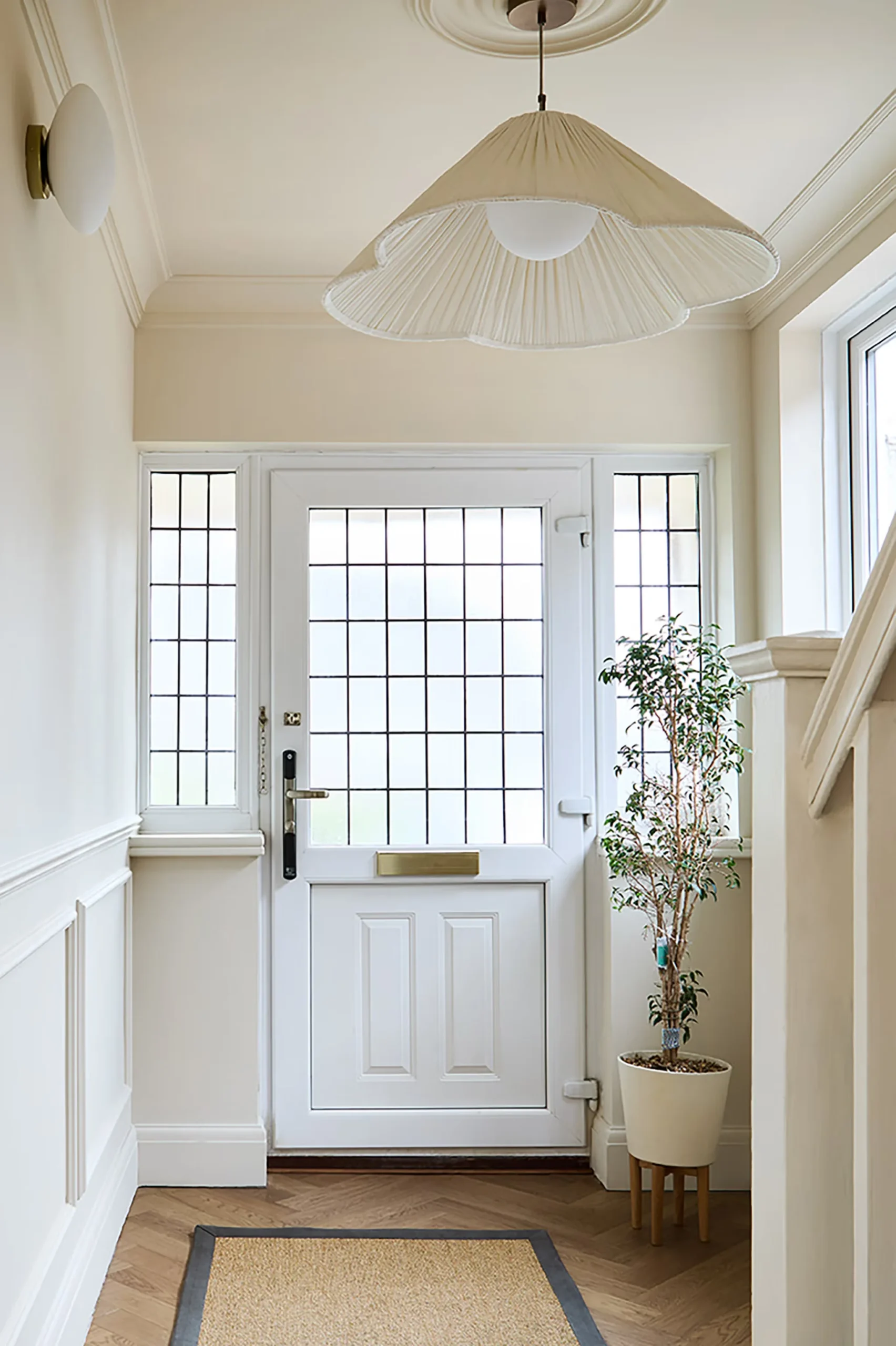
Image credits – Thorndown Paints
If your hallway receives daylight from a front-door window or an adjoining room, keep that path as open as possible. Move bulky coat racks away from the light source and avoid placing tall accessories directly in front of glazing. A warm off-white across the walls and ceiling can create a soft, continuous backdrop.
Keep window treatments light and practical. A sheer panel or suitable privacy film can help maintain privacy while admitting daylight. If you add a plant, choose a slender one that suits the available light and position it outside the walking route.
2Give the Walls a Two-Color Treatment

Image credits – Mary Wadsworth
When doorways leave little room for artwork, paint can become the main decorative feature. Try a soft aqua upper wall with deeper green below, or pair warm ivory with muted clay. Existing paneling, a chair rail, or a carefully taped line gives the colors a clear meeting point.
Choose shades that work with the floor rather than treating it as an afterthought. Terracotta tile pairs naturally with blue-green tones, while pale wood works well with cream and sage. Repeat one wall color in a runner or small accessory to make the combination feel connected.
3Create a Clear Destination at the Far End

Image credits – Rachel Whiting
A narrow hallway often feels more intentional when your eye has somewhere to land. Hang one framed print on the end wall, or paint that wall a gentle contrasting color. A blush backdrop with a dark frame, for example, introduces depth and a simple focal point.
Choose artwork large enough to read from the entrance without covering the entire wall. Keep the side walls quieter so the display remains the focus. If the hallway ends at a door, painting that door a coordinated accent color can serve the same purpose.
4Add a Soft Shine to Doors and Trim

Image credits – James French
A reflective paint finish can bring a little liveliness to a small hallway. Try satin or semi-gloss on doors, baseboards, paneling, or stair details, with a quieter finish on the upper walls. A rich olive or reddish-brown accent can look especially inviting beside warm neutral walls.
Prepare the surface carefully because shinier finishes make dents and uneven patches more noticeable. Choose paint formulated for the surface and check its cleaning instructions; durability depends on the product as well as the sheen. For an understated result, limit the shine to trim and one door.
5Make a Radiator Wall More Useful With a Shelf
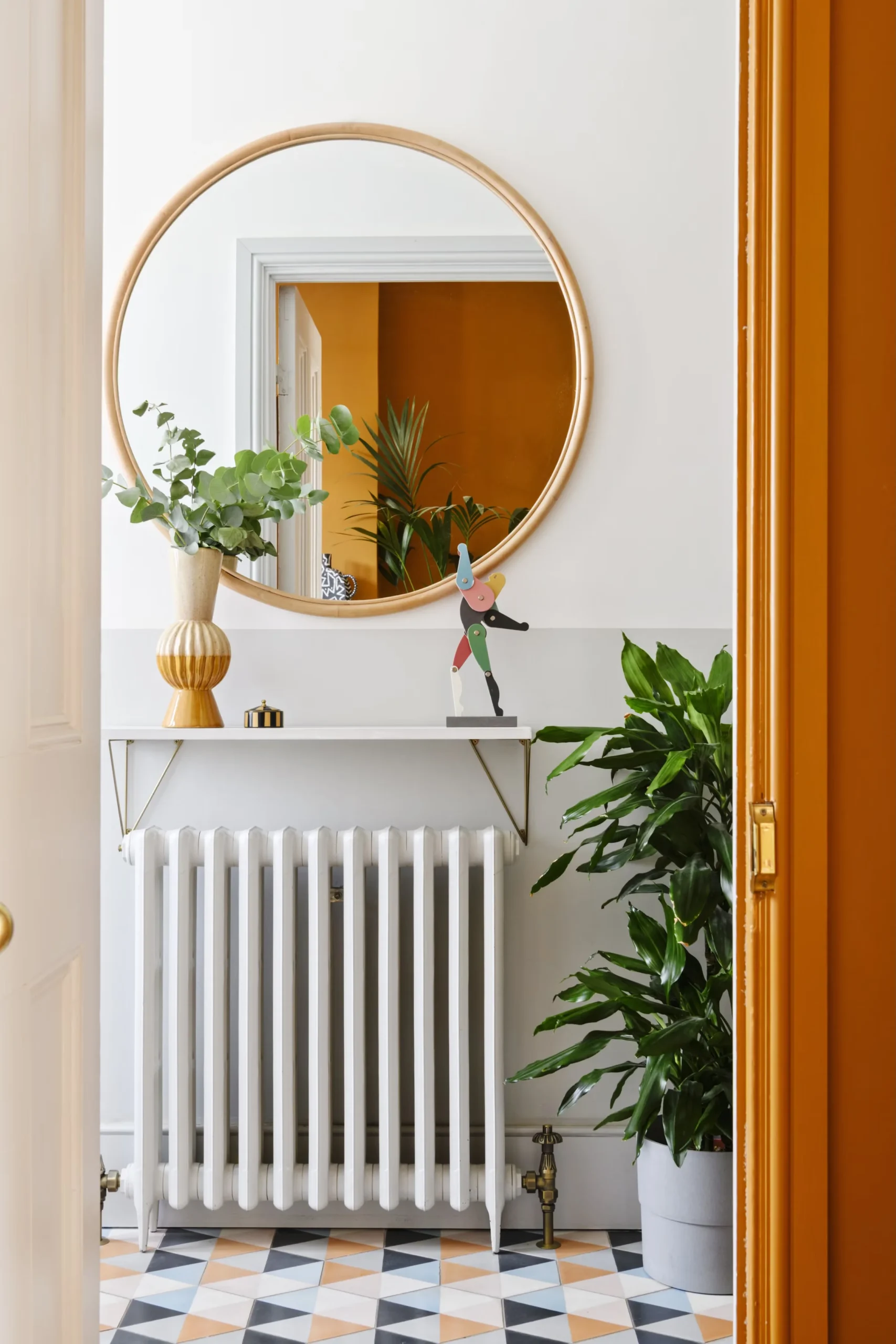
Image credits – Caroline Mardon
A radiator can occupy the only available wall in a tiny entrance. Where the radiator’s installation guidance permits it, a shallow shelf above it can provide a small landing place for keys. Add a securely mounted mirror above the shelf to complete the arrangement without introducing a console.
Follow the required clearances and keep airflow, valves, and maintenance access unobstructed. Use materials suitable for the location, and avoid storing electronics, candles, or heat-sensitive items above the radiator. If a shelf is unsuitable, a small key holder on an adjacent wall offers a simpler solution.
Amazon find: Shallow Wall Shelf
Look for a depth that suits your hallway and mounting hardware appropriate for your wall. Check suitability and required clearances before placing any shelf near a heat source.
6Keep Bold Patterns Connected Through Color

Image credits – Boz Gagovski
A small hallway can handle pattern when the different elements share a palette. Pair patterned wallpaper with a runner that repeats two of its colors. Blue, blush, mustard, and burgundy make a cheerful combination, but you can use softer versions if you prefer a calmer entrance.
Vary the pattern sizes so they do not compete equally for attention. Try a larger wallpaper motif with a smaller geometric rug, then keep doors and trim solid. A generously sized wall mirror can provide a visual pause and reflect an attractive part of the surrounding space.
7Fit a Fold-Down Desk Into a Spare Recess
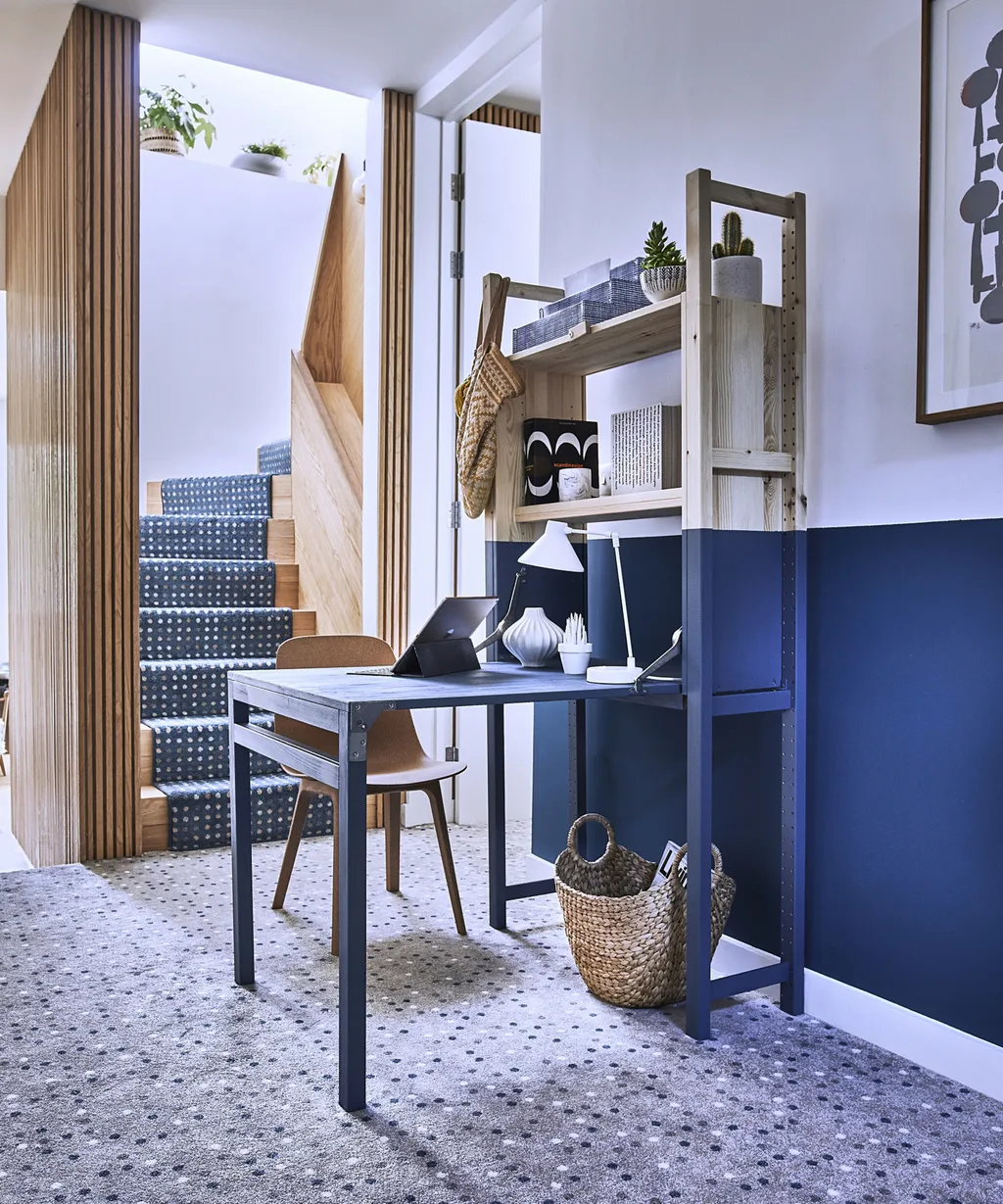
Image credits – Carpetright
An unused hallway recess can become a compact spot for occasional laptop work with a wall-mounted folding desk. Paint the closed front to match the wall, or carry a two-tone paint line across it so the fixture blends into the decorating scheme.
Measure the desk while open and include the chair and seated person in your clearance checks. This idea works best in a side alcove where working will not block passage or door access. Follow the desk’s mounting and weight instructions, then tuck away the chair and cables when you finish.
8Refresh a Small Console With Furniture Paint
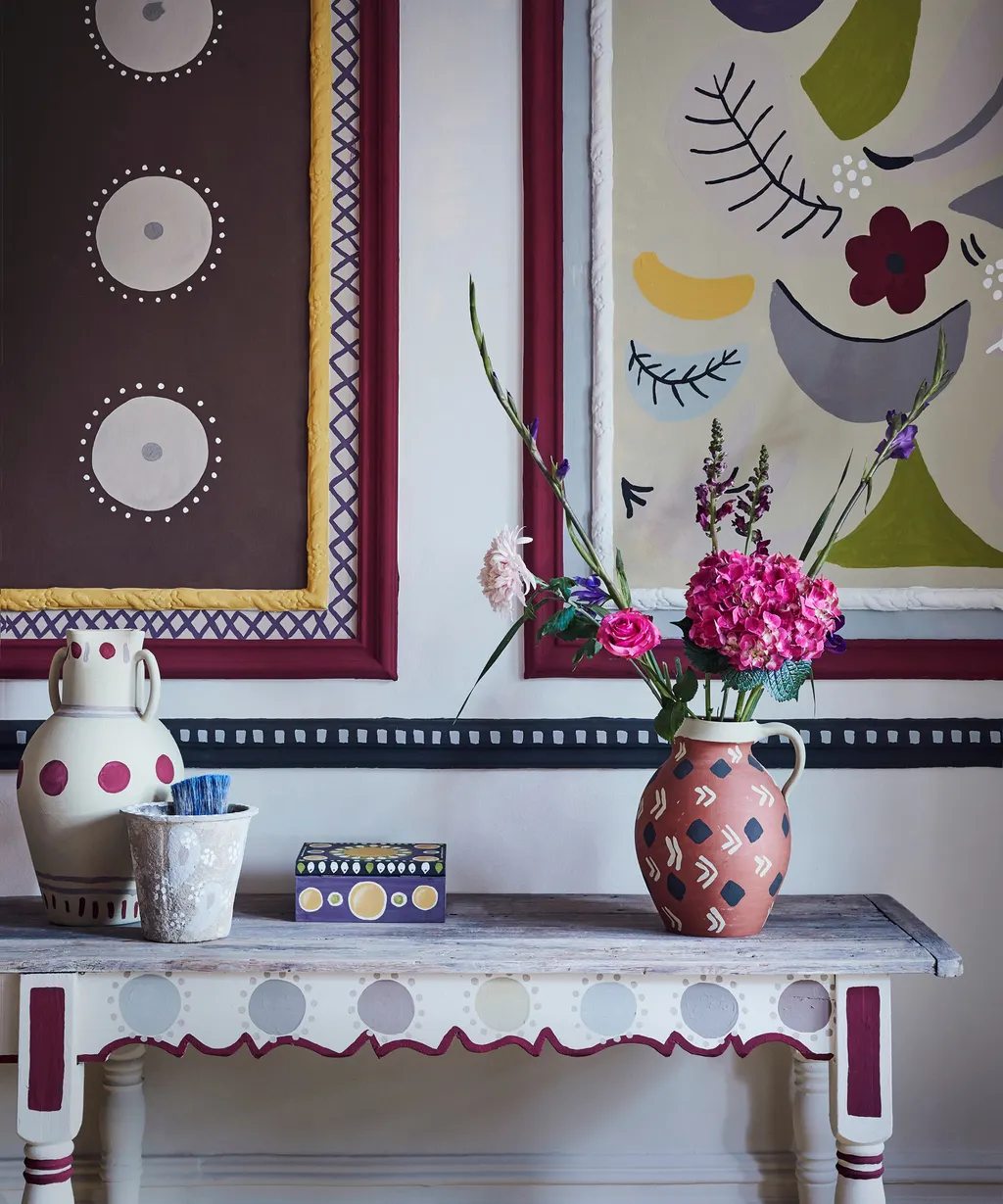
Image credits – Annie Sloan
A narrow secondhand console can bring character to a tiny hallway without a major decorating budget. Use chalk-style furniture paint in dusty blue, sage, or warm cream, then add a subtle stripe or contrasting drawer front if you want a more playful finish.
Check the furniture’s depth before buying it, and follow the paint manufacturer’s preparation and sealing directions. Keep the top useful with a key bowl and one small decorative piece. You can also paint an existing vase or frame to coordinate the display without purchasing a matching set.
9Store Coats and Shoes in a Tall, Slim Unit
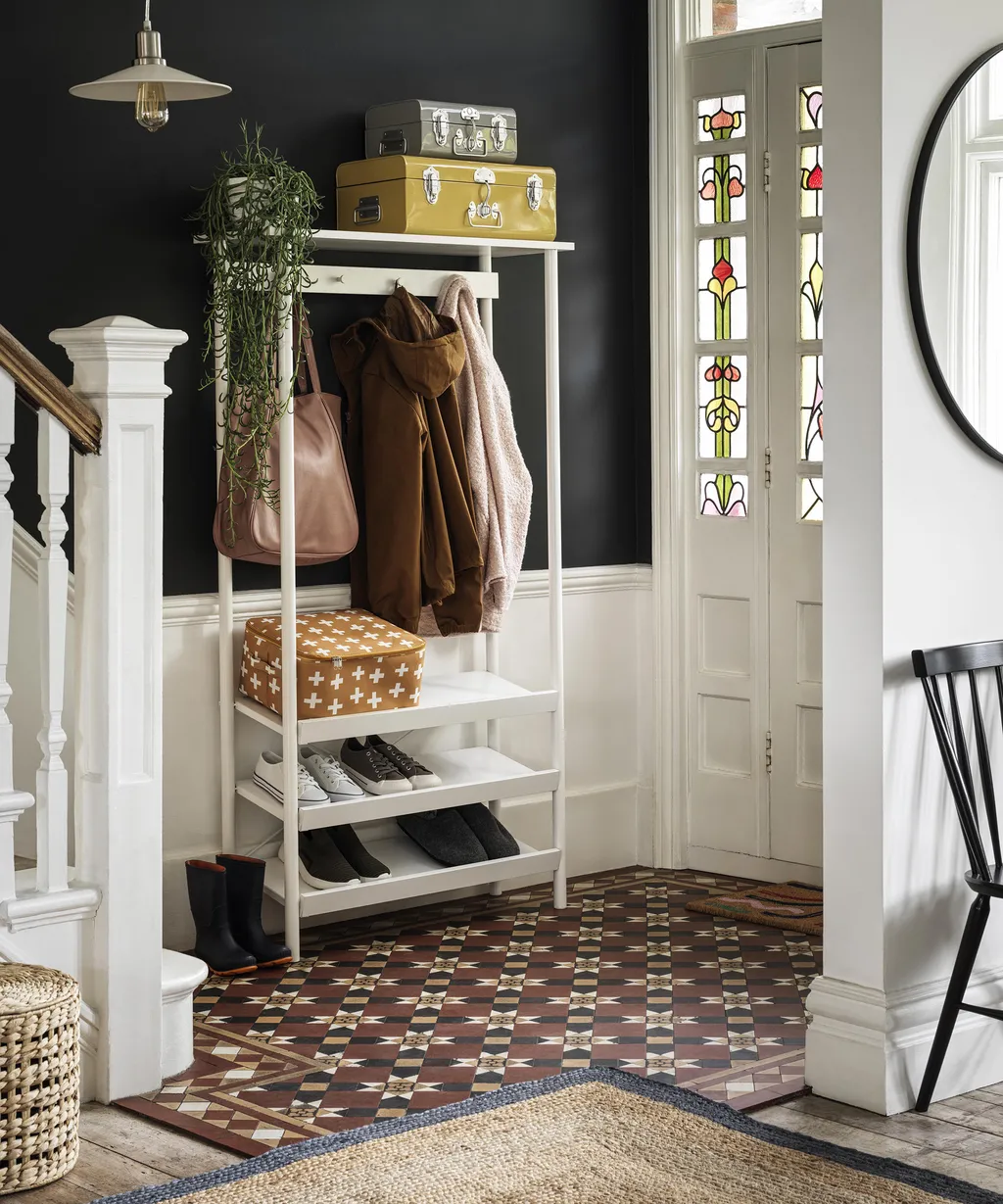
Image credits – Habitat
A narrow vertical organizer can combine coat hooks, shoe shelves, and an upper shelf in one place. Position it on the wall that gives you the most comfortable clearance. White or a wall-matching finish helps the unit sit quietly within a small entrance.
Allow for the depth of hanging coats and bags, not just the empty frame. Keep only frequently used items here and move seasonal outerwear elsewhere. Anchor the unit as directed, and reserve the highest shelf for lightweight items in easy-to-manage containers.
Amazon find: Slim Entryway Hall Tree
Compare the overall depth, hook placement, shoe capacity, and anchoring requirements. Choose a layout that supports your daily routine without crowding the entrance.
10Turn an Unused Corner Into a Reading Spot
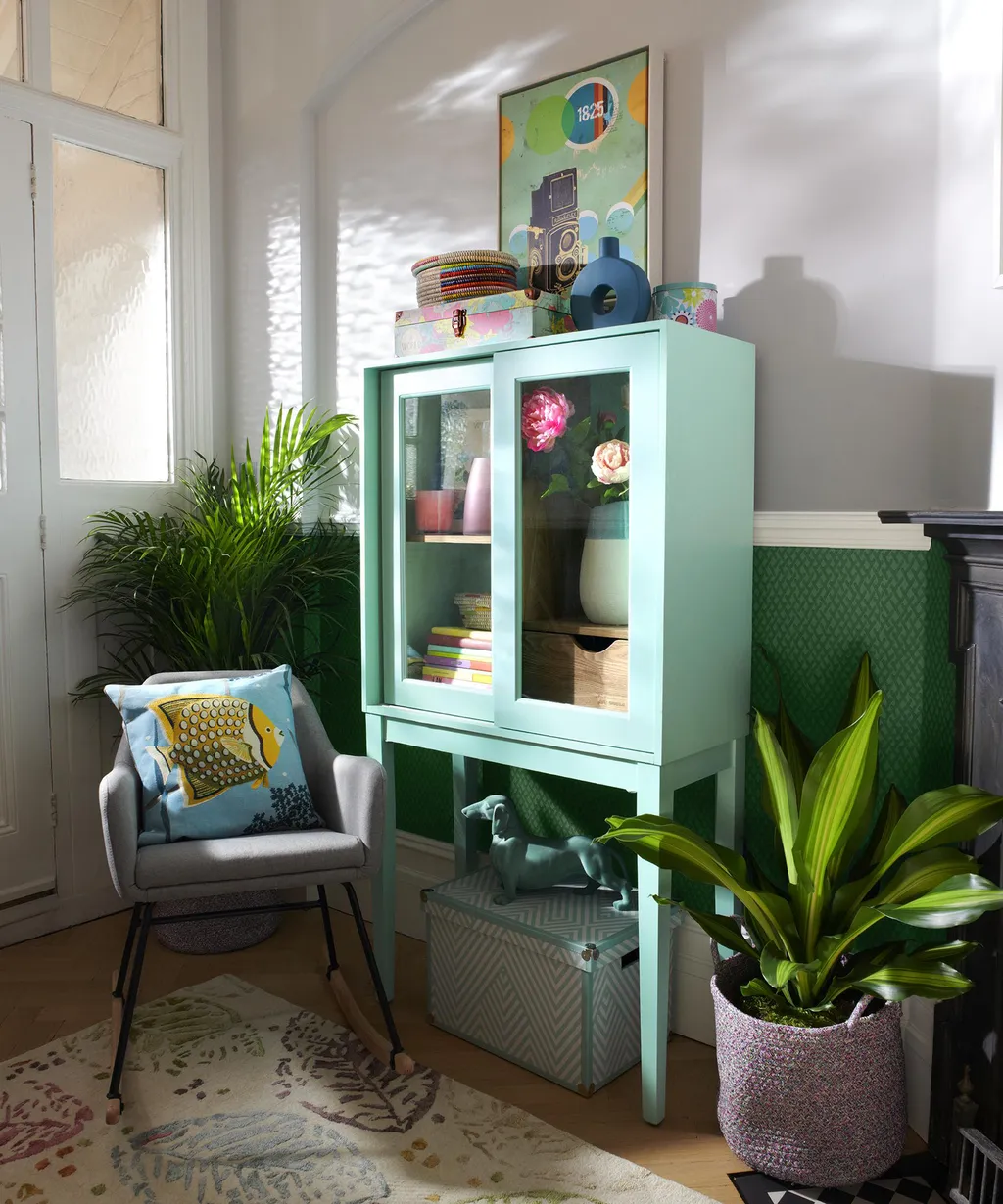
Image credits – Homesense
If your hallway widens near a window or front door, a compact chair can turn that extra space into a quiet reading corner. Add one cushion and keep a few favorite books in a nearby cabinet or shallow shelf. A chair with an open frame can look lighter than bulky upholstered seating.
Check that the chair leaves every door and the main route easy to use. Place it where the reader will have sufficient light, and keep any lamp cord against the wall. In a hallway without a genuine spare corner, enjoy the look through books and artwork rather than forcing in seating.
11Brighten the Floor With a Colorful Runner
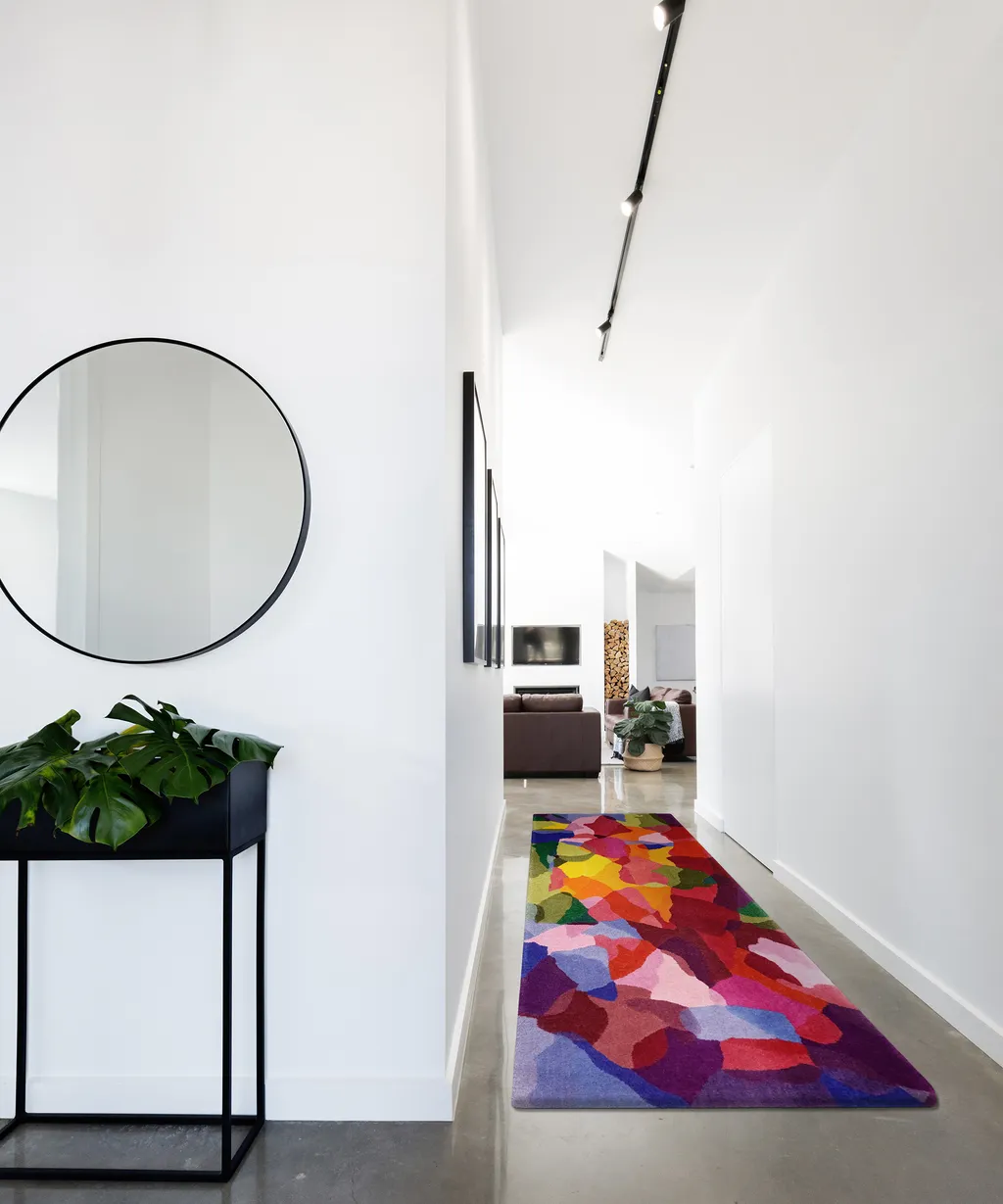
Image credits – Sonya Winner Rug Studio
A runner adds softness and personality without needing shelf or wall space. Try an abstract design with overlapping colors, a cheerful stripe, or a faded traditional pattern. In a neutral apartment hallway, the rug can become the main decorative feature.
Choose a width that leaves a visible border of flooring on both sides and a length that fits comfortably between doorways. Check door clearance, especially at the entrance, and use a compatible nonslip pad. A low-pile, easy-care rug is a practical option for a busy household.
Amazon find: Low-Pile Hallway Runner
Measure before choosing a size, and check the rug’s thickness and care instructions. If it is washable, confirm that it will fit your washing machine.
12Hide Everyday Shoes in a Shallow Tilt-Out Cabinet
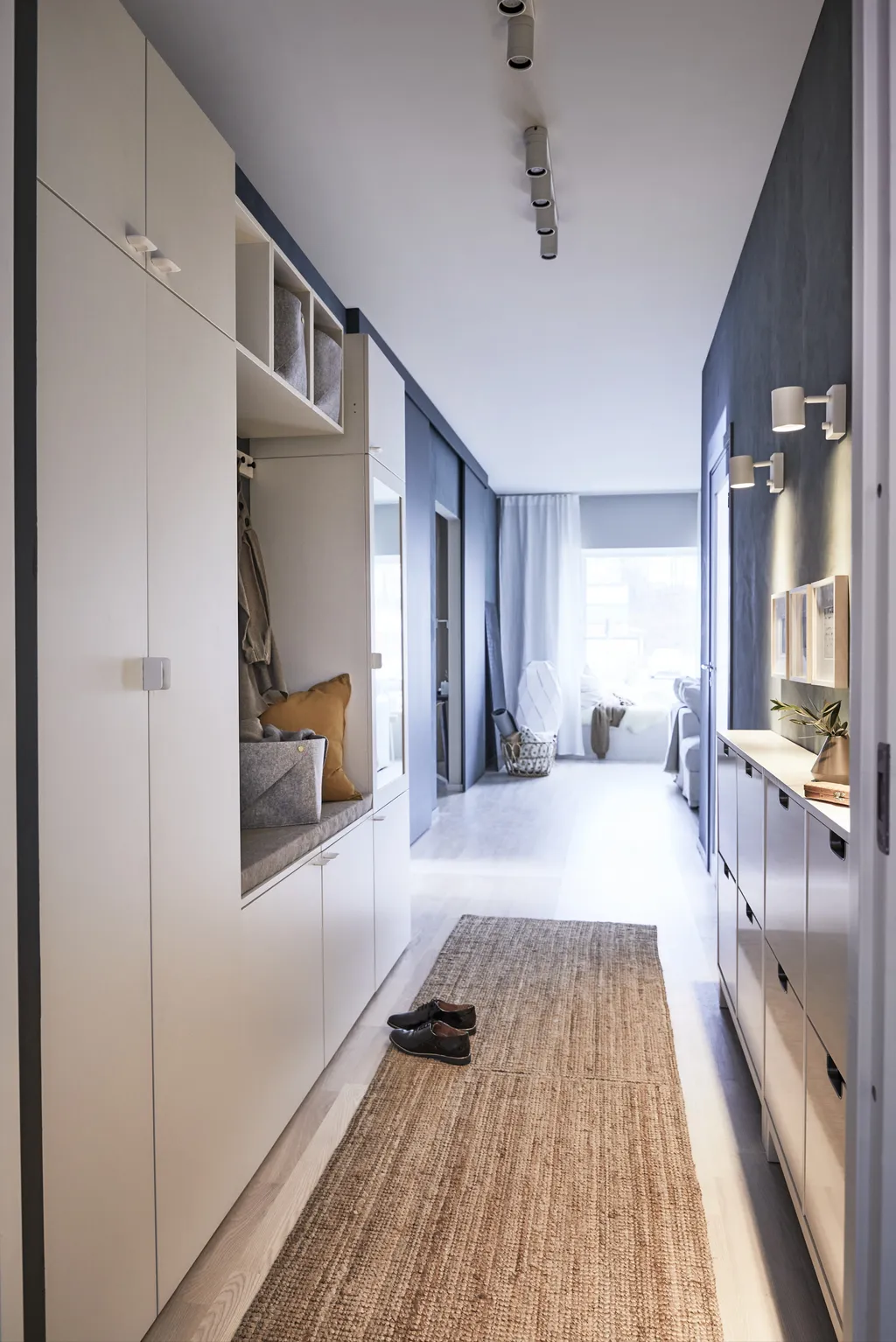
Image credits – Ikea
Tilt-out shoe cabinets can provide enclosed storage where a conventional console is too deep. Use one cabinet in a short entryway, or place two matching units side by side if you have enough uninterrupted wall space. Keep the top simple with a catchall dish and a small framed picture.
Check internal dimensions because larger shoes and boots may not fit every design. Allow room for compartments to open, and follow the manufacturer’s wall-anchoring instructions. Avoid attaching extra hooks or loading the top beyond the cabinet’s stated limits.
13Create a Wall Organizer With a Message Board and Pegboard

Image credits – Kreis Design
A small chalkboard area and a pegboard can turn an entrance wall into a practical household station. Use the board for reminders and the pegboard for keys, a small mail basket, and a few hooks. Choose matching colors to keep the arrangement from looking scattered.
For extra storage, a shelf above a doorway can hold lightweight, infrequently used items if there is adequate clearance and secure mounting. Keep everyday objects within easy reach and avoid deep pegboard accessories that project into the walkway. Chalkboard paint creates a writing surface; ordinary chalk-style furniture paint is a different product.
Shopping Checklist for a Tiny Hallway
Start with the piece that solves your biggest problem. Measure first, then add decorative extras only after the hallway is comfortable to use.
| Item | Best For | Amazon Search |
|---|---|---|
| Shallow shoe cabinet | Keeping everyday footwear off the floor | Shop on Amazon |
| Wall mirror | A useful finishing touch above a shelf or cabinet | Shop on Amazon |
| Runner and compatible rug pad | Adding color and comfort at floor level | Shop on Amazon |
| Small pegboard organizer | Keys, mail, and lightweight accessories | Shop on Amazon |
| Furniture paint | Refreshing a suitably sized secondhand console | Shop on Amazon |
Frequently Asked Questions
How can I make a tiny hallway feel bigger?
Keep the walking route clear, use coordinated colors, and avoid unnecessary floor furniture. Good lighting, a well-positioned mirror, and a simple focal point can help the space feel more open and intentional.
What is the best paint color for a small dark hallway?
Warm off-white, pale greige, and muted pastel shades are useful starting points, but the best choice depends on your lighting and flooring. Test samples under your actual bulbs. A deeper color can also feel welcoming when the hallway is well lit.
How do I decorate a hallway with no space for furniture?
Focus on paint, artwork, a wall mirror, and suitable lighting. A low-pile runner can add pattern if it fits safely. You can create a finished look without a table, bench, or freestanding storage unit.
What storage works best in a tiny entrance?
Shallow shoe cabinets, limited wall hooks, and compact vertical organizers are practical options. Choose storage around the belongings you use daily, and check both its closed dimensions and the space needed to open it.
Can I use wallpaper and a patterned runner together?
Yes. Connect them through shared colors and vary the scale of the patterns. Keep nearby doors, trim, and accessories simpler so the combination feels balanced. Looking at samples together helps you judge the result before buying.
Final Thoughts
The best tiny hallway ideas make your home more welcoming while helping everyday life run smoothly. A clearer floor, a useful storage piece, or a thoughtful paint combination can make a noticeable difference.
Start with the issue that bothers you most, whether that is scattered shoes, poor lighting, or a blank end wall. Once that is solved, add a runner, artwork, or painted detail that brings in your personality.
Choose one or two ideas that suit your layout and build from there. A tiny hallway feels complete when it is comfortable to move through and pleasant to come home to.
2 thoughts on “13 Best Tiny Hallway Ideas”