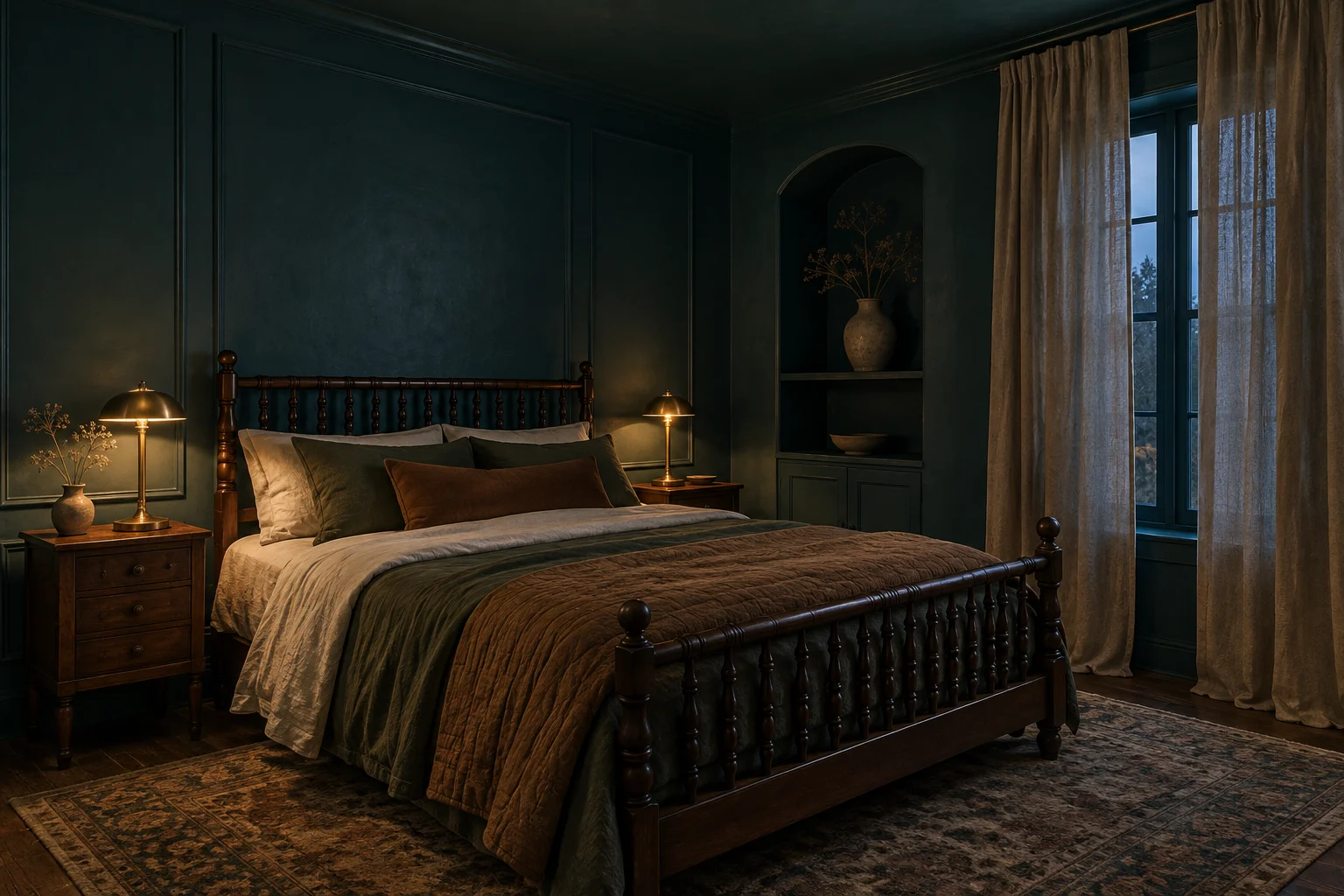
Dark bedroom paint can make a sleeping space feel warm, intimate, and beautifully restful. Deep green, smoky plum, chocolate brown, charcoal, and muted burgundy create atmosphere without relying on predictable romantic decorations.
The key is choosing a dark color with an undertone that works with the room’s flooring, furniture, daylight, and artificial lighting. Layering the finished walls with soft bedding, warm wood, elegant metal accents, and gentle lighting will keep the bedroom cozy rather than gloomy.
Below, you will find 12 moody romantic bedroom paint colors, decorating combinations, practical paint-testing advice, helpful palettes, shopping suggestions, and common mistakes to avoid.
Related Bedroom Decorating Inspiration
Quick List: Moody Romantic Bedroom Paint Colors
- Smoky charcoal
- Deep forest green
- Chocolate brown
- Burgundy wine
- Midnight navy
- Smoky plum
- Blackened teal
- Earthy terracotta
- Warm black
- Deep mushroom taupe
- Dusty mauve
- Blue-gray slate
How to Choose a Dark Bedroom Paint Color
Begin with the room’s fixed features, including flooring, trim, stone, furniture, and window direction. A deep color with warm undertones often works well with walnut, oak, cream, brass, and beige. Cooler charcoal, navy, and slate may pair more naturally with gray flooring, black furniture, or cooler white trim.
Always test several colors on large sample boards. Move the boards between different walls and view them in morning light, afternoon light, cloudy conditions, and under the lamps you normally use at night. Small color chips rarely reveal how a dark shade will behave across an entire wall.
Decide whether you want to paint one feature wall, every wall, or the walls and ceiling. One accent wall creates focused contrast, while color wrapping the whole room can feel more immersive. Painting the ceiling is most successful when you intentionally want a cocooning effect and have planned enough layered lighting.
Deep wall color + warm light + pale bedding + natural texture + one reflective metal accent
Dark Bedroom Paint and Decor Pairing Guide
| Color or Style | Best Pieces to Use | Why It Works |
|---|---|---|
| Charcoal or warm black | Ivory bedding, oak furniture, brass lighting | Strong contrast looks modern while warm materials soften it |
| Forest green or teal | Walnut, linen, woven baskets, antique bronze | Natural undertones create a grounded and restful mood |
| Burgundy or plum | Mushroom beige, velvet, dark wood, muted gold | Rich red and purple undertones create intimate warmth |
| Chocolate or terracotta | Cream textiles, clay pottery, rust accents, light oak | Earthy colors make the bedroom feel enveloping and comfortable |
| Midnight navy or slate | Cognac leather, soft gray, warm white, aged brass | Cool depth is balanced by warm, light-colored accessories |
Rich and Romantic Paint Colors for a Warm, Moody, and Intimate Bedroom
1Smoky Charcoal
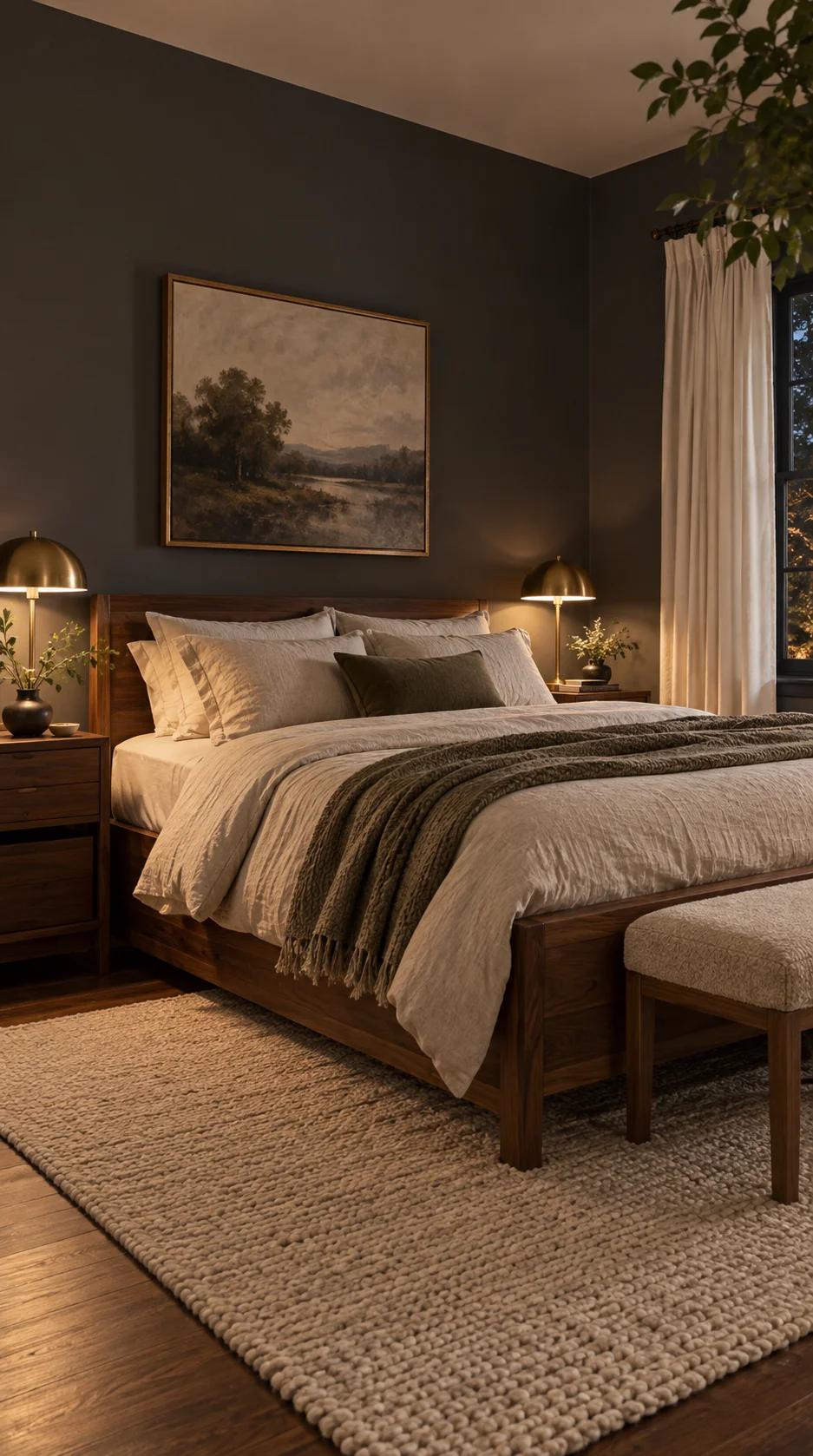
Smoky charcoal provides the drama of black with a softer, more flexible appearance. It works especially well behind a bed because it creates depth while allowing wood, cream, and metallic accessories to remain clearly visible.
Pair charcoal walls with oatmeal bedding, a warm oak or walnut headboard, and soft white curtains. Add aged brass lamps or sconces to bring warmth into the palette and prevent the gray undertones from feeling cold.
Amazon find: Warm Brass Bedside Lamps
Warm metal and softly diffused light can keep charcoal walls from looking flat or overly cool during the evening.
2Deep Forest Green

Forest green feels moody and romantic while retaining a connection to nature. It can look nearly black in dim light and reveal rich green character when sunlight enters the room.
Style it with natural linen, walnut furniture, woven textures, and warm cream bedding. A small amount of rust, camel, or antique gold can add contrast without disturbing the restful atmosphere.
3Rich Chocolate Brown

Chocolate brown creates a warm, enveloping background that works beautifully in both modern and traditional bedrooms. Unlike cooler dark colors, it naturally complements beige, camel, ivory, terracotta, and many wood tones.
Use cream bedding to create contrast and add a lighter rug if the flooring is also dark. Small black details can sharpen the palette, while bronze or brass accents reinforce the warmth.
Amazon find: Neutral Duvet Cover
Light bedding adds enough contrast to define the bed while maintaining the warm and restful feeling of brown walls.
4Romantic Burgundy Wine

Burgundy introduces the warmth and emotion associated with red in a more mature, understated way. A brown-based wine color usually feels easier to live with than a bright or heavily purple red.
Balance burgundy with mushroom beige, dusty cream, dark wood, and muted gold. Use the paint behind the headboard for a focused statement, or wrap the room in the color for a more immersive, intimate effect.
5Midnight Navy

Midnight navy gives a bedroom dramatic depth without the visual hardness that some black shades can create. It can appear nearly neutral at night while revealing a sophisticated blue tone during the day.
Combine it with warm white bedding, cognac or walnut furniture, and antique brass lighting. Avoid using too many cool gray accessories unless you intentionally want a crisp, contemporary room.
Amazon find: Cognac Accent Pillow Covers
A warm cognac accent can balance the cool depth of navy without introducing a busy pattern.
6Smoky Plum
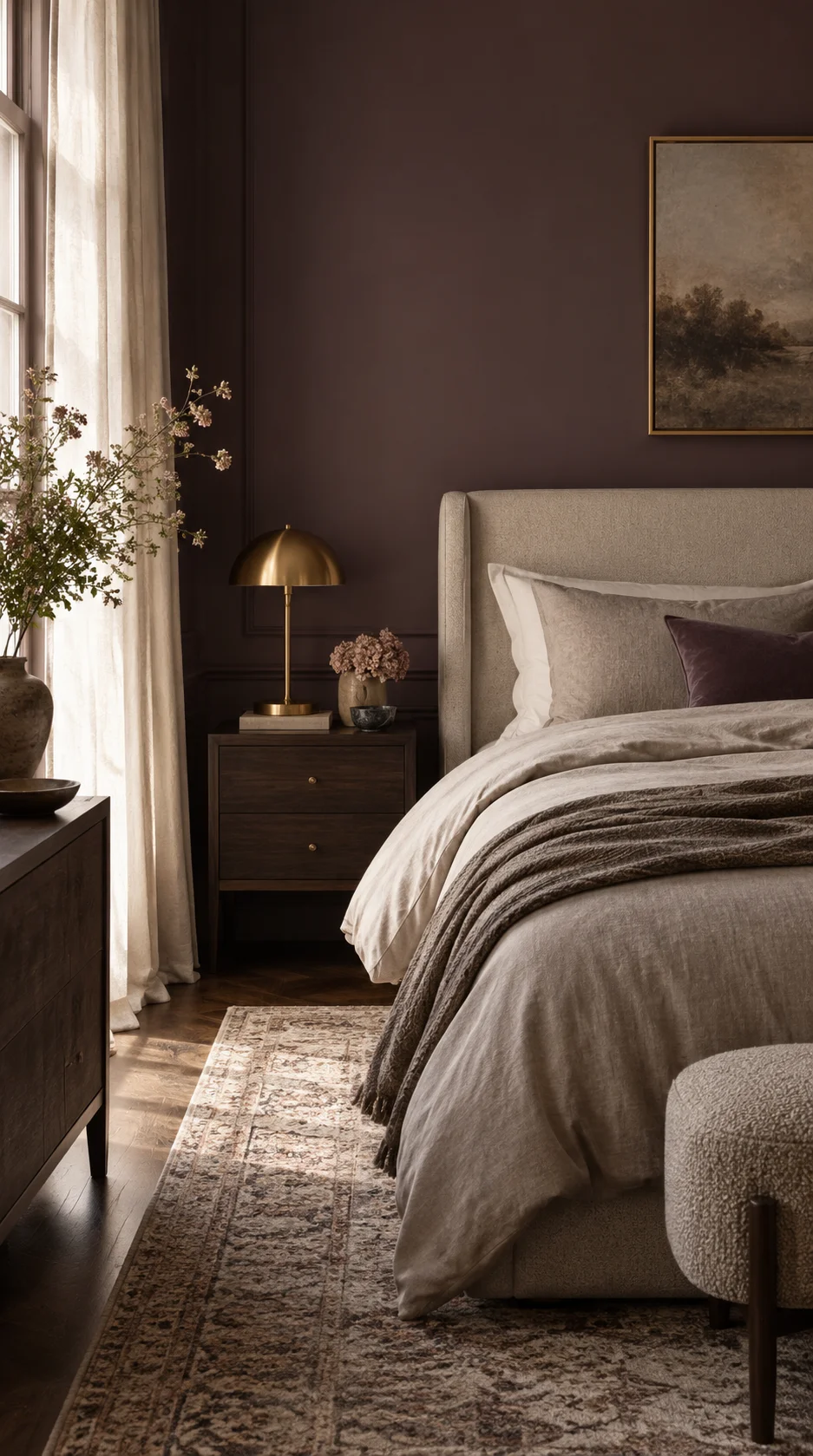
Smoky plum blends purple, brown, and gray undertones to create a romantic color that feels refined rather than overly sweet. It works well in bedrooms with soft natural light and warm-toned furniture.
Pair it with mushroom taupe, oatmeal, dark walnut, and brushed gold. Velvet or linen accessories can bring out the richness of the walls without requiring additional strong colors.
7Blackened Teal

Blackened teal sits between deep blue and green, giving the walls dimension as the light changes. It feels dramatic enough for an intimate retreat while remaining connected to calming natural colors.
Decorate with walnut, caramel, warm cream, and aged bronze. Keep bedding relatively simple so the complex wall color remains the main feature of the room.
Amazon find: Walnut-Style Bedside Tables
Warm wood can soften a blue-green wall and provide a useful natural contrast beside the bed.
8Earthy Terracotta

A deep, muted terracotta creates warmth without making the bedroom excessively dark. Brown or clay undertones give it an earthy quality that feels cozy in desert-inspired, Mediterranean, bohemian, and modern organic rooms.
Combine terracotta with sand, ivory, natural oak, and muted olive. Keep bright orange accessories to a minimum so the palette remains subdued and romantic.
9Warm Soft Black
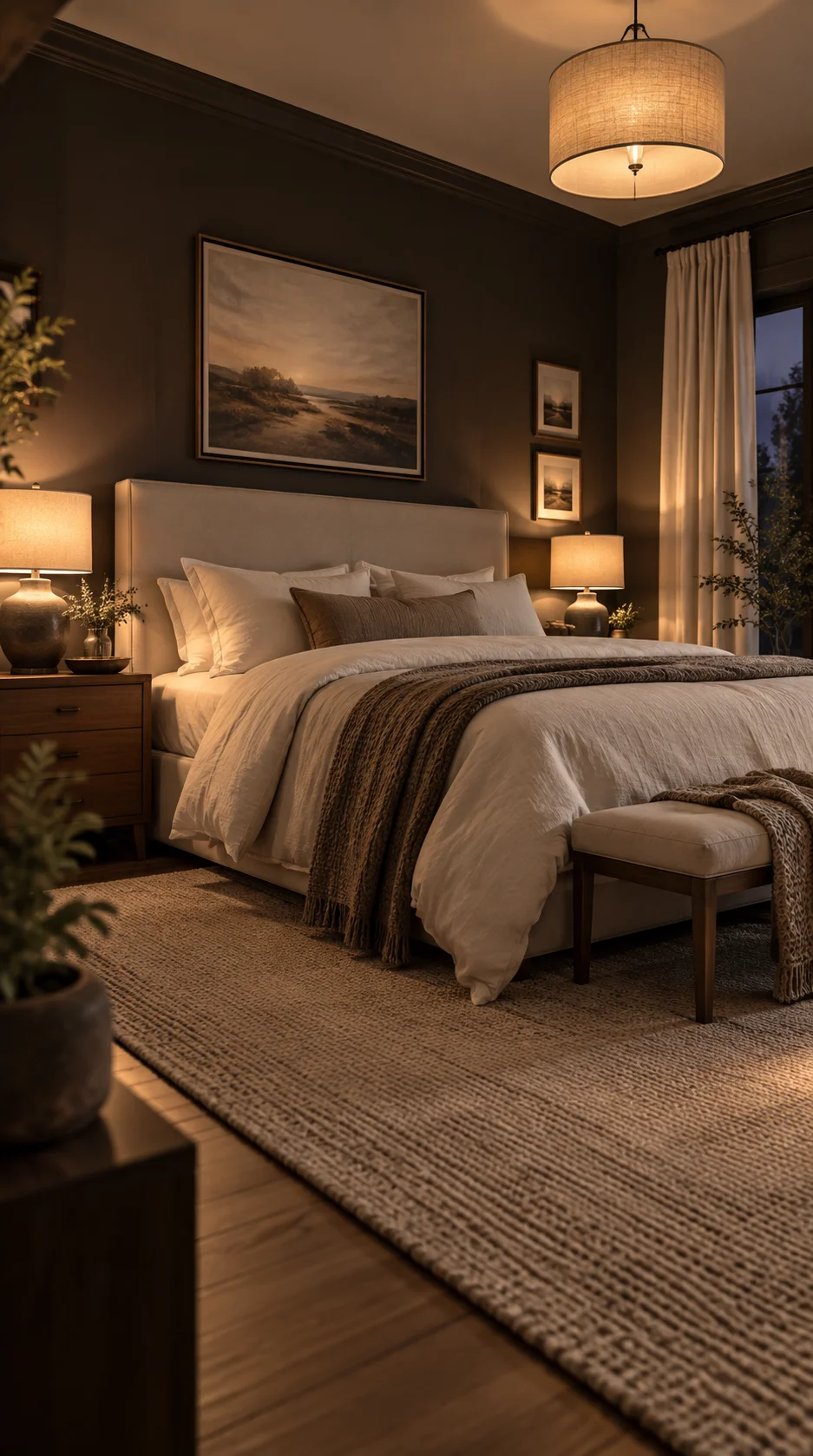
A warm black with brown, bronze, or slightly green undertones can create a sophisticated bedroom without feeling stark. It also provides a dramatic background for an upholstered headboard, pale bedding, and framed artwork.
Use several sources of warm light and include medium-toned wood to soften the contrast. A lighter rug and curtains can prevent the lower and outer edges of the room from feeling visually heavy.
Amazon find: Warm White Dimmable Light Bulbs
Adjustable warm lighting helps a black bedroom feel gentle and comfortable instead of harsh during the evening.
10Deep Mushroom Taupe
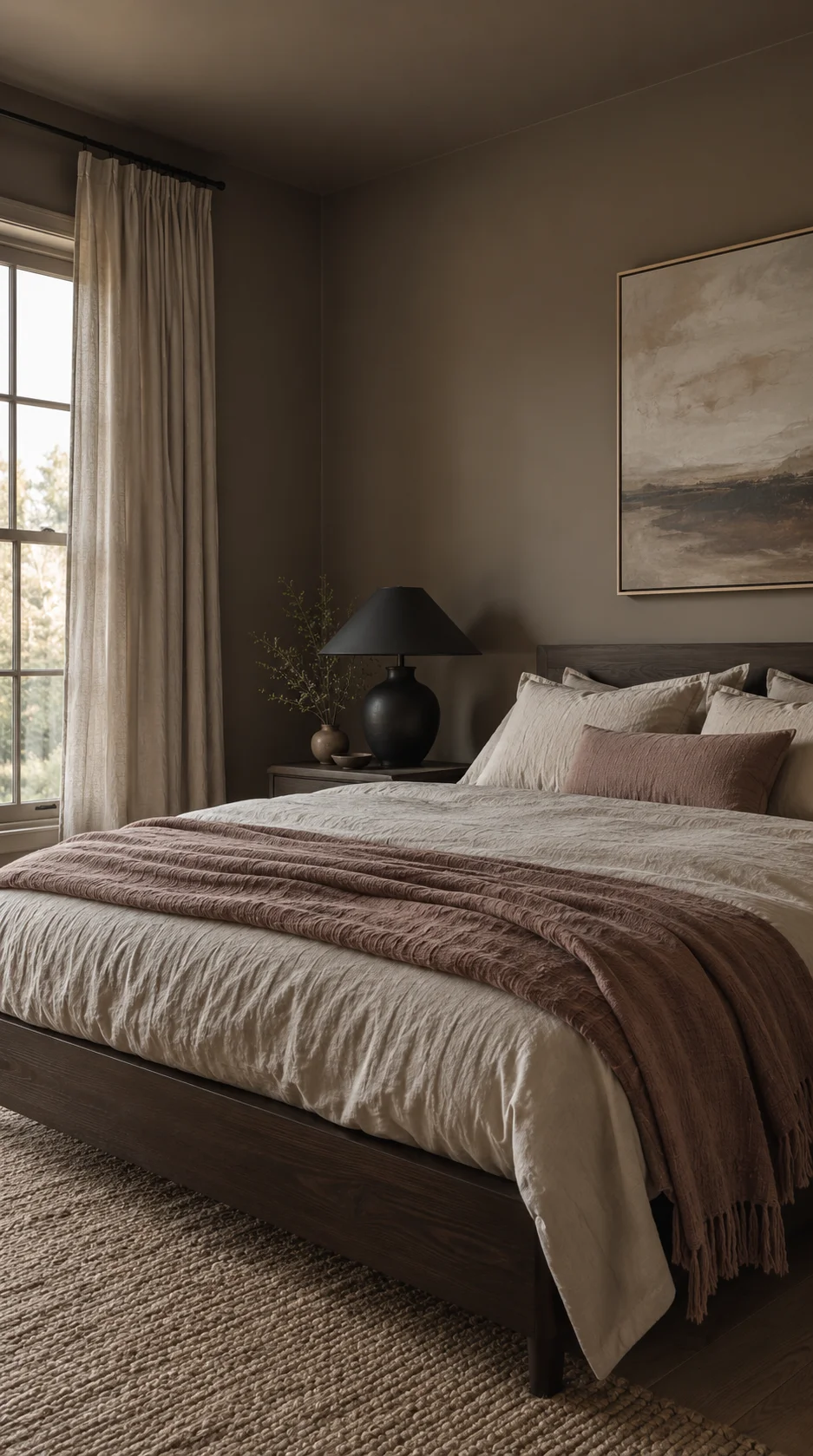
Deep mushroom taupe is ideal when you want a moody room without committing to a saturated color. Its balance of brown and gray creates a quiet, enveloping backdrop that suits both warm and modern interiors.
Layer it with cream, flax, dusty rose, dark brown, and black accents. This color also works well across every wall because its contrast is gentler than black, navy, or burgundy.
11Muted Dusty Mauve
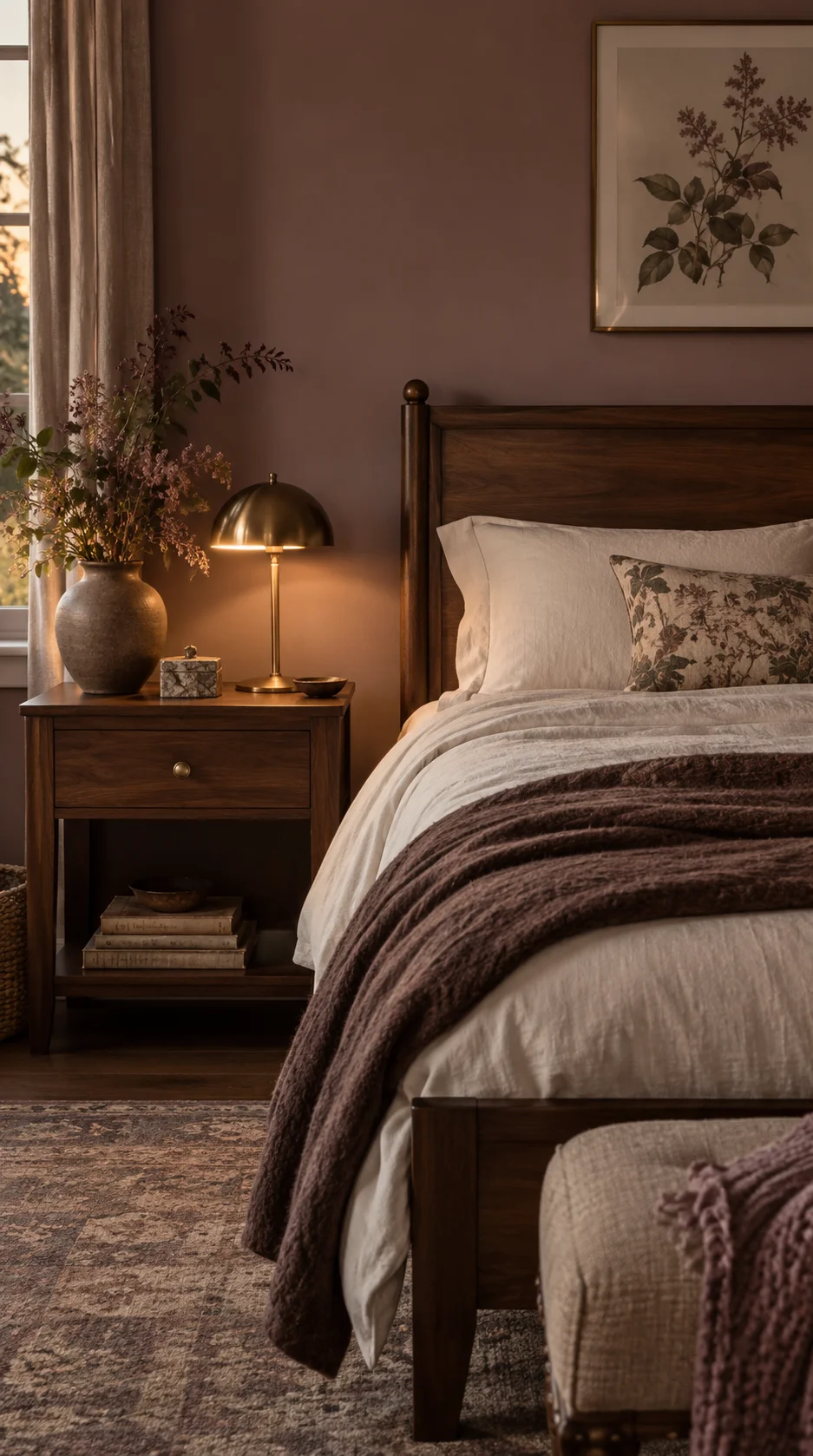
Dusty mauve creates a softer romantic bedroom than burgundy or plum. Choose a grayed, brown-based version rather than a bright pink-purple shade for a mature and restful result.
Pair the walls with cocoa brown, cream, walnut, and muted brass. Use solid bedding or a subtle botanical pattern so the room feels warm and sophisticated rather than overly decorative.
Amazon find: Cocoa Brown Throw Blanket
A chocolate or cocoa textile grounds dusty mauve and gives the softer color palette greater depth.
12Blue-Gray Slate

Blue-gray slate offers a calm, stormy atmosphere that feels less saturated than navy. It is a useful choice for people who want dark bedroom decor but prefer a quieter and more adaptable wall color.
Warm the slate with oatmeal bedding, natural wood, cognac, and aged brass. If the room faces north or receives limited daylight, avoid overly icy slate tones and test warmer blue-gray alternatives.
Dark Bedroom Painting and Decor Shopping Checklist
| Item | Best For | Amazon Search |
|---|---|---|
| Paint sample sheets | Testing dark colors on several walls | Shop on Amazon |
| Paint roller set | Applying consistent coverage to larger walls | Shop on Amazon |
| Angled paintbrush | Cutting in around trim, windows, and ceilings | Shop on Amazon |
| Painter’s tape | Protecting trim and creating clean edges | Shop on Amazon |
| Canvas drop cloth | Protecting floors and furniture | Shop on Amazon |
| Warm light bulbs | Softening dark walls during the evening | Shop on Amazon |
| Neutral duvet cover | Balancing rich or dark walls | Shop on Amazon |
Best Complete Color Palettes for a Moody Bedroom
Modern Charcoal Romance
Smoky charcoal, ivory, natural oak, camel, and antique brass.
Forest Retreat
Deep forest green, walnut, oatmeal, rust, and aged bronze.
Wine and Mushroom
Burgundy, mushroom taupe, cream, dark wood, and muted gold.
Common Dark Bedroom Painting and Styling Mistakes
- Choosing from a small paint chip: Dark shades change substantially across a large wall, so test them on movable sample boards first.
- Ignoring undertones: Compare the paint with the flooring, trim, headboard, curtains, and nearby wood before making a final decision.
- Testing in only one type of light: View samples during the day and at night under the actual bedroom lighting.
- Depending on one ceiling fixture: Use bedside lamps, sconces, or floor lamps to prevent dark corners and create a softer atmosphere.
- Using only dark furniture and textiles: Add cream bedding, light curtains, a pale rug, or reflective accents to provide visual relief.
- Skipping wall preparation: Fill holes, clean the surface, sand repairs, and use an appropriate primer because deeper colors can emphasize uneven areas.
- Painting without ventilation: Follow the paint manufacturer’s instructions, ventilate the room, use suitable protective equipment, and allow the recommended drying and curing time.
Frequently Asked Questions
What is the most romantic dark bedroom paint color?
Burgundy, smoky plum, chocolate brown, forest green, and warm black can all feel romantic. The best choice depends on the room’s lighting, existing finishes, and the colors both people find relaxing.
Will dark paint make a small bedroom look smaller?
Dark paint may make the boundaries feel less obvious and can create a cozy, enveloping effect. Keep the room balanced with layered lighting, light bedding, simple window treatments, and uncluttered surfaces.
Should I paint one wall or the entire bedroom dark?
A single wall creates a defined focal point and is easier to balance, while painting every wall produces a more immersive mood. Test the color first and consider the room’s size, natural light, ceiling height, and available artificial lighting.
What paint finish is best for dark bedroom walls?
Matte and flat finishes create a soft appearance but may be harder to clean. Eggshell often provides a practical balance between low shine and easier maintenance. Always compare the manufacturer’s finish recommendations and test the appearance before painting the entire room.
Final Thoughts
Moody bedroom paint can turn an ordinary room into an intimate retreat. Smoky charcoal, forest green, chocolate, burgundy, navy, plum, and blackened teal all create depth while offering very different moods.
Choose the color by testing its undertones beside your existing flooring, furniture, bedding, and lighting. Then balance the dark walls with warm lamps, comfortable textiles, natural materials, and enough lighter contrast to define the room.
Start with several large samples and live with them for a few days before deciding. The right shade should feel restful in daylight, comfortable at night, and appealing to everyone who shares the bedroom.