
A tiny bedroom does not have to feel cramped or cluttered. With a thoughtful layout, better storage, and a few visual tricks, even a compact room can feel open, calm, and comfortable.
The smartest small bedroom ideas do more than look pretty. They improve the walking space, make everyday items easier to reach, and use walls, corners, and hidden areas that often go to waste.
This guide includes 17 practical ideas, a simple planning formula, room-by-room solutions, product suggestions, color palettes, common mistakes, and an easy shopping checklist.
Affiliate note: This article may contain affiliate links. If you buy through these links, we may earn a small commission at no extra cost to you.
More Small-Space Inspiration
Quick List: 17 Smart Small Bedroom Ideas
- Plan a clear walking path
- Choose a storage bed
- Use tall, shallow storage
- Float the nightstand
- Mount bedside lighting
- Hang curtains high and wide
- Place a mirror near daylight
- Use one continuous light palette
- Try a color-drenched accent
- Build storage around the headboard
- Add a slim picture ledge
- Choose a compact desk
- Use the back of the door
- Keep bedding visually simple
- Create one organized display
- Consider a daybed or loft bed
- Edit clutter with a reset basket
How to Make a Tiny Bedroom Feel Bigger
Measure before you move or buy anything. Record the room width, wall lengths, window position, closet access, door swing, and the open space around the bed. A comfortable pathway of about 24 inches is helpful where the room allows it, but the most important goal is keeping doors and drawers usable.
Next, decide which functions the room must support. Sleeping is essential, but you may also need dressing, working, reading, or extra storage. Give each function one compact zone and choose furniture that can handle more than one job.
Finally, reduce visual interruptions. Repeating colors, exposing more floor, using taller elements, and keeping surfaces clear allow the eye to move through the room. A tiny space usually feels larger when it has fewer but more useful pieces.
Clear pathway + visible floor + vertical storage + reflected light + one calm palette
Best Solutions for Common Small-Bedroom Problems
| Style / Area / Decor Item | Best Pieces to Use | Why It Works |
|---|---|---|
| Narrow bedside area | Floating shelf and plug-in sconce | Provides essentials while keeping the floor open. |
| Limited closet space | Storage bed, tall cabinet, and over-door organizer | Uses hidden and vertical areas before adding bulky furniture. |
| Dark bedroom | Mirror, light curtains, and layered lamps | Spreads natural and artificial light more evenly. |
| Work-from-bedroom corner | Wall-mounted desk and nesting stool | Creates a useful work zone with a small footprint. |
| Visually busy room | Closed bins, simple bedding, and one display area | Reduces visual clutter without removing personality. |
Space-Saving Design Tricks to Create a Brighter, More Open and Comfortable Bedroom
1Plan One Clear Walking Path
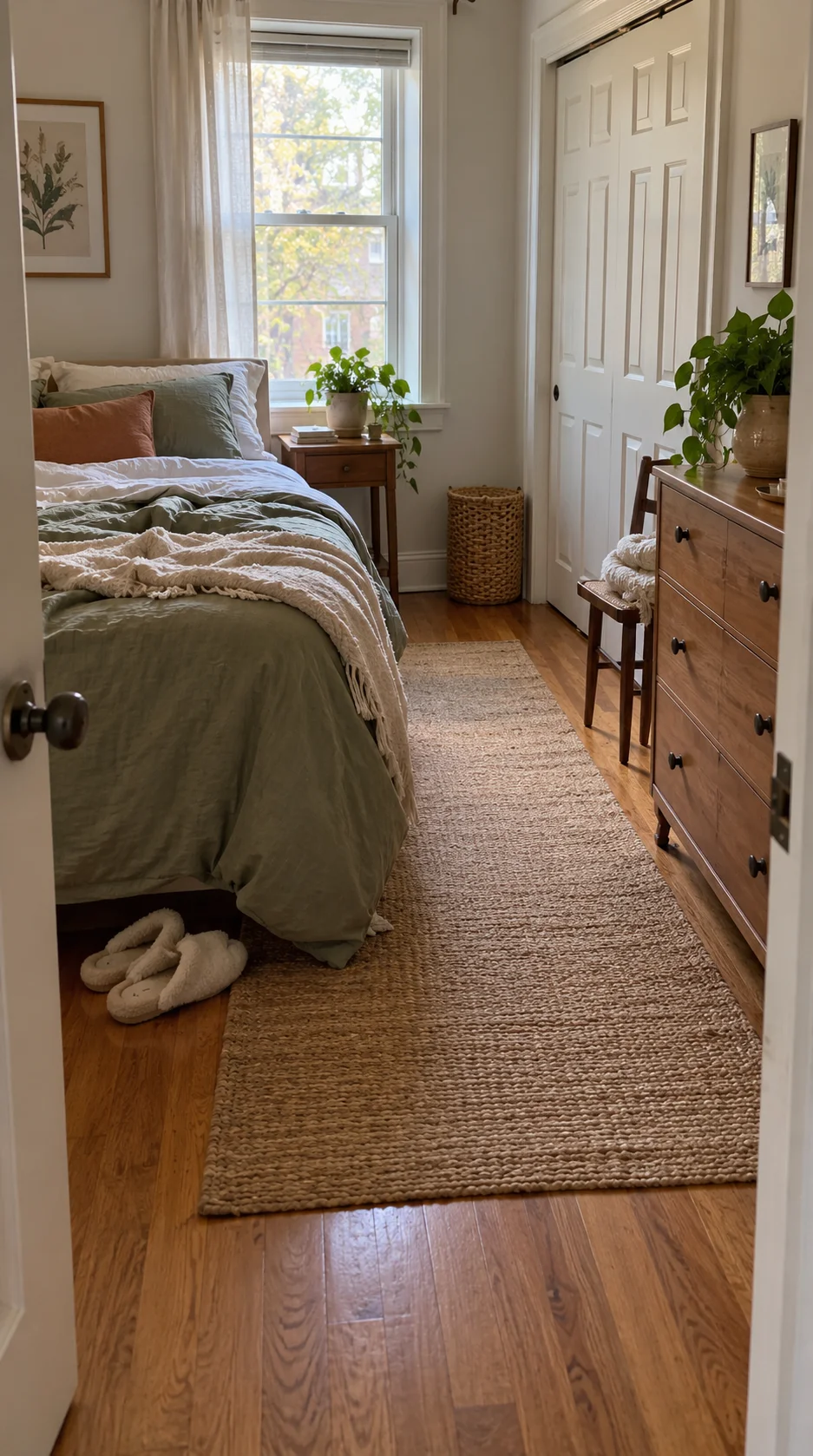
A room feels larger when you can enter and move around without weaving between furniture. Start by placing the bed where it does not block the doorway, closet, or main window. Then align the remaining furniture along as few walls as possible.
Use painter’s tape to mark furniture footprints before rearranging. If a dresser drawer hits the bed or a chair interrupts the doorway, choose a shallower piece or move that function elsewhere. A clear route often matters more than having a perfectly centered bed.
2Choose a Bed With Built-In Storage
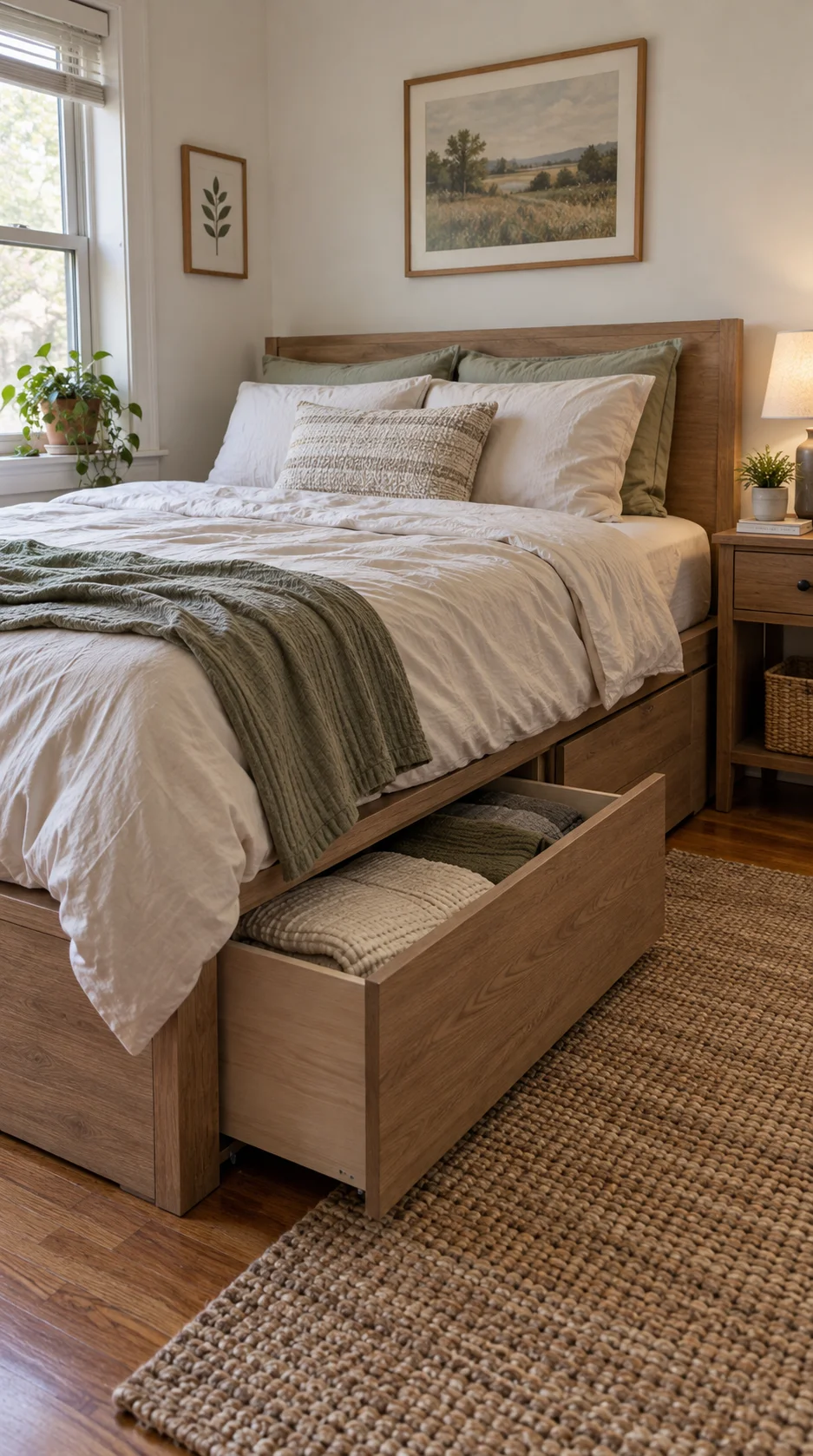
A platform bed with drawers or lift-up storage can replace a separate dresser or linen cabinet. Use the hidden space for seasonal clothes, spare bedding, shoes, or items you do not need every day.
Check the direction in which drawers open and leave enough clearance beside the bed. If replacing the frame is not practical, use matching low-profile containers beneath the current bed and add a simple bed skirt if the bins remain visible.
Amazon find: Under-Bed Storage Containers
Low containers turn unused floor space beneath the bed into organized storage without adding another cabinet.
3Use Tall, Shallow Storage
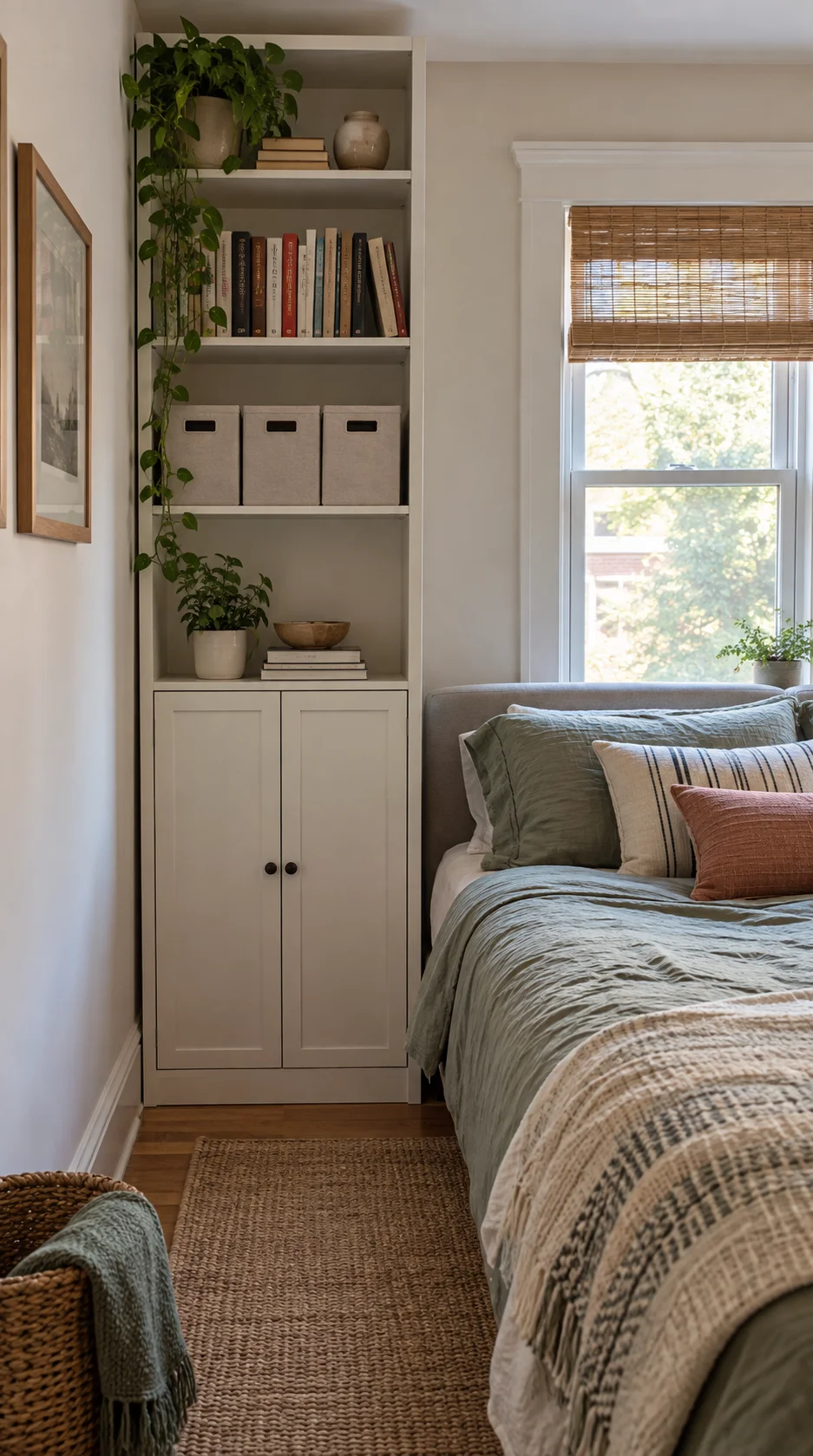
A tall bookcase or narrow cabinet uses wall height without taking up the floor area of a wide dresser. Closed storage on the lower half can hide clutter, while a few open shelves above can hold books and decor.
Choose a unit with a shallow depth and a color close to the wall so it visually recedes. Place frequently used items between waist and eye level. Always secure tall furniture to a wall stud or with the recommended anti-tip hardware.
4Float the Nightstand
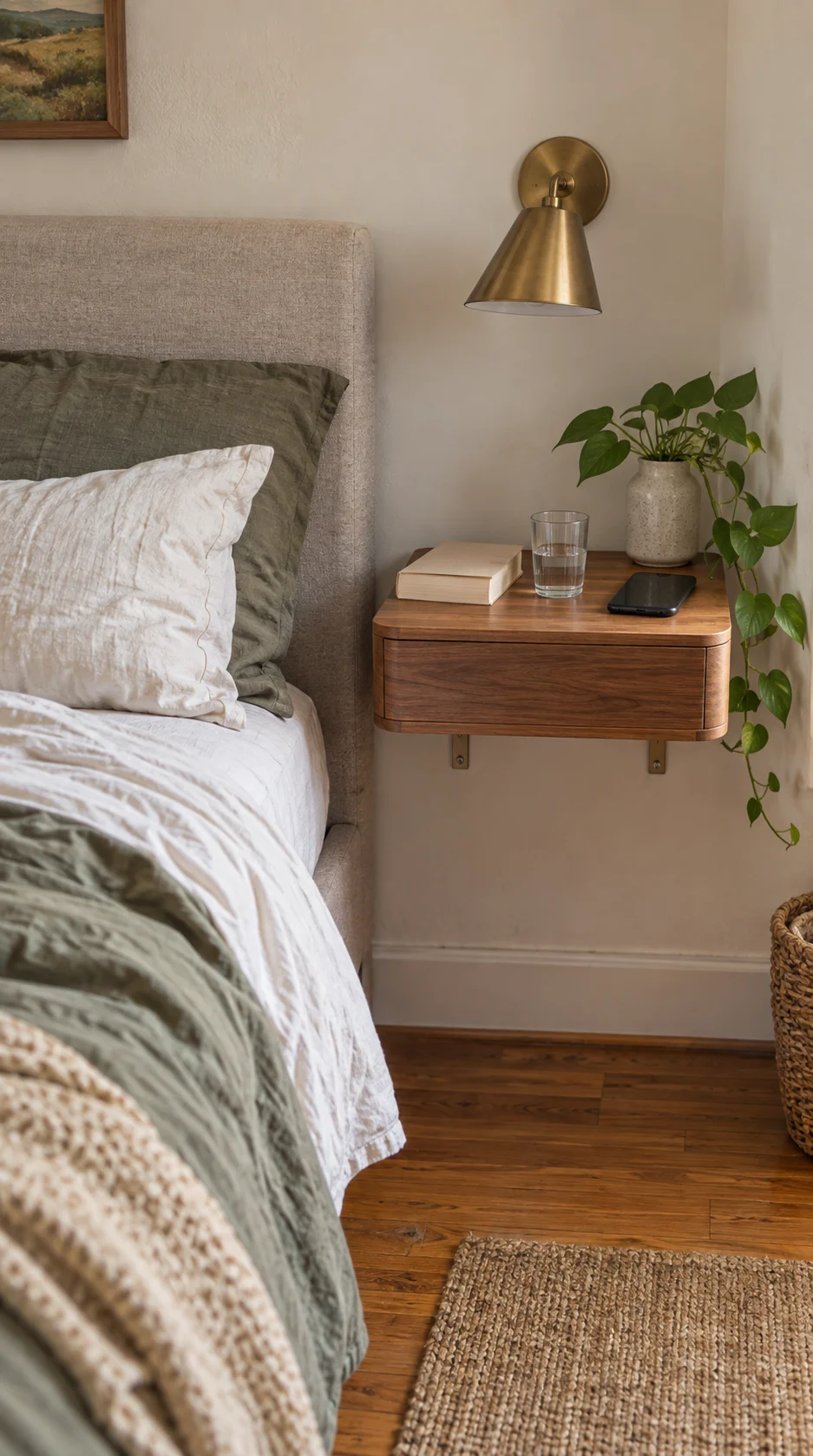
A wall-mounted nightstand keeps more floor visible, which makes the bed area feel less crowded. A small shelf is enough for a phone, book, and water glass, while a compact drawer can hide charging cables and personal items.
Mount it near the top of the mattress so it is easy to reach. Choose rounded corners for a narrow pathway, and use fasteners designed for the wall material and expected weight rather than relying on light-duty adhesive strips.
Amazon find: Floating Nightstand
A compact floating nightstand provides bedside function while preserving the open floor beneath it.
5Mount the Bedside Lighting
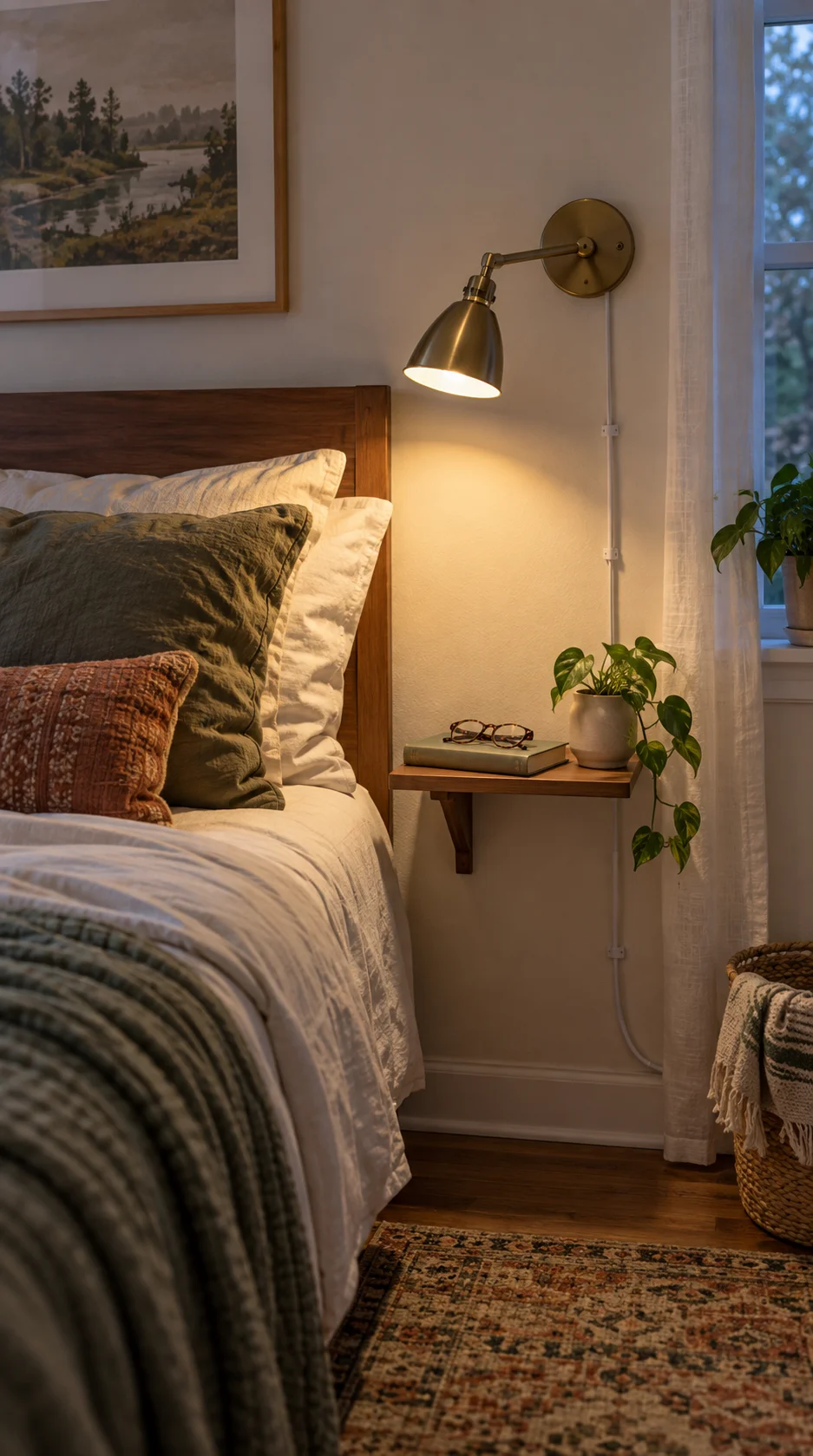
A plug-in wall sconce or adjustable reading light frees the nightstand from a lamp base. It also brings light closer to where you need it, making the room more comfortable for reading without requiring electrical work.
Install the fixture where the light will reach your book but not shine directly into your eyes. Secure loose cord sections with removable cable clips and keep wiring away from pillows, blankets, heaters, and walking paths.
Amazon find: Plug-In Wall Sconce
A slim plug-in fixture adds focused light without using valuable furniture space.
6Hang Curtains High and Wide
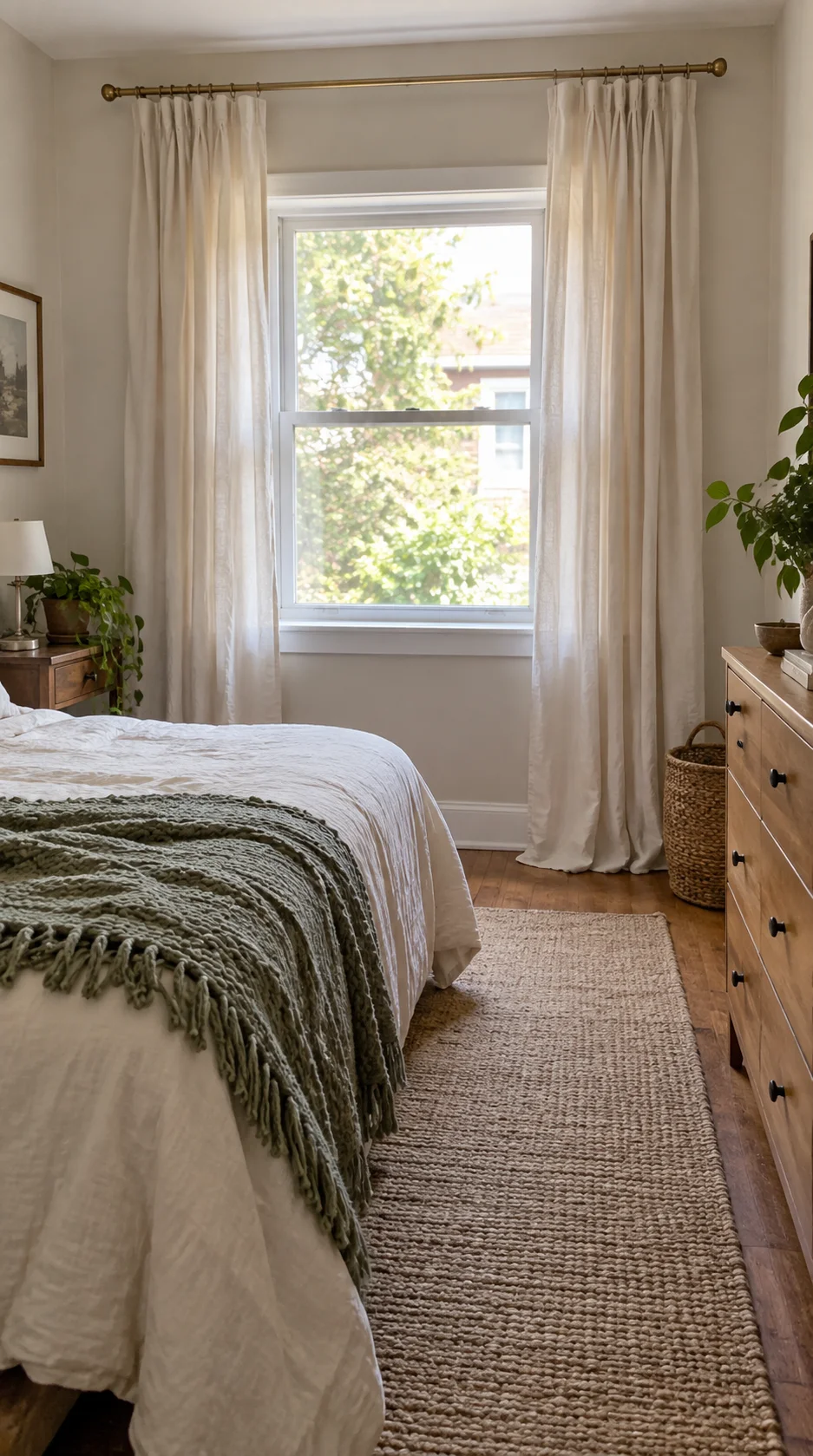
Mounting the curtain rod several inches above the window pulls the eye upward and makes the wall appear taller. Extending the rod beyond the frame allows open panels to reveal more glass and bring extra daylight into the room.
Choose floor-length curtains in a color close to the walls for a continuous look. Lightweight fabric keeps the window airy, while a lined panel can improve privacy. Measure from the planned rod position to the floor before ordering.
7Place a Mirror Near Natural Light
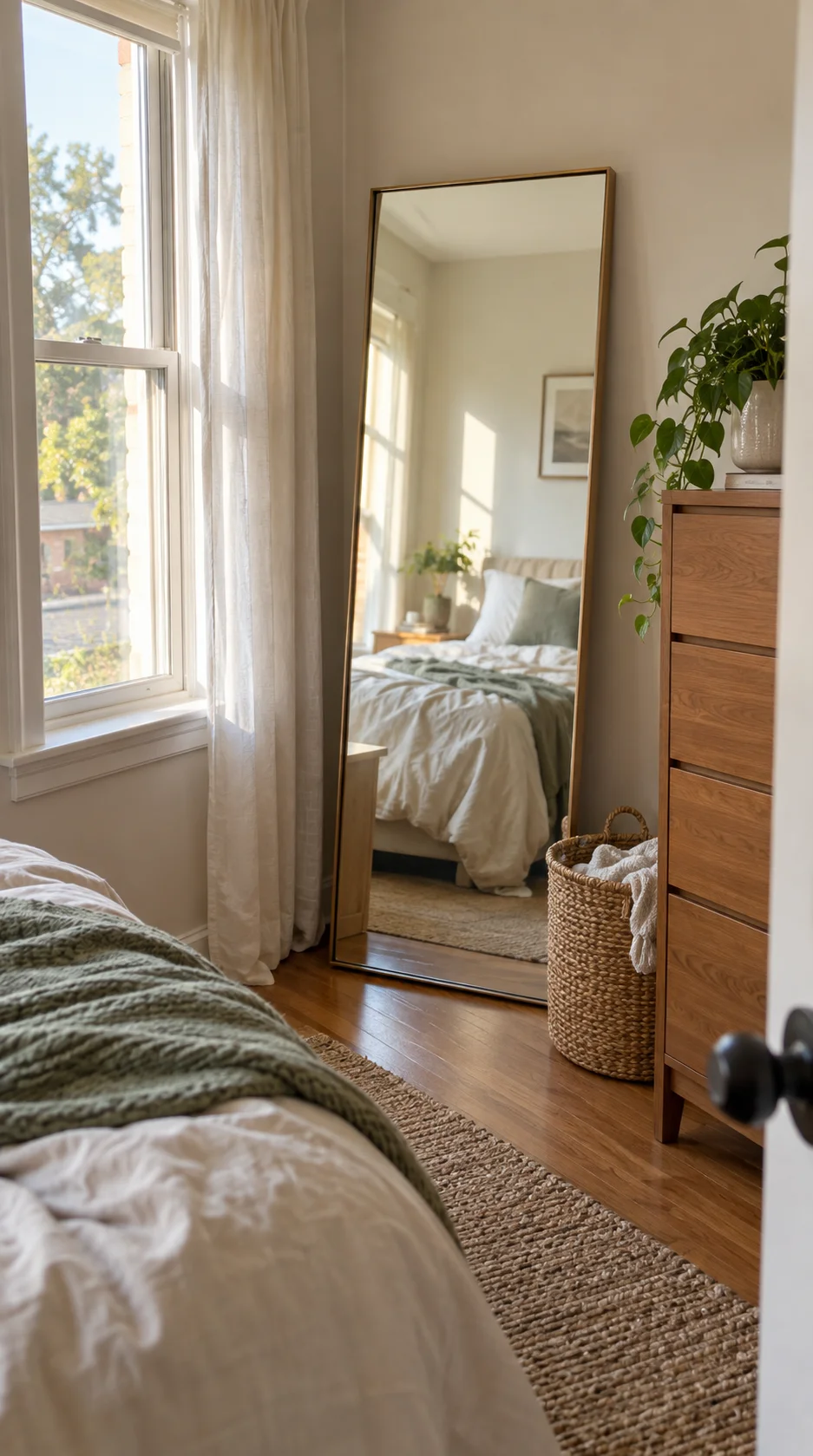
A mirror can spread daylight and create a sense of depth. Position one across from or beside a window, above a dresser, or behind a door. Check the reflection first so it highlights an attractive, uncluttered part of the room.
One medium or large mirror generally looks calmer than a collection of tiny ones. A thin frame keeps the profile light. Use weight-rated hardware, and attach a leaning mirror to the wall with an anti-tip strap.
Amazon find: Full-Length Mirror
A full-length mirror provides a useful dressing view while reflecting light through a narrow room.
8Use One Continuous Light Palette
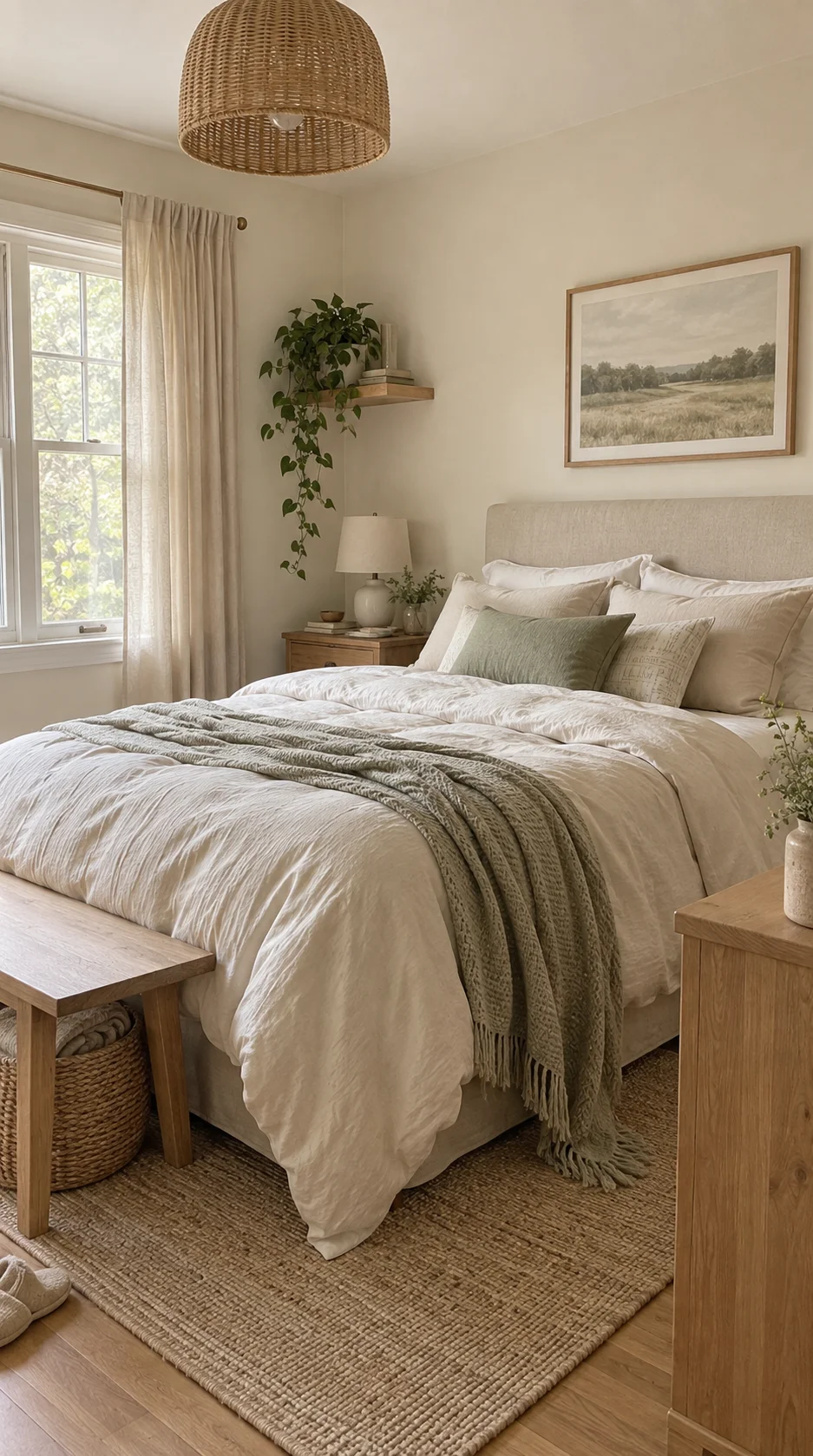
Using similar light tones on the walls, curtains, and large bedding areas reduces hard visual breaks. Warm white, cream, light greige, pale sage, and misty blue can make the room feel open without looking cold.
Add depth with texture rather than many contrasting colors. A woven throw, soft rug, linen curtain, and pale wood furniture can all belong to the same calm palette while keeping the room interesting.
9Try a Color-Drenched Accent
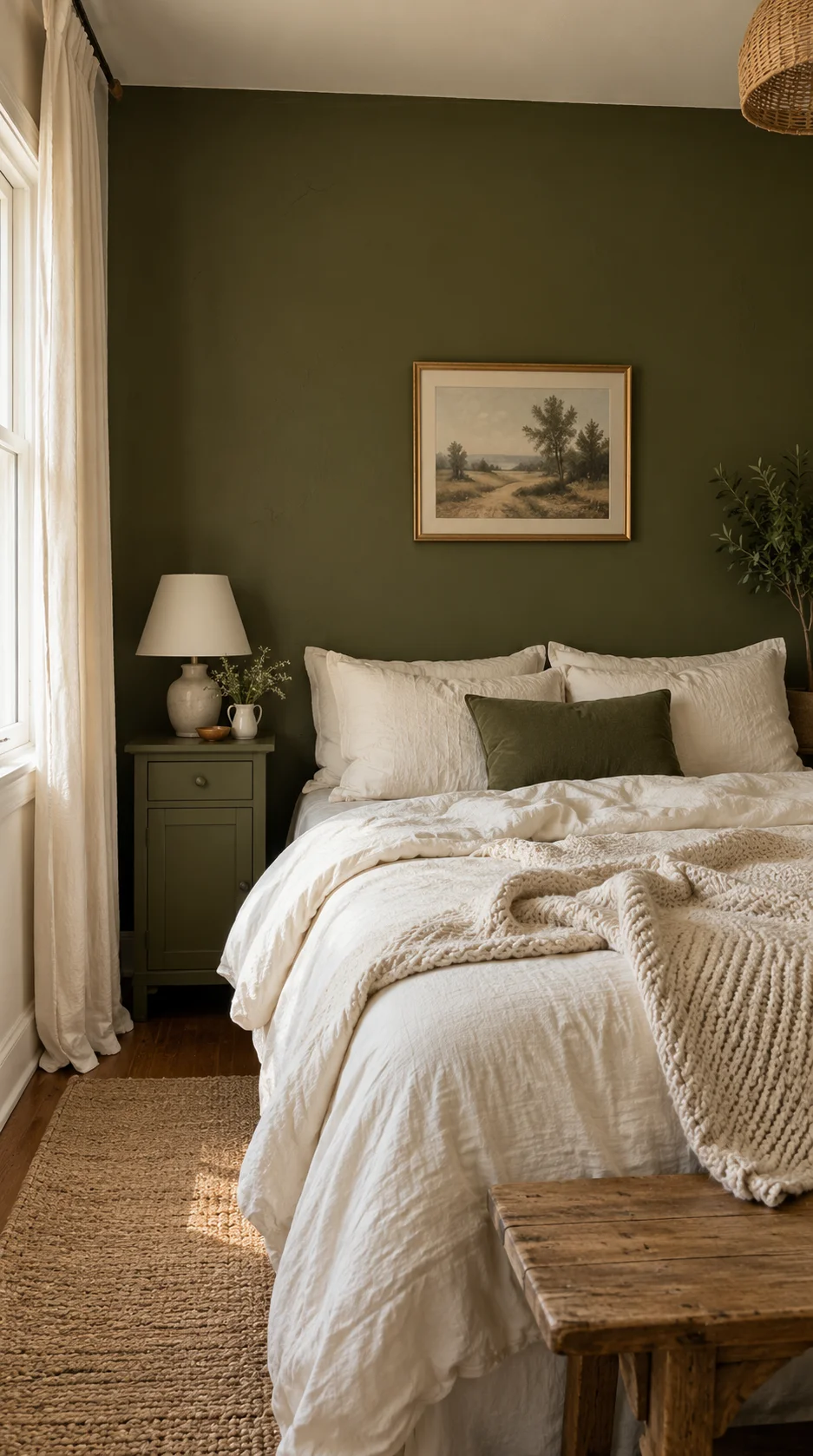
A tiny bedroom does not have to be entirely pale. Painting one wall and nearby furniture in a similar deep tone can blur their outlines and create a cozy, unified look. Dusty navy, deep olive, warm charcoal, and muted burgundy work well in controlled amounts.
Keep the ceiling, bedding, or window treatment lighter so the room retains balance. Test the paint in morning and evening light before committing. This approach works best when the accent color is repeated only a few times.
10Build Storage Around the Headboard
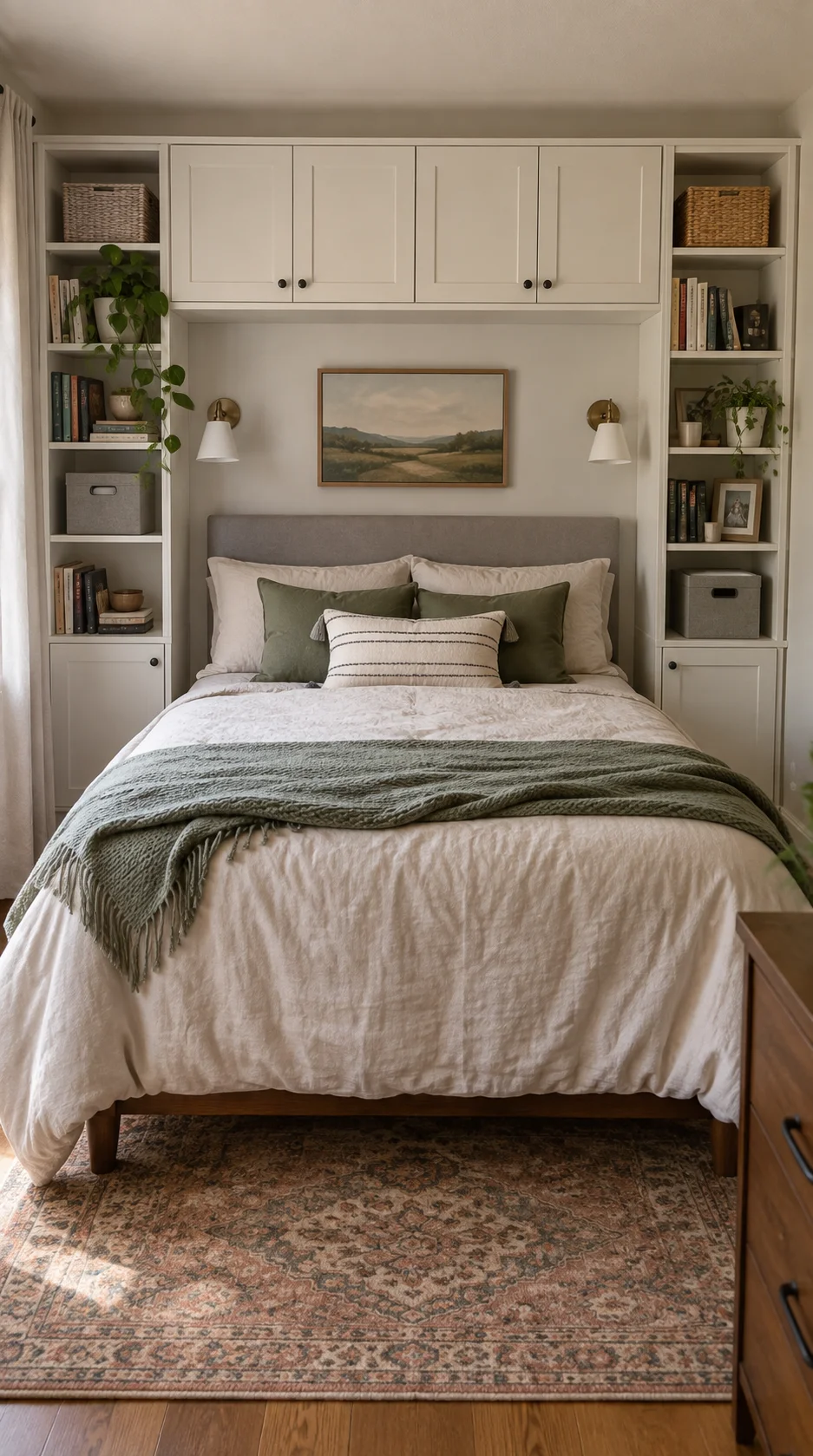
Shallow cabinets or shelves positioned beside and above the headboard can turn an unused wall into organized storage. Keep the center visually simple so the bed does not feel boxed in, and use closed doors for items that would otherwise create clutter.
This project requires careful measurement and secure installation. Maintain head clearance, use wall-appropriate anchors, and avoid placing heavy or breakable objects directly over pillows. A professional should handle complicated built-ins or uncertain wall conditions.
11Add a Slim Picture Ledge
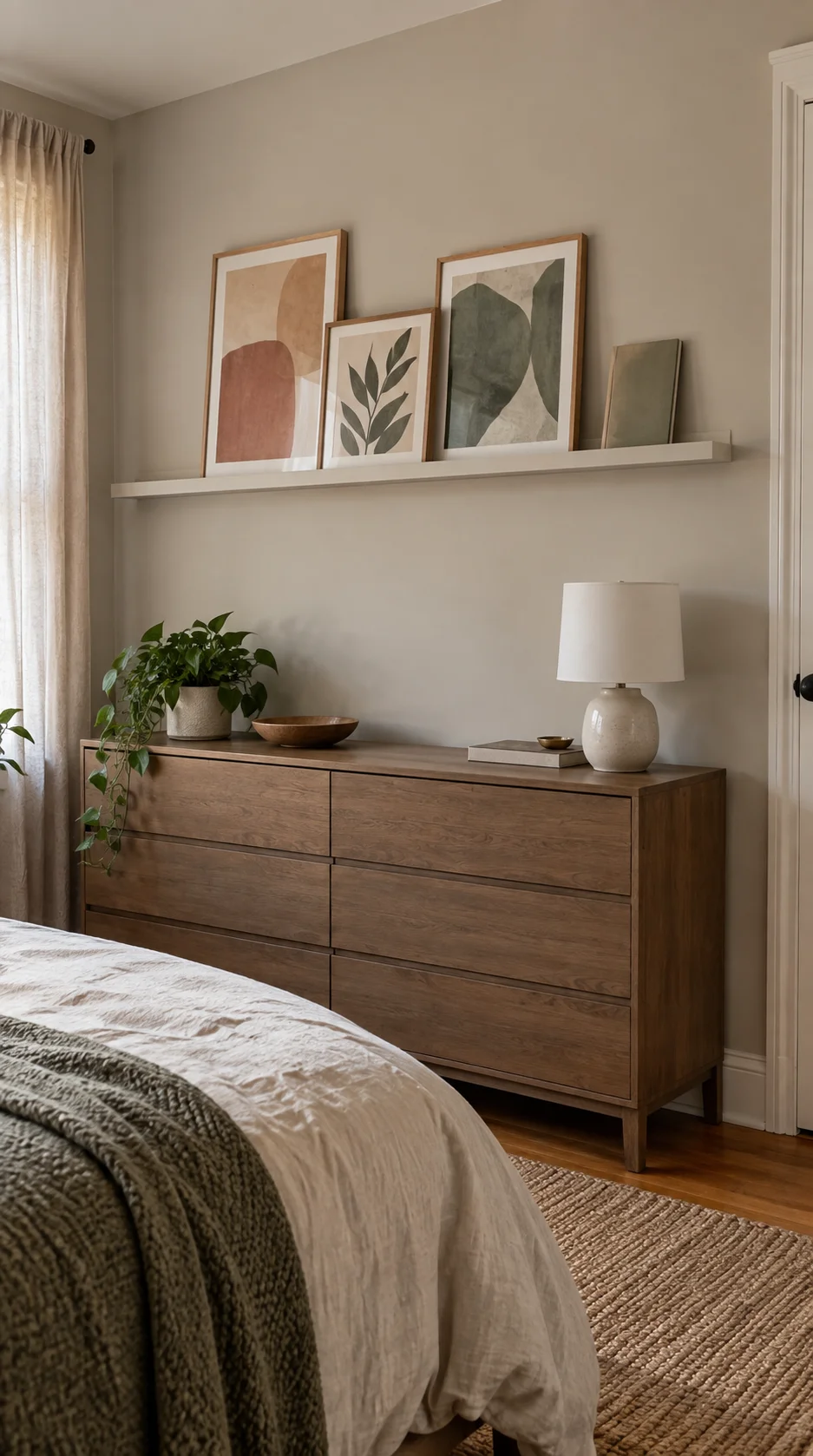
A picture ledge uses very little depth and lets you layer framed photos, artwork, and a small book without filling the wall with separate holes. It can also replace decorative objects on a dresser, freeing that surface for daily use.
Paint the ledge the wall color to make it visually disappear. Overlap two or three frames and leave open space at each end. Install it away from the sleeping area unless every item is lightweight and properly secured.
Amazon find: Narrow Picture Ledge
A shallow ledge adds a flexible display surface without the footprint of another furniture piece.
12Choose a Compact or Wall-Mounted Desk
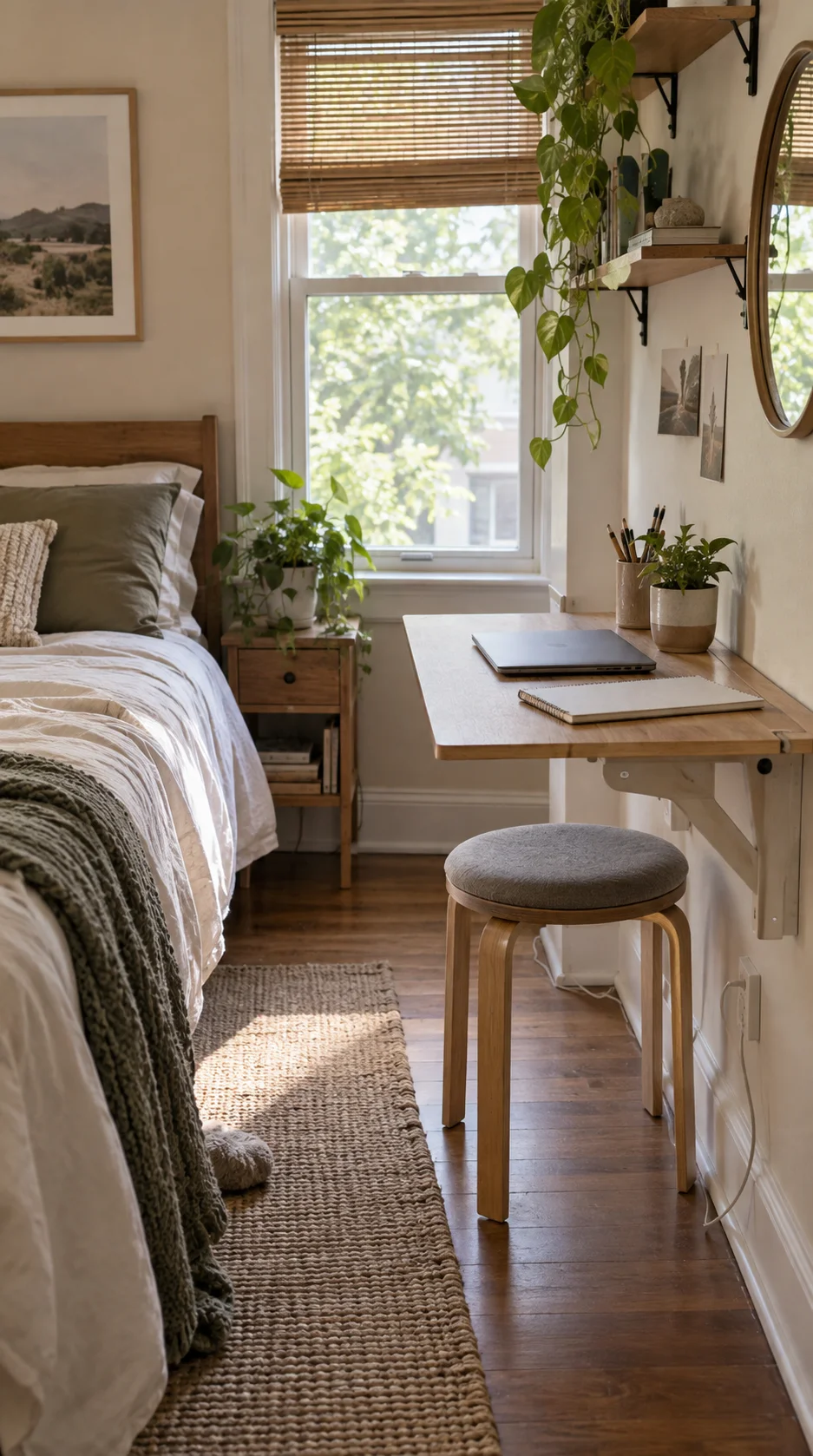
A narrow writing desk can double as a vanity or bedside table. Look for a shallow surface with a small drawer, or use a wall-mounted drop-leaf desk that folds away when the workday ends.
Pair it with a stool that slides completely underneath. Keep supplies in one drawer, a wall pocket, or a nearby basket rather than covering the desktop. Place the desk near daylight when possible, but avoid blocking the window or radiator.
Amazon find: Wall-Mounted Folding Desk
A folding desk creates a temporary work surface and closes when you need the bedroom to feel calm.
13Use the Back of the Door
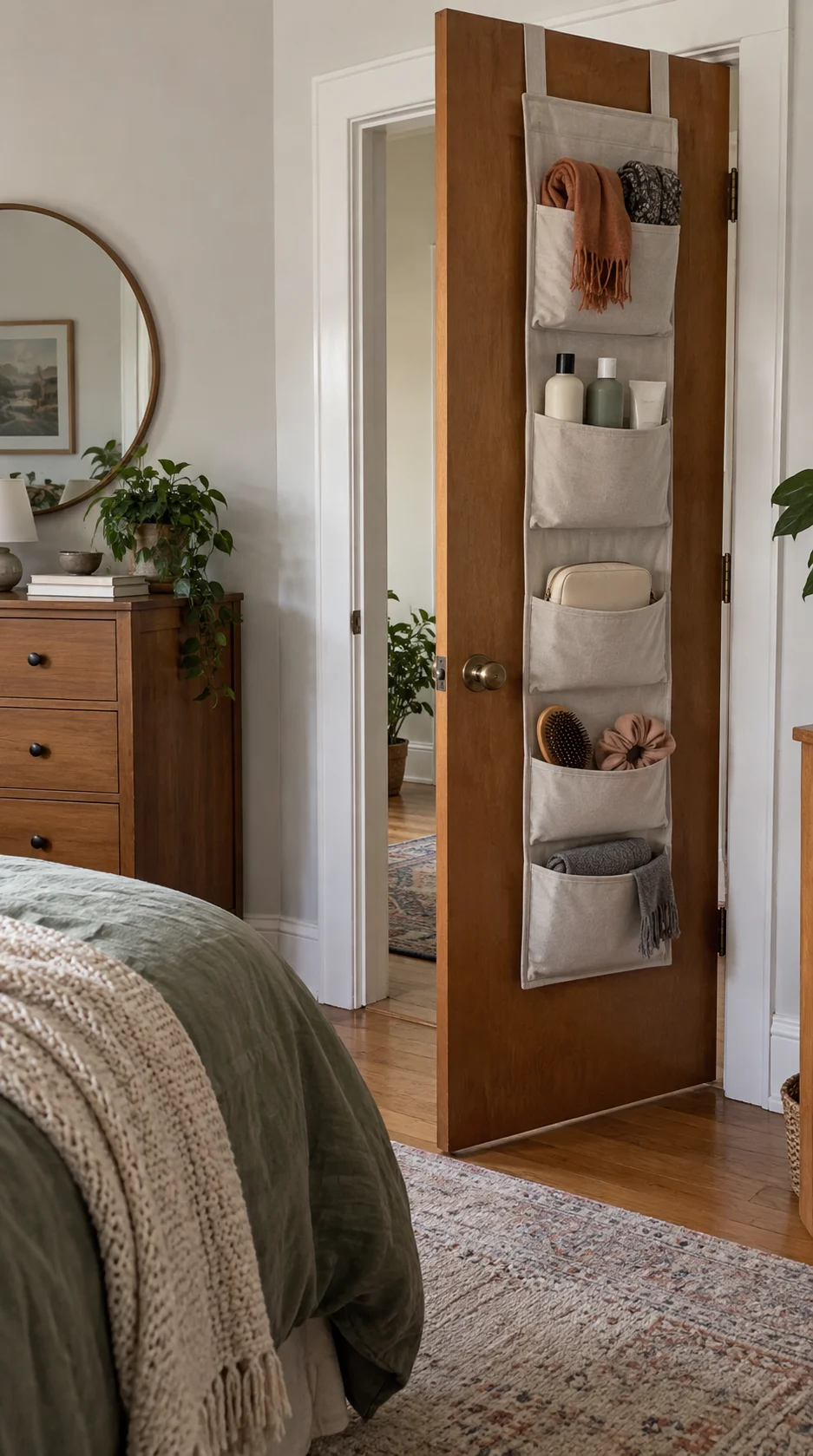
The back of the bedroom or closet door can hold shoes, accessories, scarves, small bags, or grooming supplies. A slim organizer keeps these items easy to reach while freeing drawers and visible surfaces.
Select a design that allows the door to close without rubbing the frame. Distribute weight evenly, avoid overloading hooks, and make sure the organizer does not cover required ventilation or interfere with handles and locks.
14Keep the Bedding Visually Simple
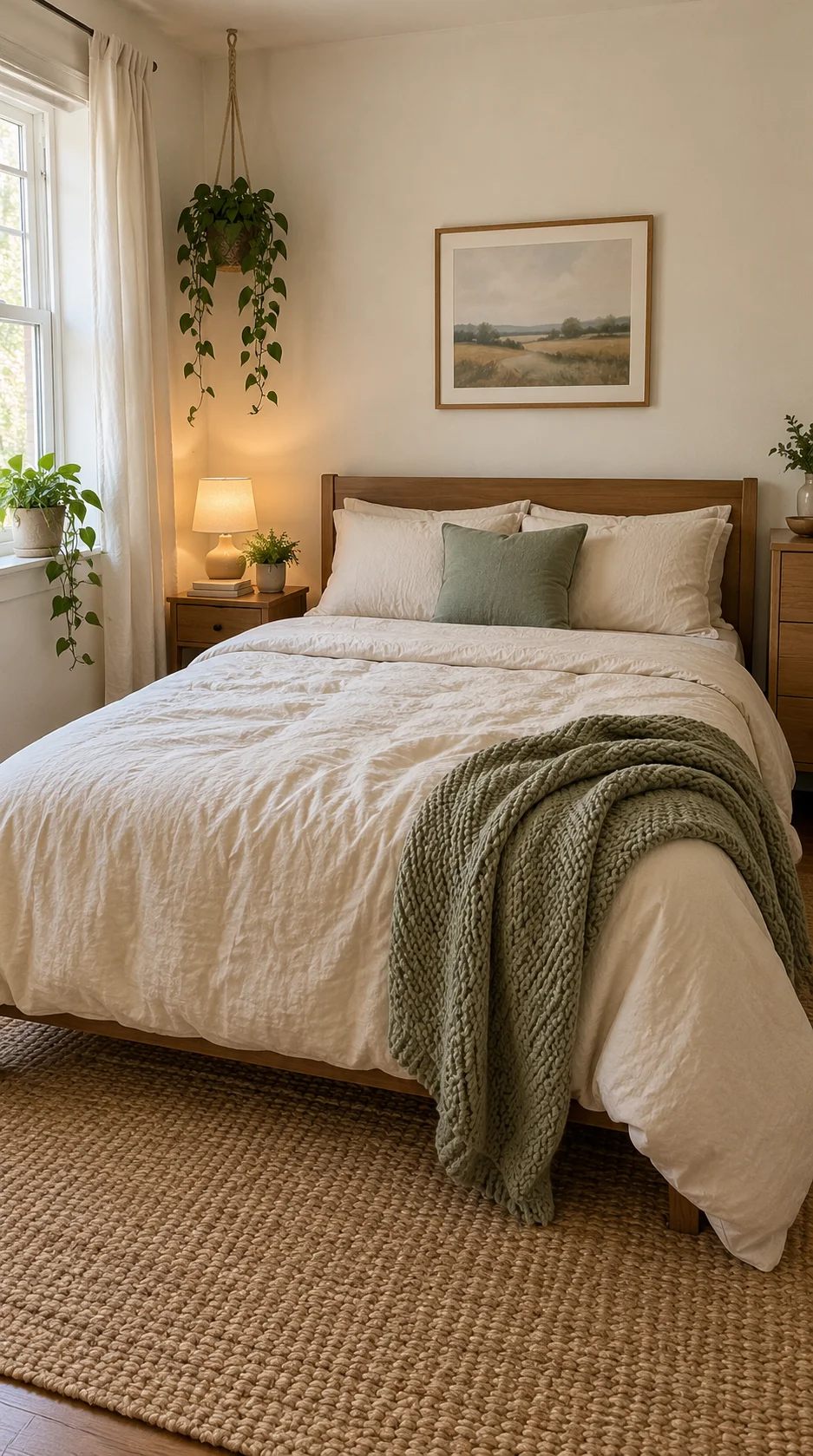
Because the bed occupies so much visual space, a calm bedding arrangement can make the entire room feel less crowded. Begin with a solid or subtly patterned duvet, then add one folded throw and a limited number of accent pillows.
Use texture for interest instead of combining many competing prints. Cotton, linen, knit, and a little velvet can feel layered while staying cohesive. Choose washable pieces that are easy to fold and store.
Amazon find: Textured Duvet Cover
A simple textured cover adds softness and interest without introducing a busy pattern to the room’s largest surface.
15Create One Organized Display Zone
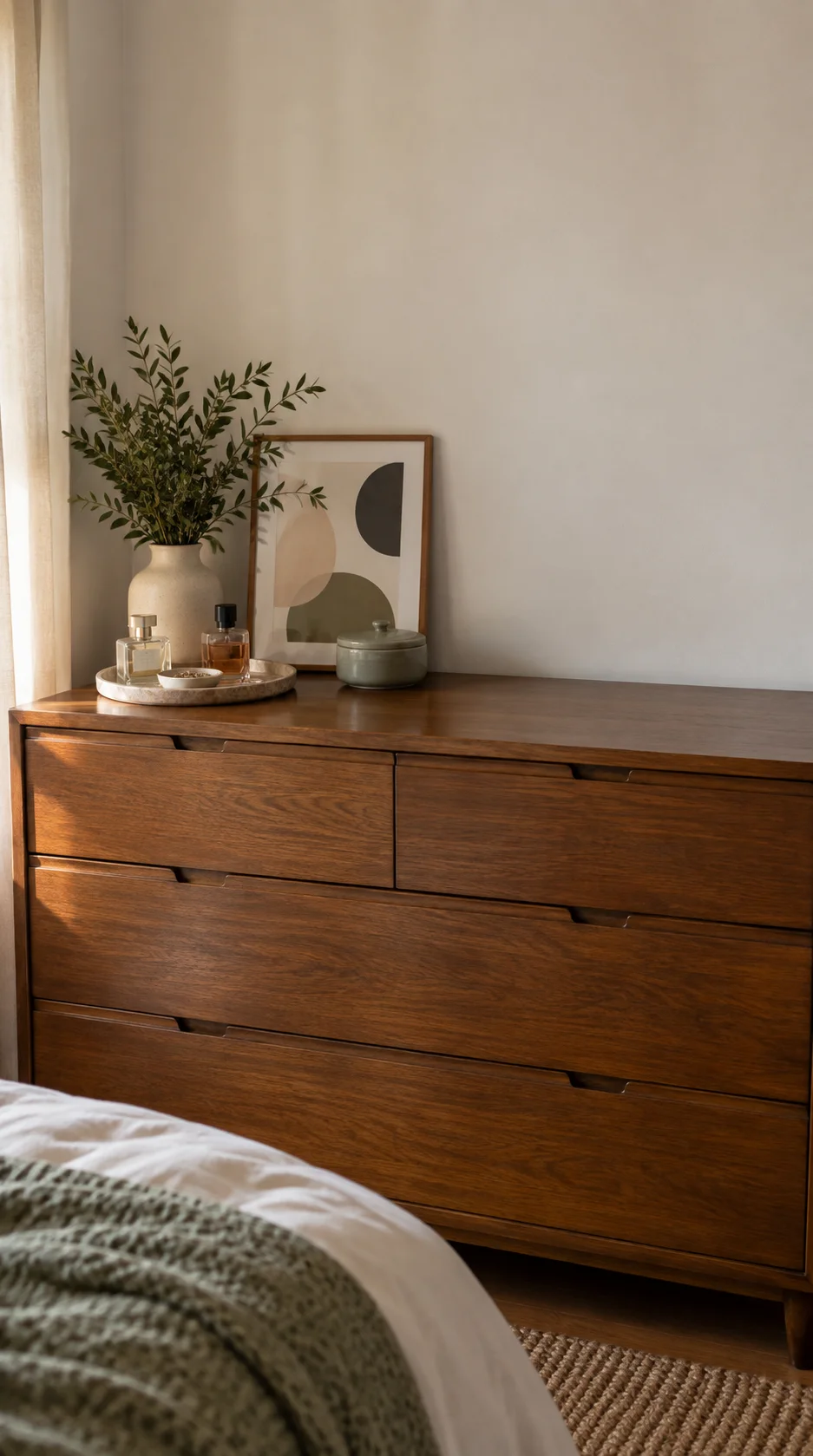
Instead of spreading decorations across every wall and surface, concentrate them in one area. Style a dresser corner, shelf, or small gallery with a few meaningful items, then leave the rest of the room quieter.
Use a tray to group perfume, jewelry, or daily essentials. Combine one taller object, one framed piece, and one small accent for balanced height. Open space around the arrangement helps it look intentional rather than cluttered.
16Consider a Daybed or Loft Bed
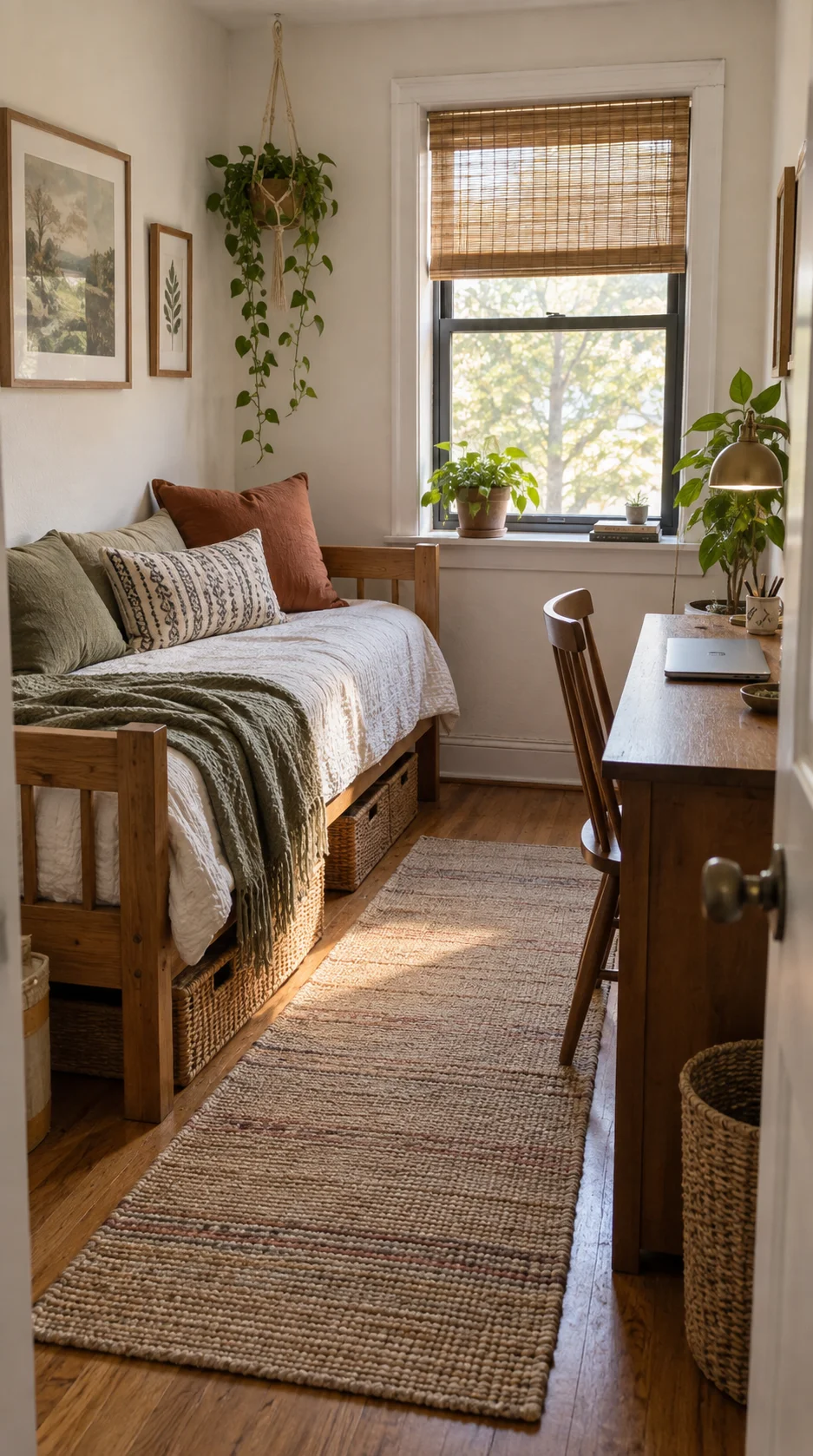
A daybed can function as seating during the day and a sleeping space at night, making it useful in a guest room or multipurpose bedroom. A loft bed frees the floor beneath it for a desk, dresser, or reading area.
Choose based on ceiling height, user age, room layout, and safety needs. Follow all manufacturer weight, guardrail, mattress-depth, and installation directions. A loft bed may not suit young children, people with limited mobility, or rooms with low ceilings or ceiling fans.
17Edit Clutter With a Reset Basket
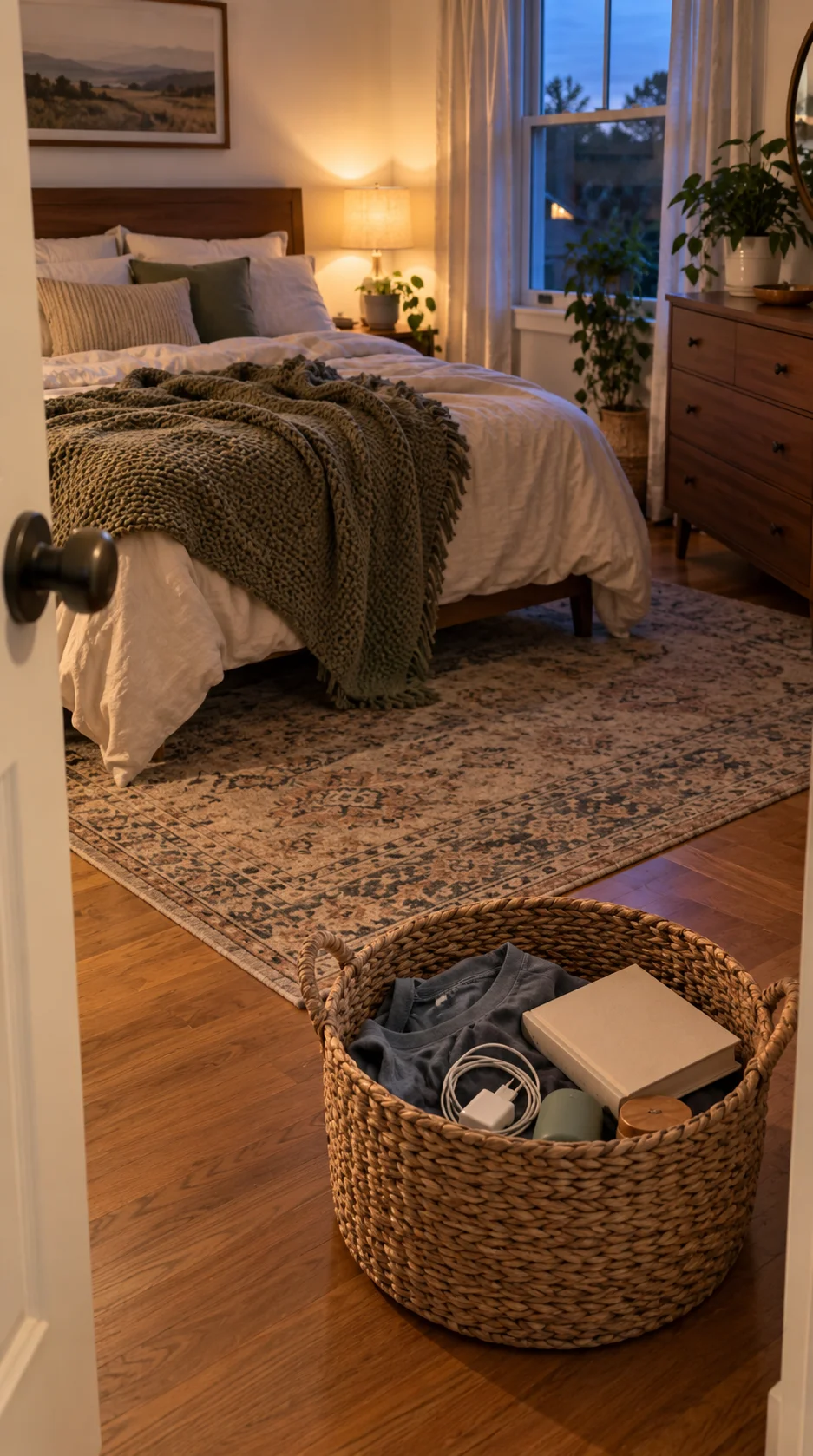
Small rooms reveal clutter quickly. Keep one attractive basket for items that belong elsewhere, then empty it during a five-minute evening reset. This prevents clothing, chargers, books, and everyday objects from collecting on the floor.
Give frequently used items a permanent home close to where they are used. If a drawer or basket is overflowing, remove duplicates before buying more storage. Better habits often create more usable space than another organizer.
Small Bedroom Shopping Checklist
| Item | Best For | Amazon Search |
|---|---|---|
| Under-bed storage | Seasonal clothing and linens | Shop on Amazon |
| Floating nightstand | Narrow bedside areas | Shop on Amazon |
| Plug-in wall sconce | Space-saving reading light | Shop on Amazon |
| Full-length mirror | Reflecting light and dressing | Shop on Amazon |
| Folding wall desk | Compact work or vanity zone | Shop on Amazon |
| Over-door organizer | Accessories and small essentials | Shop on Amazon |
Best Color Palettes for Tiny Bedrooms
Ivory, oatmeal, pale oak, camel, and soft black.
Warm white, misty blue, sand, faded navy, and light wood.
Cream, pale sage, olive accents, tan, and muted brass.
Greige, white, light gray, walnut, and charcoal.
Dusty navy, cream, pale gray, cognac, and aged gold.
Common Small-Bedroom Mistakes and Safety Tips
- Buying before measuring: Check the furniture footprint, drawer clearance, door swing, and delivery route before placing an order.
- Filling every corner: Open floor and empty wall space help a room breathe. Not every gap needs furniture or decor.
- Using only open storage: Too many visible items create visual clutter. Mix open shelves with drawers, doors, and matching bins.
- Choosing furniture that is too deep: A tall, shallow piece usually protects the walking path better than a wide, deep cabinet.
- Blocking light or airflow: Keep windows, vents, heaters, and radiators clear of bulky furniture and long fabric.
- Weak wall installation: Use suitable anchors, locate studs when needed, and respect the stated weight limit for shelves and fixtures.
- Ignoring tip-over risks: Secure tall furniture and leaning mirrors, especially in children’s rooms and homes with pets.
Frequently Asked Questions
What makes a small bedroom look bigger?
A clear walking path, visible floor, vertical storage, light-reflecting surfaces, and a limited color palette create the strongest sense of space. Keeping everyday clutter behind closed storage also makes an immediate difference.
Where should the bed go in a tiny room?
Place it where the doorway, closet, and window remain usable. Centering the bed looks balanced when space allows, but placing one side near a wall can protect a better walking path in a very narrow bedroom.
Can dark colors work in a small bedroom?
Yes. Use one deep accent color behind the bed or color-drench a wall and nearby furniture so their outlines blend. Balance the darker area with lighter bedding, curtains, and good layered lighting.
How can I add storage without making the bedroom crowded?
Use the space beneath the bed, behind the door, and higher on the walls first. Choose shallow vertical furniture and closed containers, and remove duplicates before purchasing more organizers.
What furniture should I avoid in a small bedroom?
Avoid pieces that block doorways, extend into the main walking path, or duplicate another function. Deep dressers, oversized chairs, wide nightstands, and benches at the foot of the bed often consume more space than they provide.
Final Thoughts
Making a tiny bedroom feel huge is less about adding more and more about choosing better. A clear layout, hidden storage, reflected light, and furniture with more than one purpose can transform the way the room functions.
Start with the idea that solves your biggest daily frustration. That may mean clearing the walkway, moving lighting to the wall, organizing the area beneath the bed, or replacing a deep piece of furniture with a shallow one.
Work slowly, measure carefully, and leave some open space as you decorate. The bedroom will feel calmer, easier to use, and surprisingly spacious without losing warmth or personality.
1 thought on “17 Smart Small Bedroom Ideas to Make Tiny Spaces Feel Huge”