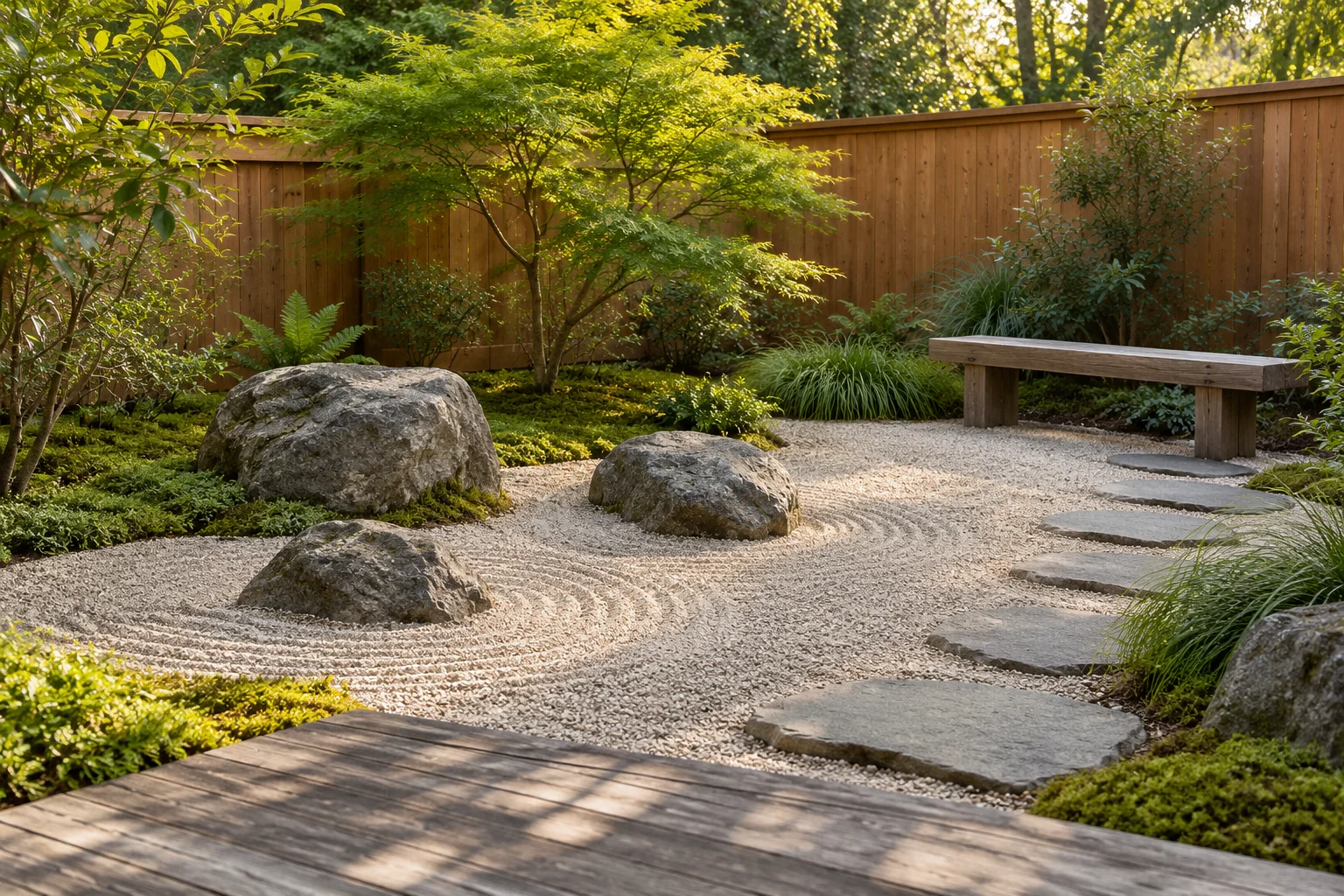
A peaceful backyard does not need a large pond, expensive landscaping, or an endless collection of garden ornaments. A few thoughtfully placed stones, simple greenery, and a quiet place to enjoy the view can give an ordinary corner a completely different feeling.
These backyard Zen garden ideas range from small gravel arrangements to stepping-stone paths, screened corners, and understated water features. Traditional dry landscape gardens use carefully arranged rocks and raked gravel; some ideas below also draw from broader Japanese-inspired garden design.
You will find practical layout tips, affordable material alternatives, shopping suggestions, and ways to adapt each idea to your space. Choose the features you enjoy most and build a garden that feels comfortable to spend time in.
Affiliate note: This article may contain affiliate links. If you buy through these links, we may earn a small commission at no extra cost to you.
Bring the Peaceful Feeling Indoors
Quick List of Backyard Zen Garden Ideas
- Create a meaningful arrangement of rock islands.
- Use stones and gravel to suggest mountains and water.
- Design around changing natural light.
- Turn a screened backyard corner into a retreat.
- Match the garden to your home’s architecture.
- Add one understated garden lantern.
- Balance large rocks with smaller planting.
- Include a thoughtfully placed Buddha statue.
- Shape plants into simple, natural forms.
- Lay a gently curved stepping-stone path.
- Surround a small fountain with pebbles.
- Add a bridge over water or a dry stream.
- Create an open area of raked gravel.
- Combine two complementary stone colors.
- Build small pockets of rocks and greenery.
- Frame the entrance with a simple archway.
How to Create a Backyard Zen Garden on a Budget
Choose the place you will view most often: beside a patio chair, outside a living room window, or at the end of a garden path. Sketch a modest area rather than redesigning the entire backyard. Include a comfortable viewing spot and leave room to reach the garden for maintenance.
Before buying materials, observe sunlight, drainage, falling leaves, and existing plants. A gravel bed beneath a tree may look beautiful but need frequent clearing. Work with the site instead of choosing a layout that will be difficult to maintain.
Simple Zen garden formula: One focal feature + an open gravel area + restrained greenery + a clear boundary + a comfortable viewing spot.
Compare locally available gravel, crushed stone, and reclaimed materials before paying for specialty finishes. Request a sample if you want to rake patterns: rounded pea gravel and coarse aggregate behave differently from fine angular gravel. Buy small plants suited to your climate and allow room for their mature size.
Begin with the boundary, surface, and main stones. Seating, lighting, and decorative features can follow later. For a balcony or tiny patio, a shallow outdoor container with stones and gravel offers a smaller version of the same design approach.
Choose a Layout That Suits Your Backyard
| Garden Area or Style | Best Pieces to Use | Why It Works |
|---|---|---|
| Small backyard corner | Privacy screen, compact gravel bed, simple bench | Defines a retreat without taking over the yard. |
| Modern patio garden | Concrete pavers, charcoal stone, wood seating | Connects clean architectural lines with natural texture. |
| Dry landscape garden | Rakeable gravel, sculptural rocks, restrained planting | Creates interest through arrangement and open space. |
| Shaded garden edge | Suitable shade plants, weathered stones, stepping stones | Uses existing shade as part of the atmosphere. |
| Water-feature nook | Small recirculating fountain, pebbles, nearby chair | Provides a compact focal point to enjoy from a seat. |
16 Peaceful Zen Garden Ideas for Your Backyard
1Create Rock Islands With Personal Meaning
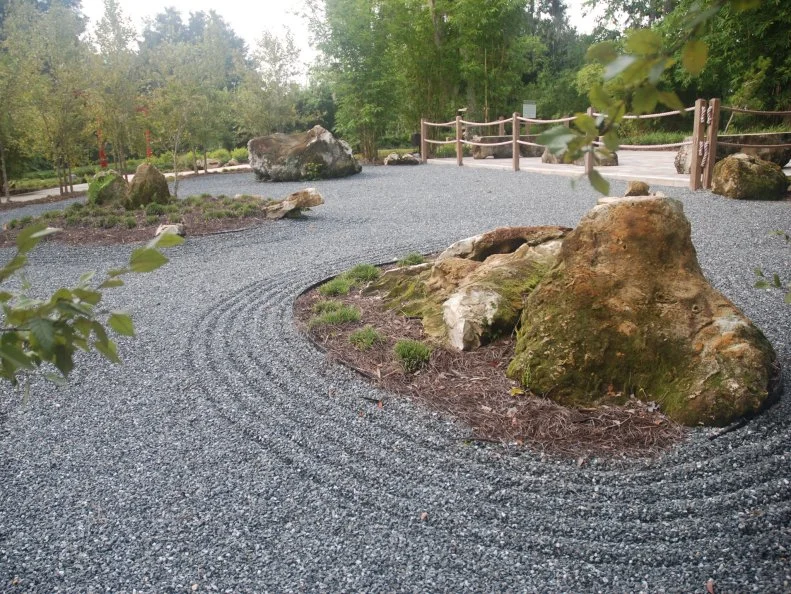
Image credits – Sholom Park
Arrange several groups of stones as small islands within a gravel bed. Each group can suggest something meaningful to you, such as resilience, change, or connection. The story can remain private; the arrangement does not need labels to be enjoyable.
Give the groups different shapes and leave generous space between them. Try one upright stone, a lower cluster, and a broad rock surrounded by smaller pieces. View the composition from your intended seat before settling the stones into position.
Styling tip: Let the rock groups carry the idea. Extra figurines and signs can make a simple landscape feel crowded.
2Suggest Mountains and Water With Stone
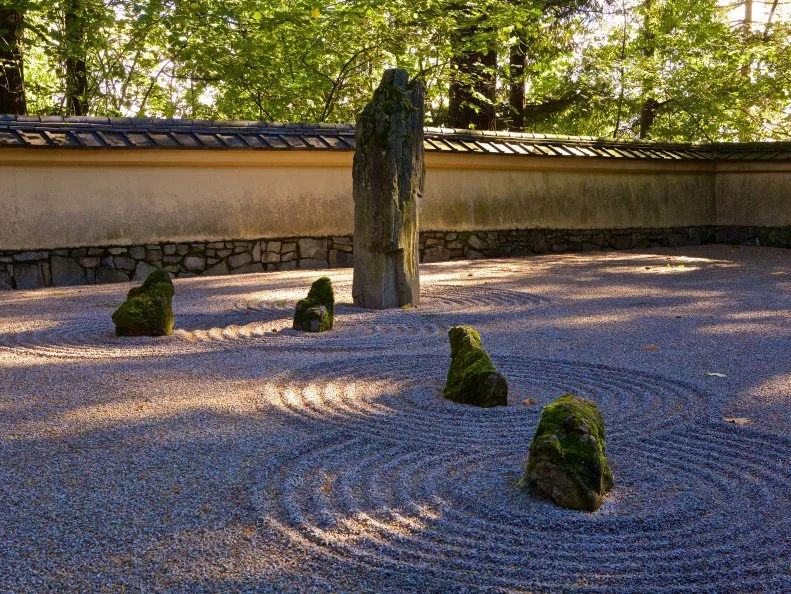
Image credits – Portland Japanese Garden/Wayne Williams
Use a tall, irregular rock as a miniature mountain and rake the surrounding gravel into flowing lines. This creates the impression of a much larger landscape within a compact garden bed, using texture and scale instead of actual water.
Choose stones with interesting edges and varied profiles. For outdoor patterns, test fine angular gravel that can hold a groove; loose sand may blow or wash out in an exposed yard. Keep a clear edge between the garden bed and neighboring lawn or soil.
3Let Changing Light Shape the View
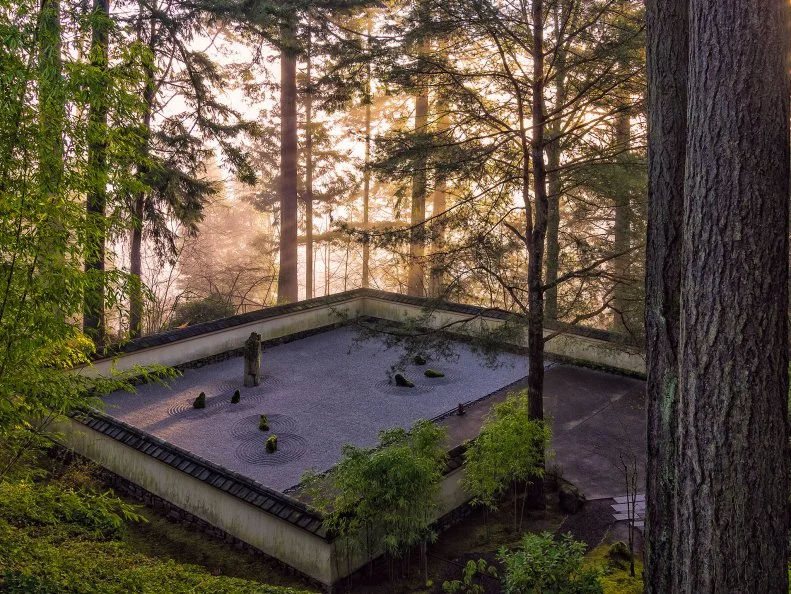
Image credits – Portland Japanese Garden/Roman Johnston
Visit your chosen garden spot in the morning, afternoon, and early evening. Low sunlight can reveal the ridges in raked gravel, while moving foliage casts shifting shadows across stones. Place the main feature where you enjoy these changes.
If you use the backyard after dark, add a small amount of shielded outdoor lighting. Aim it toward a path edge or focal stone rather than filling the entire garden with brightness. Preserve darker areas and avoid directing light into neighboring windows.
Amazon find: Shielded Outdoor Path Lights
Low-glare lighting can help define the garden edge in the evening. Choose fixtures rated for the installation location and check power requirements.
4Screen a Small Corner for Privacy
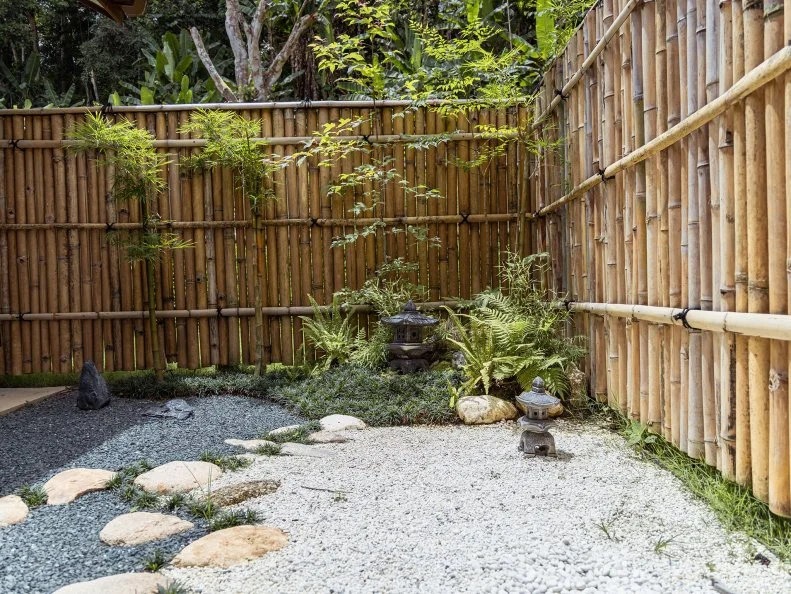
Image credits – Shutterstock.Sumala Chidchoi
Turn an unused backyard corner into a defined retreat with a wood screen, bamboo panel, or existing fence. Add a compact stone area and suitable greenery along the boundary. A short path gives the nook a clear entrance.
Match the screen’s height and scale to the yard so it feels sheltered rather than boxed in. Manufactured bamboo screening offers the look without planting spreading bamboo. Keep a comfortable seat outside the gravel bed where you can enjoy the whole arrangement.
Budget tip: Use the fence you already have as the backdrop. A cleaned-up border and one simple bench may be enough to define the space.
5Echo Your Home’s Architectural Style
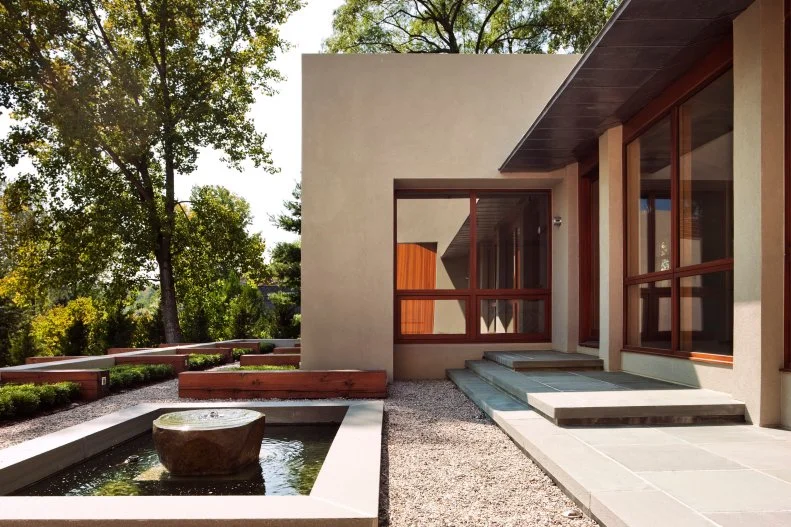
Image credits – Jeff McNamara
A Zen-inspired garden can feel at home beside contemporary architecture. Repeat the house’s clean lines with rectangular concrete steps, restrained gravel borders, and a plain wood bench. Keep the material palette small so the garden reads as one connected space.
For a traditional home, weathered stone and softer planting edges may fit better. Use one color or material from the patio to connect the areas. You can achieve a cohesive design without adding a pool or rebuilding the entire outdoor space.
6Place One Lantern Among the Greenery
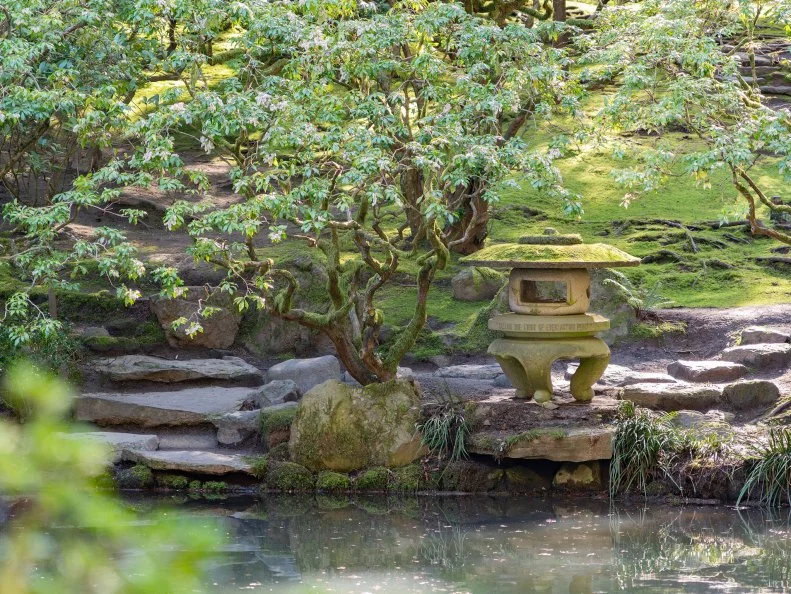
Image credits – Portland Japanese Garden
A stone-style lantern can introduce a quiet focal point beside a path, near a water feature, or beneath a tree. Position it slightly off-center so it feels integrated into the landscape rather than displayed in the middle of the yard.
Choose a size that suits the surrounding rocks and plants. A small garden usually needs only one lantern, and it can be decorative without being illuminated. Set it on a stable base and keep it clear of walking routes.
Amazon find: Outdoor Stone-Style Garden Lantern
An understated lantern adds a focal detail without requiring several ornaments. Check dimensions, weight, and outdoor durability before ordering.
7Balance Bold Rocks With Smaller Plants
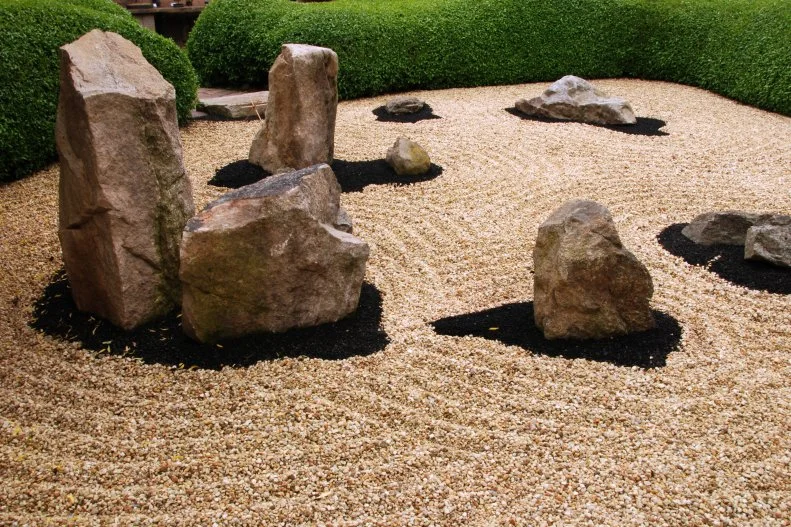
Image credits – David Maska / Shutterstock.com
One substantial rock can give a small garden a strong sense of scale. Pair it with smaller stones and low planting rather than surrounding it with equally large features. An uneven arrangement often looks more natural than identical rocks placed at equal intervals.
Consider how the plants will look at maturity so they do not eventually hide the main stone. Set rocks securely with their bases partly embedded where appropriate. Have heavy pieces delivered and positioned with suitable equipment rather than attempting an unsafe lift.
8Include a Buddha Statue With Intention
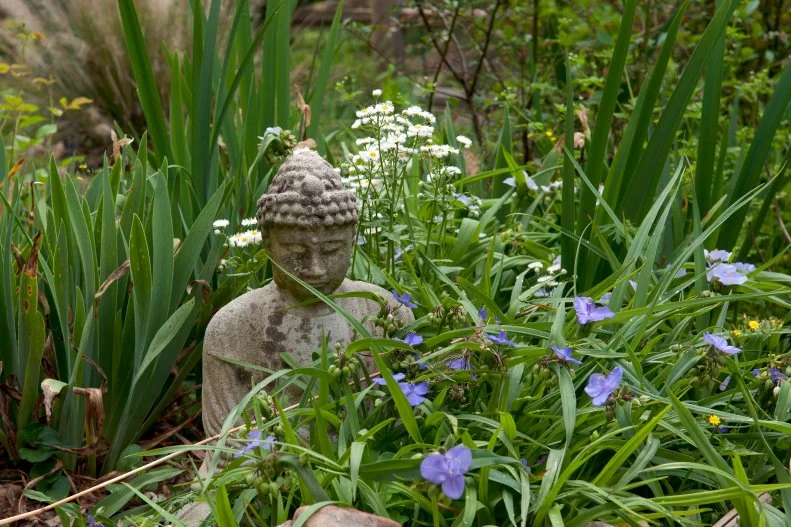
Image credits – Bob Farley
If a Buddha figure holds meaning for you, give it a considered place within the garden. A seated figure can become a focal point viewed from a bench, with simple greenery behind it and open space around its base.
Remember that the figure represents a living religious tradition. Choose and place it respectfully rather than treating it as a required accessory. If it does not connect with your beliefs or interests, a sculptural stone can provide a focal point instead.
Placement tip: Give a meaningful figure its own space instead of crowding it with unrelated ornaments.
9Maintain Simple, Natural Plant Shapes
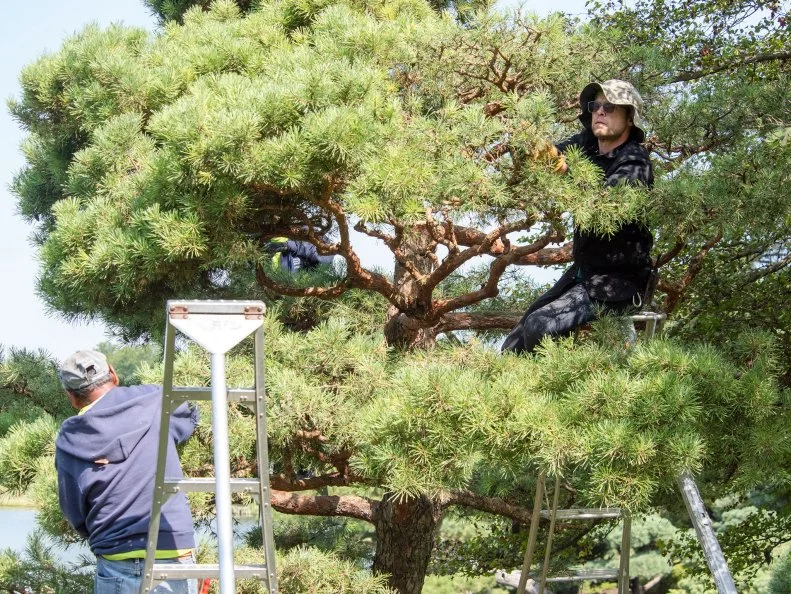
Image credits – Chicago Botanic Garden
Thoughtful pruning can reveal the structure of a small tree and keep shrubs from overwhelming the stones. Aim for a balanced outline with room between plants rather than forcing everything into tight balls or identical shapes.
Choose plants whose mature size fits your garden, then learn the correct pruning timing for each species. Pine shaping and specialist training require more care than routine trimming. Start with manageable plants and avoid heavy cuts simply to imitate an aged garden tree.
10Lay a Gently Curving Stepping-Stone Path
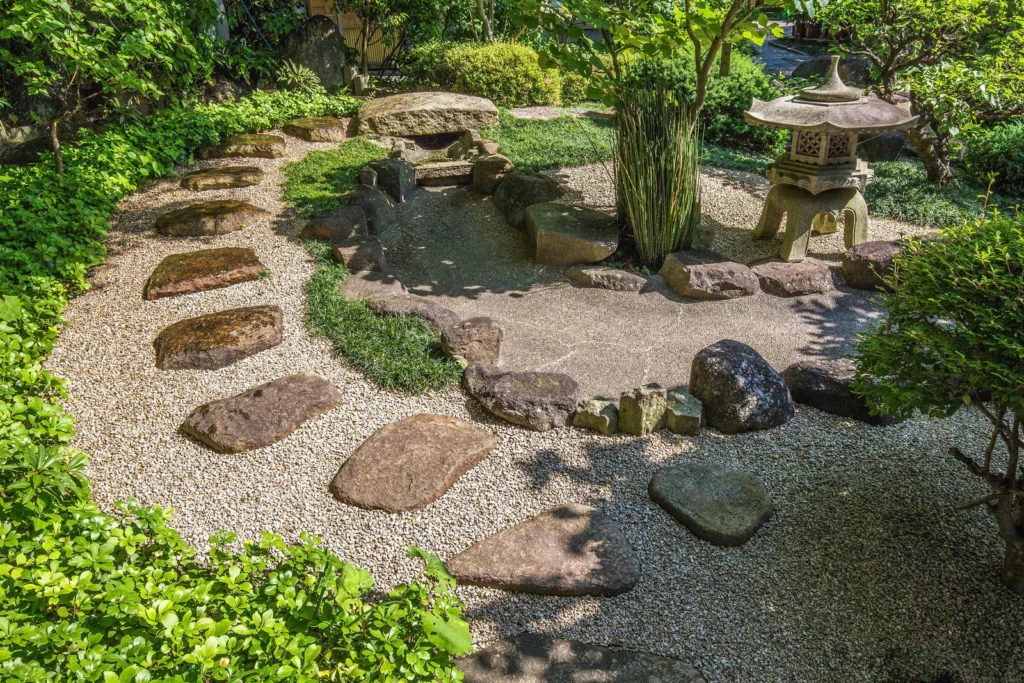
Image credits – John Lander/Alamy Stock Photo/Alamy
A stepping-stone path can guide you past a tree, rock arrangement, or small fountain. Use a gentle curve where space allows, with broad stones that suit a comfortable walking stride. The route should feel inviting rather than difficult to navigate.
Test the spacing before installation and prepare a stable base appropriate to the site. Keep the walking surfaces level and avoid narrow gaps that catch a foot. Where accessibility matters, use a continuous firm path instead of separated stepping stones.
Affordable alternative: Plain concrete pavers can create a restrained path when natural stone exceeds your budget.
11Set a Small Fountain in a Pebble Bed
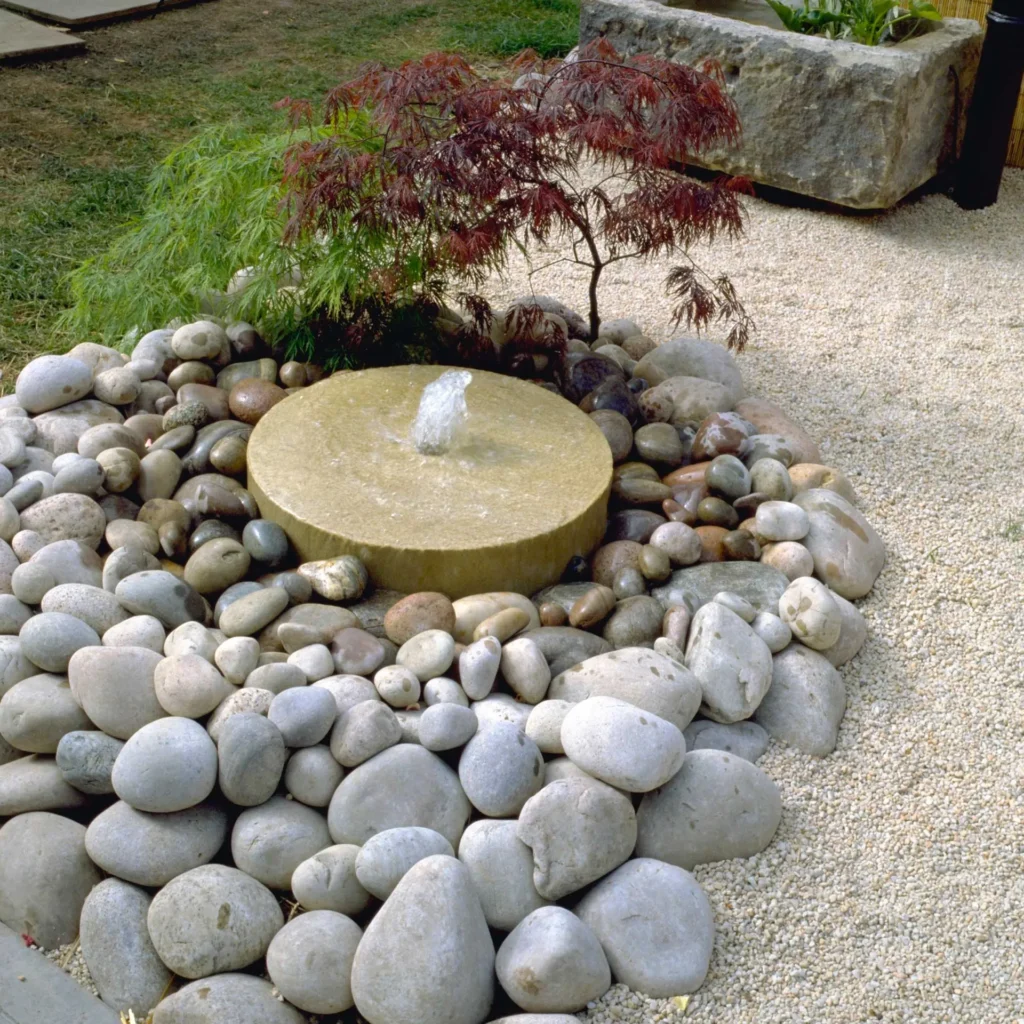
Image credits – Amateur Gardening/Future
A modest recirculating fountain creates movement without making water the dominant feature. Surround it with smooth pebbles, then use finer gravel beyond them for a gentle change in texture. Position a chair nearby so you can enjoy the sound.
Listen to the fountain before choosing it if possible; a strong splash may be distracting in a small yard. Keep access to the pump clear and follow cleaning and winter-storage instructions. Use outdoor-rated equipment and a properly protected power supply.
Amazon find: Compact Recirculating Outdoor Fountain
A simple fountain can suit a patio-edge garden. Compare its size, pump access, power needs, and maintenance requirements.
12Bridge a Pond or Symbolic Dry Stream
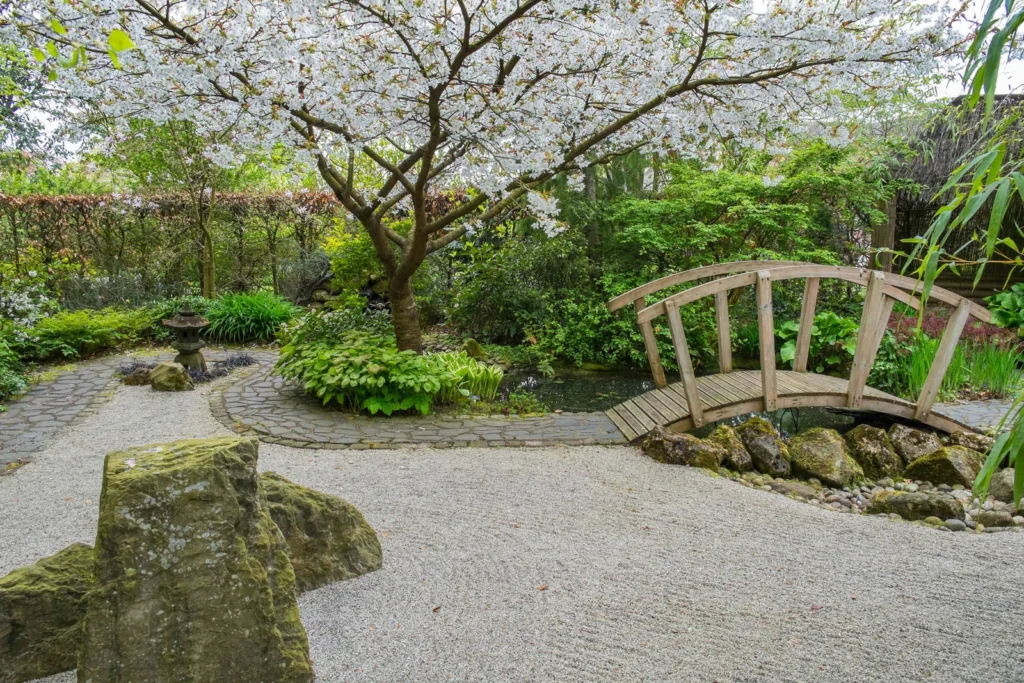
Image credits – Digital-Fotofusion Gallery
A simple bridge introduces an architectural detail and a sense of passage. It can cross a small pond, but a ribbon of pebbles also creates the suggestion of water without a pump or open pool. Keep the bridge in proportion to the crossing.
For a functional bridge, choose a structure designed for pedestrian use with suitable foundations and slip-resistant surfaces. Decorative bridges may not support people. Let the dry stream follow the landscape naturally, and do not assume it can handle runoff unless it has been designed for drainage.
13Reserve an Open Area for Raked Gravel
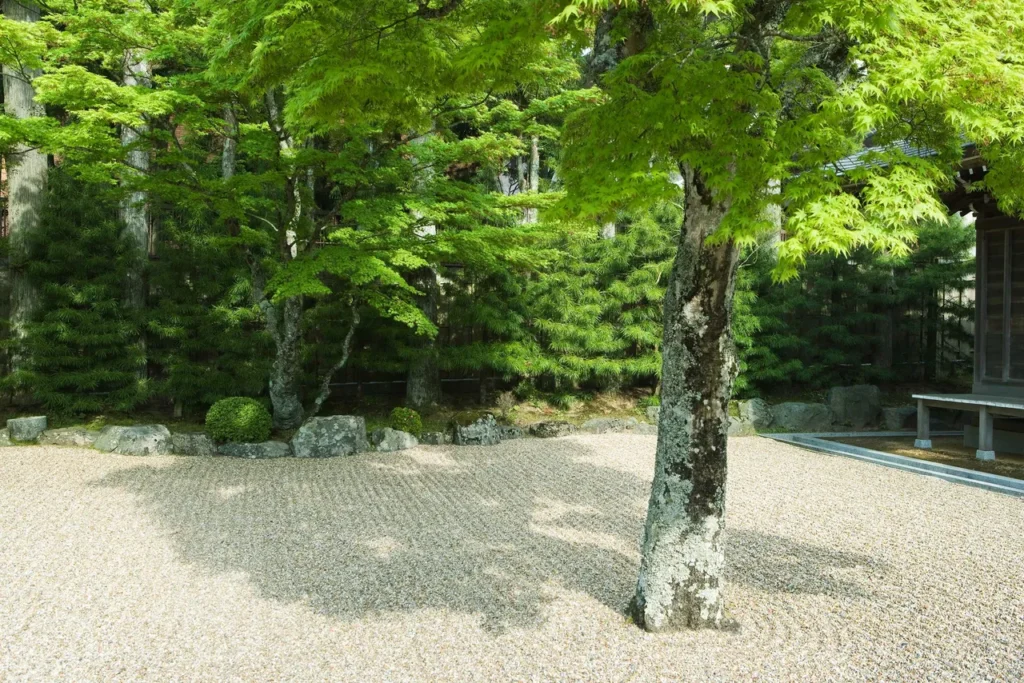
Image credits – Photick/ZenShui/Laurence Mouton
Leave a generous section of the garden unfilled so the gravel patterns have room to show. Straight lines can run across the bed, while curved grooves move around a stone group. The contrast creates interest without adding more objects.
Keep this area separate from regular foot traffic and choose edging that contains the aggregate. If a tree forms the focal point, protect its root flare and avoid piling gravel against the trunk. A smaller, easy-to-reach bed is often more enjoyable to maintain than a large one.
Amazon find: Full-Size Garden Gravel Rake
A suitable rake helps refresh outdoor patterns. Check the dimensions carefully, since miniature tabletop rakes are too small for a backyard bed.
14Define Gentle Shapes With Two Stone Colors
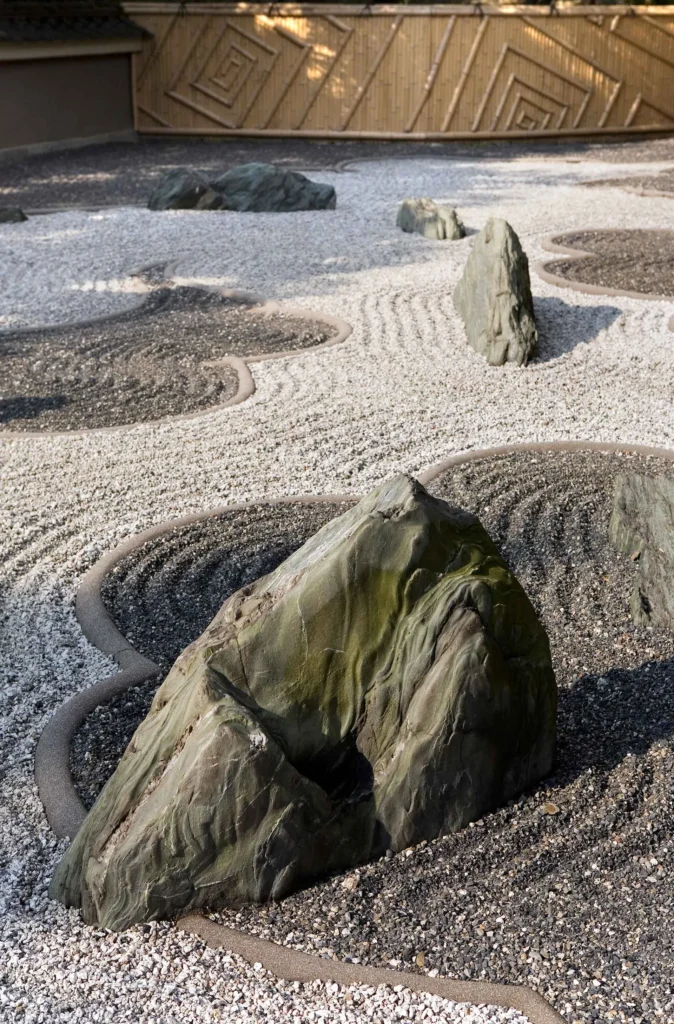
Image credits – Apexphotos/The Image Bank Unreleased/Getty Images
Combine two related gravel colors, such as pale gray and charcoal, to suggest islands or flowing channels. Keep one color dominant and use the second for a few clear shapes. This gives the garden contrast without a busy patchwork effect.
Use discreet dividers or stone borders where the colors meet, especially if you plan to rake the surface. Test samples both wet and dry before ordering, since stone can change appearance after rain. Repeat the darker tone in a focal rock to connect the composition.
15Create Small Rock-and-Plant Pockets
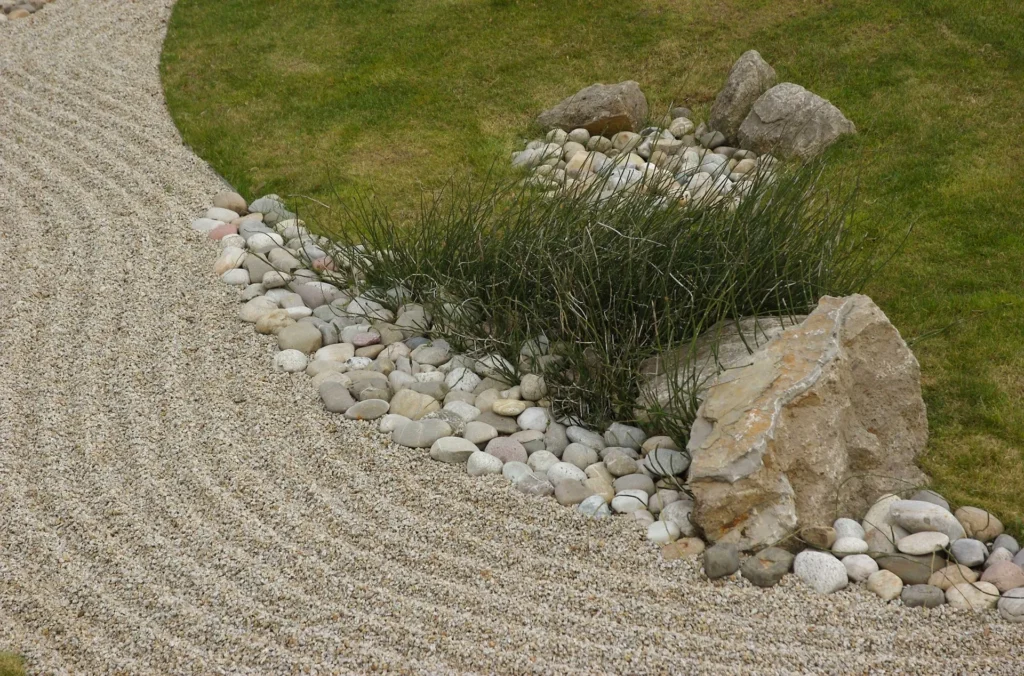
Image credits – Aron Jungermann/Getty Images
If you want to keep most of your lawn, add miniature rock arrangements along a path or patio edge. Combine a larger stone, a few pebbles, and one clump of suitable grass or low greenery. Each pocket becomes a small landscape within the larger yard.
Repeat a similar stone color across the pockets to make them feel connected. Choose plants for your sun exposure, climate, and available space, and check whether ornamental grasses spread locally. Leave growth room instead of tightly packing new plants between rocks.
Small-yard tip: Begin with one pocket beside your favorite chair. Extend the planting only after you see how it grows and how much upkeep it needs.
16Frame the Garden With a Simple Archway
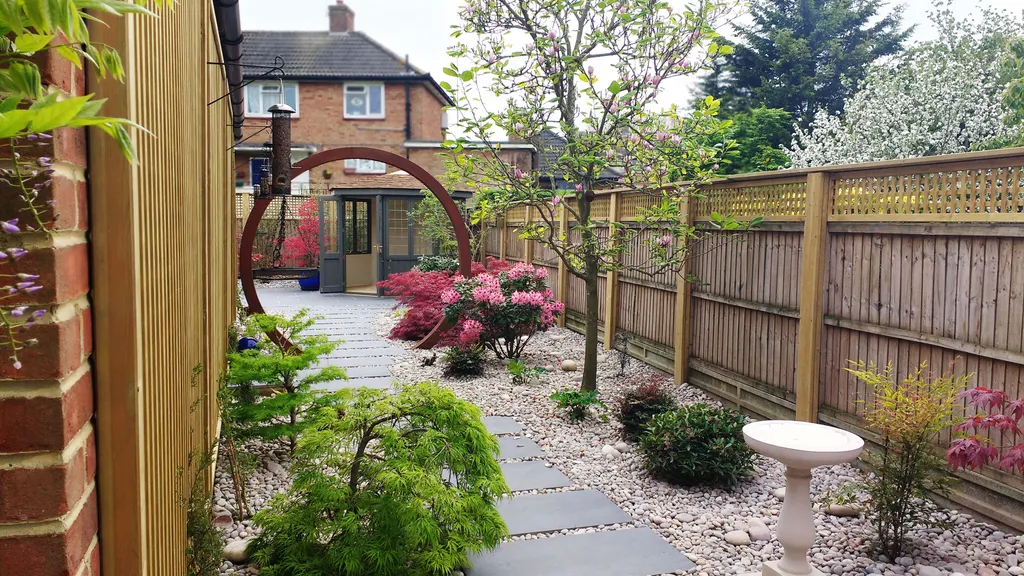
Image credits – Rhoda Maw Garden Design
An understated arch or circular garden gate gives the retreat a clear entrance. Align it with a path and use the opening to frame a tree, stone arrangement, or bench beyond. It works especially well when a narrow yard needs a stronger focal view.
Choose wood or metal that complements your fence and other garden materials. Leave adequate headroom and walking width, and anchor the structure for the site conditions. Keep planting restrained so the opening remains easy to use and the frame stays visible.
Backyard Zen Garden Shopping Checklist
Source bulk gravel and heavy rocks locally where practical. Use online searches for tools and smaller accessories, and measure the garden before buying anything.
| Item | Best For | Amazon Search |
|---|---|---|
| Outdoor gravel rake | Refreshing surface patterns | Shop on Amazon |
| Landscape edging | Containing gravel beds | Shop on Amazon |
| Privacy screen | Defining a quiet corner | Shop on Amazon |
| Outdoor bench | Enjoying the garden view | Shop on Amazon |
| Compact fountain | Adding gentle water movement | Shop on Amazon |
| Bypass pruning shears | Routine light plant maintenance | Shop on Amazon |
Frequently Asked Questions
What should I include in a small backyard Zen garden?
Start with a contained gravel bed, a few interesting stones, and a comfortable viewing spot. Add one plant group or screen if needed. A small garden does not require a fountain, bridge, or statue.
How can I make a Zen garden on a budget?
Use an existing fence as the backdrop, compare local aggregate prices, and begin with a small area. Reuse suitable materials you already own and purchase younger plants. Save optional accessories for later.
Is sand or gravel better for an outdoor Zen garden?
Gravel is often more practical in an exposed backyard because loose sand can shift in wind and rain. Fine angular gravel may hold raked patterns better than rounded pebbles. Test a sample and consider your site conditions.
Does a Zen garden need a water feature?
No. Traditional dry landscape gardens suggest water through gravel and stone arrangements. A fountain is an optional feature for a broader Japanese-inspired backyard design, especially if you enjoy its sound and can maintain it.
How do I maintain a backyard Zen garden?
Remove leaves and weeds, refresh gravel patterns, and check that edging and stones remain secure. Care for plants according to their species, and clean any fountain as directed. A compact design makes these tasks easier to keep up with.
Final Thoughts
The best backyard Zen garden gives you a view you enjoy and a reason to pause outside. Thoughtful stone placement, open space, and suitable plants can create that feeling in a small corner or a larger landscape.
Begin with one manageable area and a few connected ideas. A gravel bed with rock islands, a screened bench nook, or a simple stepping-stone path can be a satisfying first project.
Let the garden develop gradually. As the plants grow and the light changes through the seasons, you can adjust the details while keeping the space comfortable, practical, and personal.
2 thoughts on “16 Zen Garden Ideas for Backyard”